
China’s street food scene isn’t a single experience—it’s a sprawling, noisy, steamy ecosystem that runs from Beijing’s hutongs to Changsha’s late-night alleys. Walk through a market district at 11 PM and you’ll smell charcoal smoke, hear the sizzle of flatbreads, and see queues of locals huddled around a cart that looks like it was thrown together with a duffel bag and two propane tanks. That’s the point. The best stalls are the ugly ones.
What street food stalls in China serve best

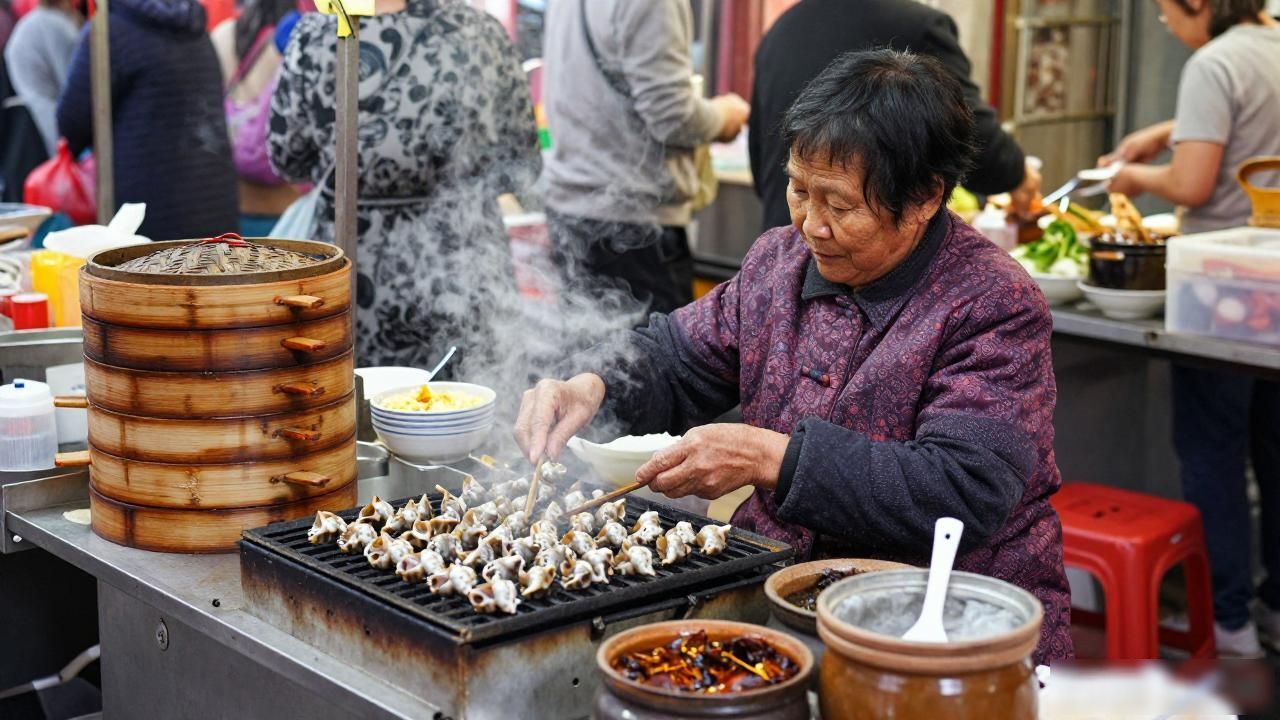
The answer shifts by region,and that’s what keeps the whole thing interesting. In Sichuan, a stall might be nothing but a wok, a pile of dried chilies, and a bowl of soy sauce—yet the mapo tofu they serve for 15 yuan will rewire your brain. In Xiamen, you’ll find a grandmother grilling tiny sea snails on skewers while humming a local folk song, the shells crackling and snapping under tongs.
In the north, the star is jianbing—those layered, crispy-spread crepes slathered with sweet bean paste and loaded with thin fried crackers. A Beijing stall near the subway can churn out 200 of these before the morning rush ends, and the regulars don’t even stop to look. They just point, pay with a phone tap, and walk away with steam rising off the wrap.
Where do street food stalls in China pop up
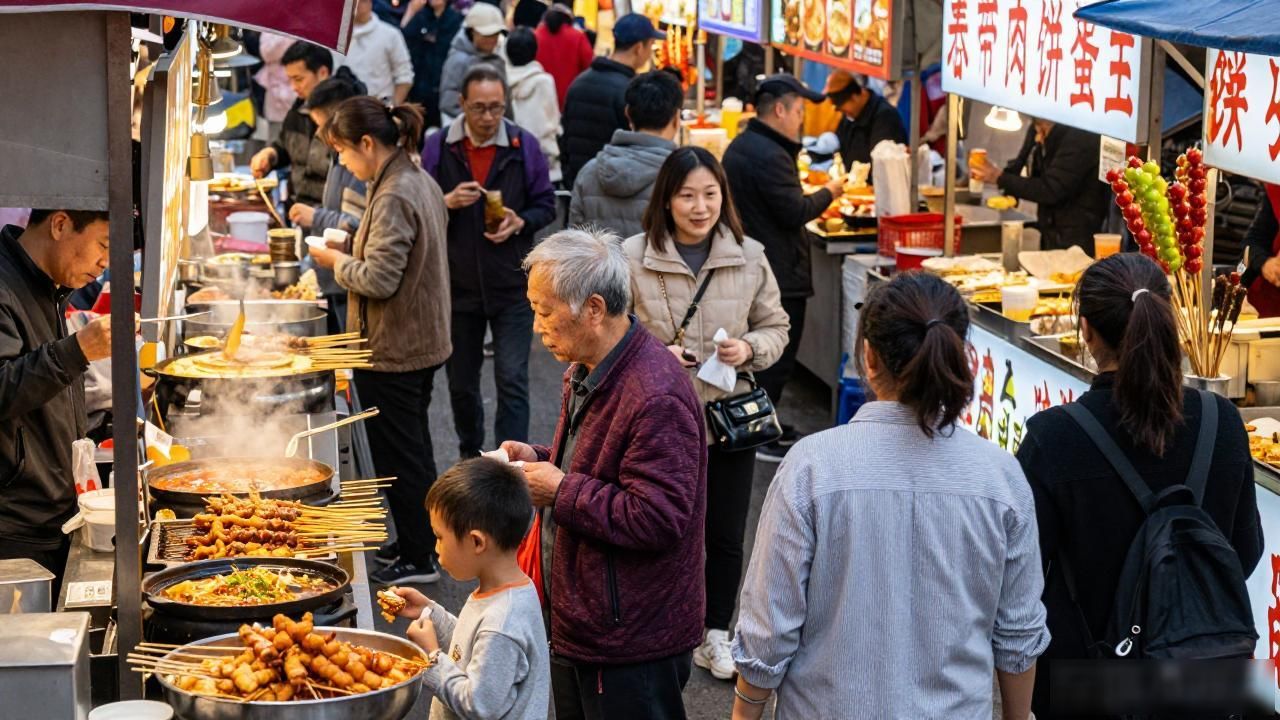
You won’t find a sign that says “street food zone” in most cities. The stalls cluster around residential compounds, school gates, and the undersides of overpasses. In Chengdu, the Shuangliu district has an entire row of them operating from 7 PM until the street gets swept clean at 2 AM. In Dalian, they set up along the coastal promenade where the sea breeze keeps the griddle smoke from settling.
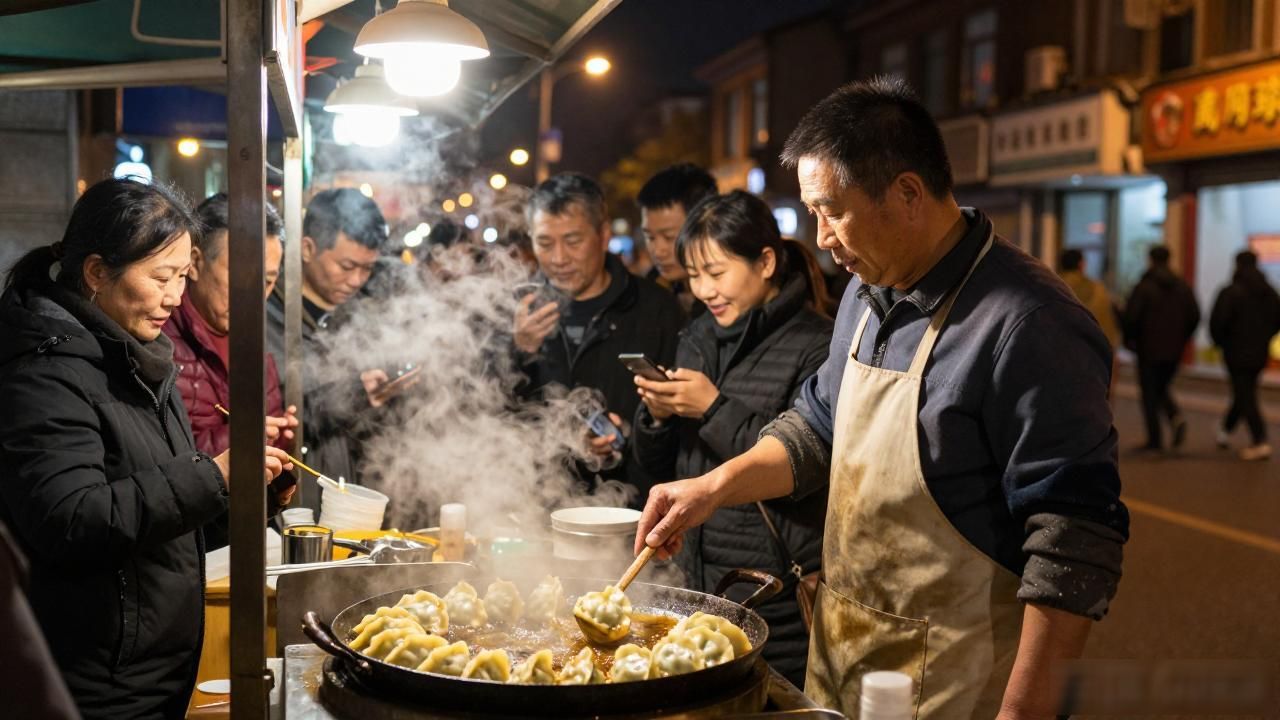
Some cities have designated night markets—Shenzhen’s Dongmen and Guangzhou’s Beijing Road are the big-name examples—but the real test is the unnamed cart three alleys over, where a man in a faded apron has been frying gourd-shaped dumplings for eleven years and knows half his regulars by their favorite dipping sauce.
The beauty of China’s street food culture is that it never asks for your approval. You just show up, point at something sizzling, and let your tastebuds figure out the rest. No reservations, no tasting menus, no pretense. Just smoke, noise, and a plate of food that costs less than a coffee.