
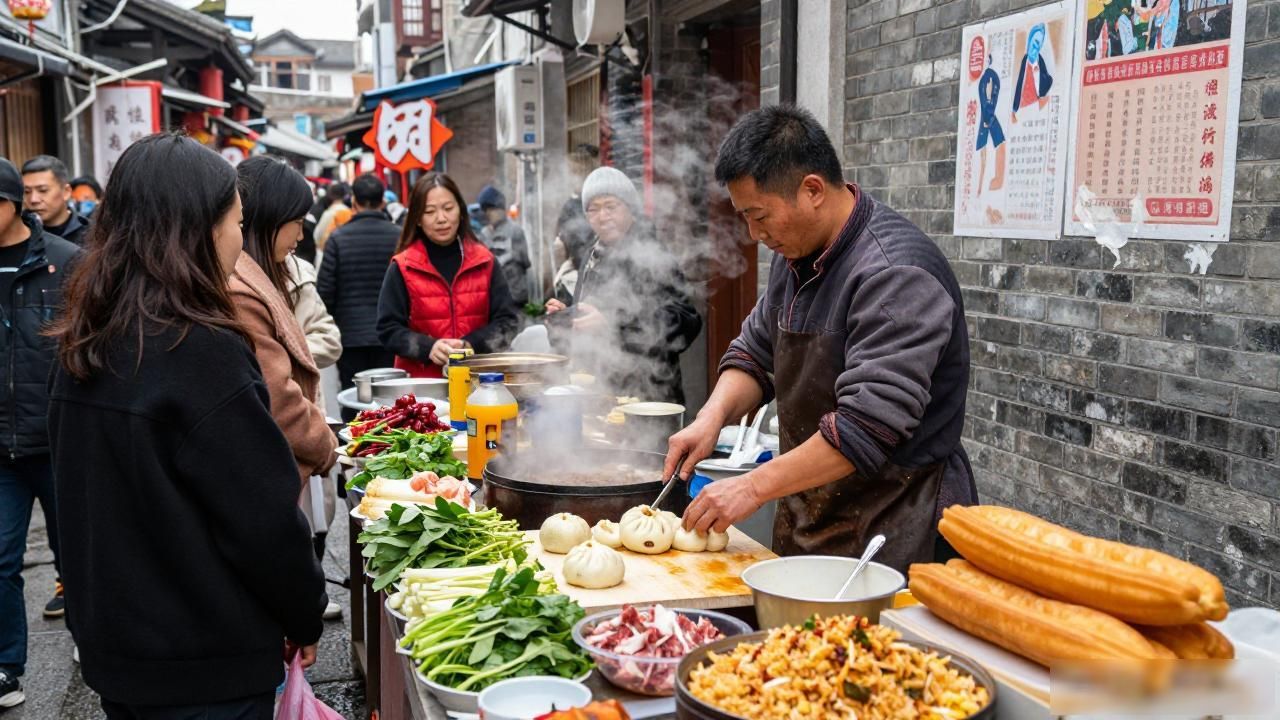
If you’re visiting China, street food is where the real magic happens. Forget expensive restaurants — some of the most unforgettable meals are sold from tiny wooden carts on busy corners. These stalls serve everything from sizzling skewers to hand-pulled noodles, and they’re where locals go after work to eat, chat, and unwind.
Street Food Culture in China
In China, street food isn’t just about quick snacks. It’s a way of life. People gather around steaming woks late into the evening, sitting on small plastic stools while vendors shout orders over the hiss of hot oil. Every city has its own street food scene with regional specialties that reflect local tastes and traditions.
You’ll find different kinds of stalls across the country. In Chengdu, you’ll discover spicy mapo tofu sold from mobile carts. In Xi’an, tourists line up for cumin lamb skewers grilled right in front of them. Beijing’s hutongs hide secret dumpling stands that have been running for decades.

What makes Chinese street food special is the freshness. Most ingredients are prepared on-site, and you can watch your meal being cooked before your eyes. The aromas alone will make you hungry just walking past a stall.
What Are the Must-Try Street Foods?
There are countless dishes to try, but some stand out as absolute classics. Roujiamo, a kind of Chinese burger filled with slow-cooked meat, is a must-eat. Originating from Shaanxi province, it’s now found on almost every street corner nationwide.
Another favorite is jianbing, a savory crepe made with egg, scallions, and crispy crackers. It’s the ultimate breakfast food — cheap, filling, and delicious. You’ll see vendors flipping these on flat griddles at sunrise, serving breakfast to commuters rushing to work.
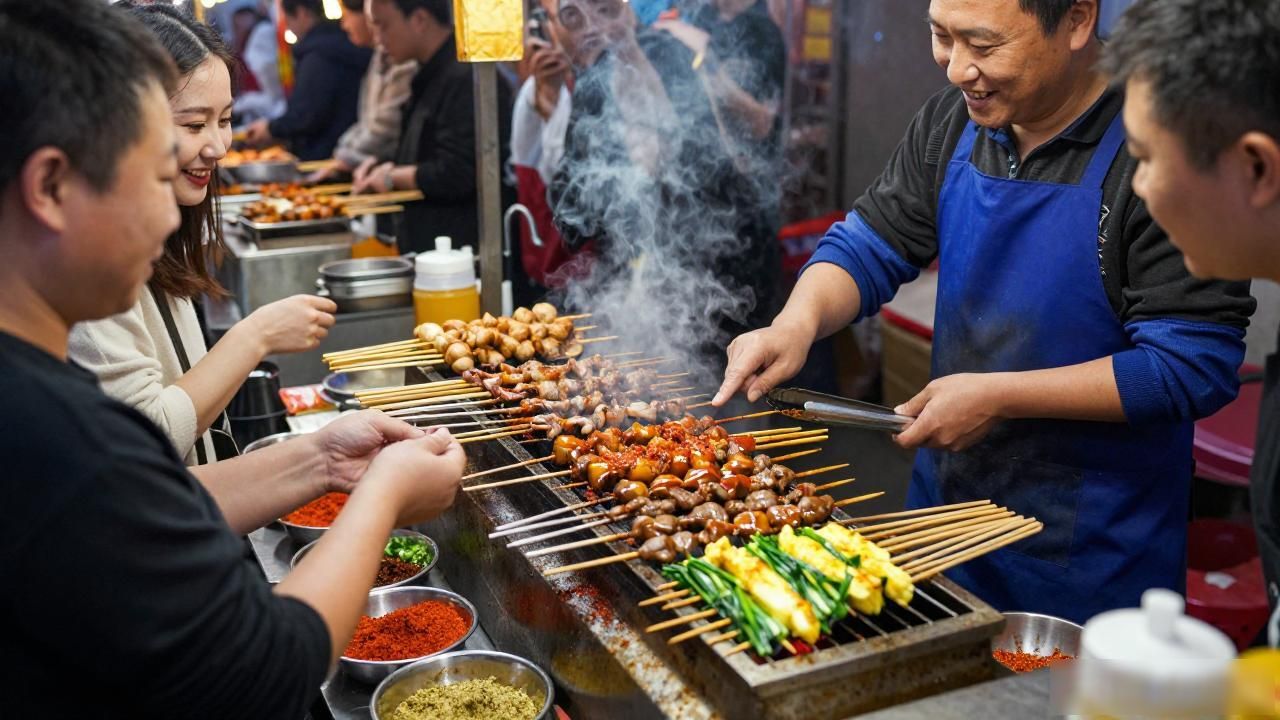
Don’t miss the skewers. From lamb to squid, everything can be grilled over charcoal and seasoned with cumin, chili powder,or sweet bean sauce. Just point at what looks good and tell the vendor how spicy you want it.
In southern China, you’ll find rice noodle rolls called cheung fun. These delicate dishes are filled with shrimp or pork and drizzled with soy sauce. They’re soft, light, and completely different from the heavy flavors found in the north.
Where to Find the Best Stalls
Night markets are the best places to experience Chinese street food culture. Cities like Guangzhou, Shanghai, and Shenzhen have famous night markets that stay open until midnight or later. The energy is electric, with lights flashing and the sound of woks clanging filling the air.
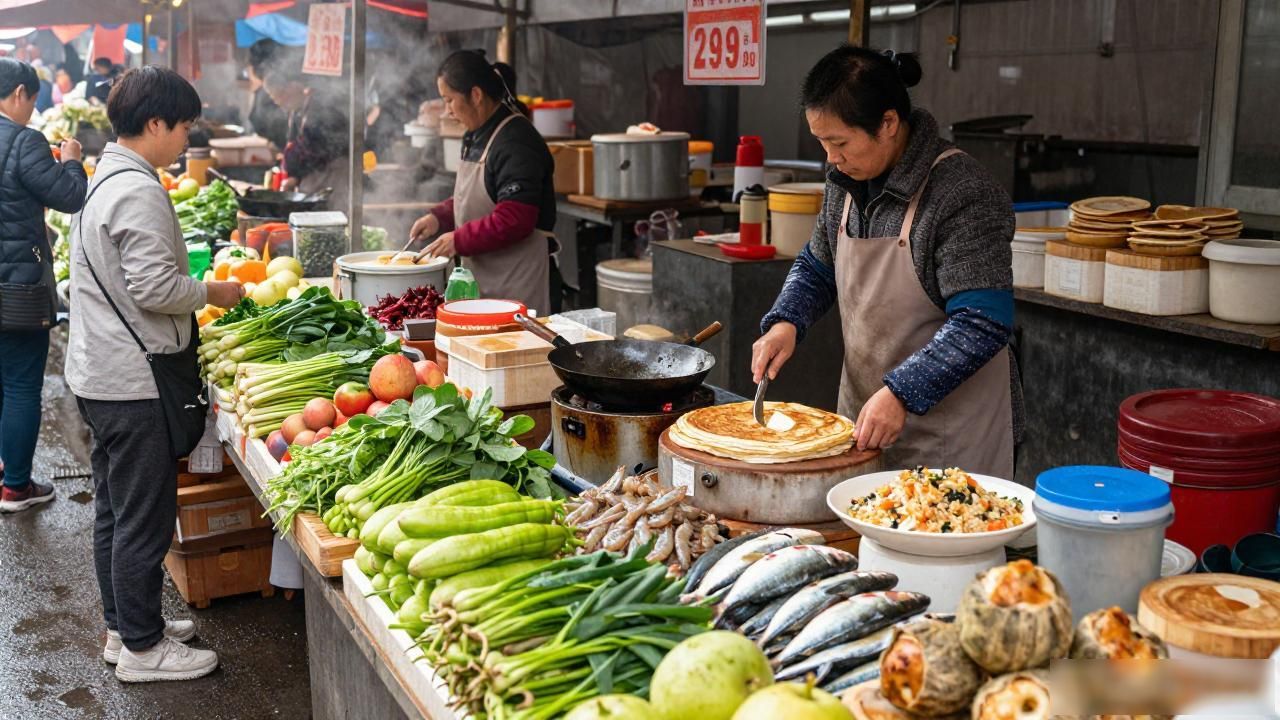
For a more authentic experience, visit local wet markets in the morning. Vendors set up small cooking stations alongside fresh produce sellers, serving breakfast to neighborhood regulars. This is where locals eat, and you’ll taste food that’s been perfected over generations.
University areas are also great spots. Young people love affordable street food, so vendors near campuses often have the best prices and most creative dishes. Try eating where students eat — you’ll save money and discover hidden gems.
Just follow your nose and watch the crowds. The busiest stalls usually serve the freshest food.
A few tips for first-time visitors: bring cash since many stalls don’t accept cards, learn to say “how much is this?” in Chinese, and don’t be afraid to point at what others are eating. That’s often the best way to discover something new.