

The Terracotta Army in Xi’an is one of the most astonishing archaeological discoveries of the 20th century. Buried for over two millennia, this vast collection of life-sized clay soldiers, horses, and chariots was meant to protect China’s first emperor in the afterlife. For anyone planning a trip to Xi’an, understanding the history, scale, and practical tips for visiting this UNESCO World Heritage site is essential to fully appreciate its wonder.
How old is the Terracotta Army
The Terracotta Army is approximately 2,200 years old. It was built starting in 246 BCE under the orders of Qin Shi Huang, the first emperor of a unified China. The construction involved over 700,000 workers and took nearly 40 years to complete. This incredible age means the site offers a direct window into the military organization, craftsmanship, and belief systems of ancient China, long before the Common Era began.

Farmers digging a well in 1974 accidentally uncovered the first fragments, leading to systematic excavations. Since then,three main pits have been opened, containing an estimated 8,000 soldiers, 130 chariots, and 670 horses. The sheer scale and age of the army make it a must-see for history lovers. Despite centuries of decay and a fire set by an invading army, the remaining warriors still inspire awe today.
Why was the Terracotta Army built
Emperor Qin Shi Huang ordered the Terracotta Army to serve him in the afterlife. He believed that he would continue to rule in another realm after death, so he needed a complete army to protect him from spiritual threats. Unlike previous rulers who buried live servants or smaller figurines, Qin opted for life-sized, individualized clay soldiers to demonstrate his power and ensure loyalty without human sacrifice.
Each warrior has unique facial features, hairstyles, and armor, suggesting they were modeled after real soldiers. The army was arranged in battle formation, with infantry, archers, cavalry, and chariots. This careful planning reflects the emperor’s obsession with immortality and his desire to replicate his earthly kingdom underground. The burial complex also includes acrobats, musicians, and officials, showing a whole afterlife court.
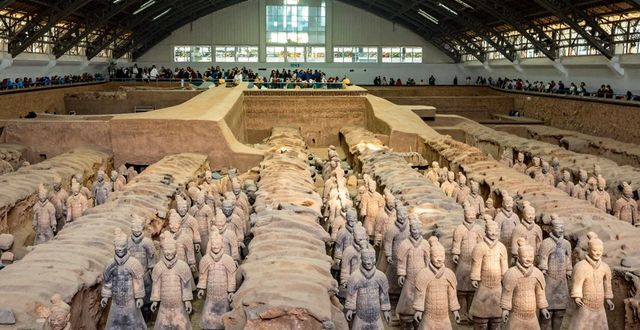
How to visit the Terracotta Army from Xi’an
The Terracotta Army site, officially called the Museum of the Terracotta Warriors and Horses of Qin Shi Huang, is located about 40 kilometers east of downtown Xi’an. The easiest way to get there is by taking Tourist Bus Line 5 (306) from the Xi’an Railway Station. The ride takes about an hour and costs around 7 RMB. Alternatively, you can hire a private taxi or join a guided tour for more convenience.
Plan to spend at least three hours exploring the three main pits. Pit 1 is the largest and most impressive, containing the main army of over 6,000 soldiers. Pits 2 and 3 offer more specialized units and the command post. Visit on a weekday morning to avoid massive crowds. Wear comfortable shoes, as you will walk a lot. Also, hire a licensed guide or rent an audio device to understand the fascinating details you might otherwise miss.
What makes the Terracotta Army so special
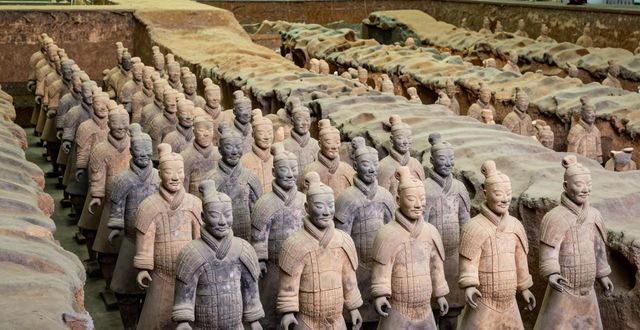
What truly sets the Terracotta Army apart is its combination of scale, realism, and mystery. No two warriors are exactly alike, from their expressions to their clothing and even their ear shapes. Advanced techniques such as assembly-line production with individually sculpted heads were used, showing incredible industrial organization for the 3rd century BCE. The warriors were originally painted in bright colors, though most pigment has faded after exposure to air.
Additionally, the army was equipped with real bronze weapons, including swords, spears, and crossbows, many still sharp after 2,000 years due to a chromium coating—a technology not discovered in the West until the 20th century. Ongoing excavations continue to reveal new secrets, such as rare painted figures and new types of officials. For any visitor to Xi’an, standing before these silent ranks is a humbling experience that connects you directly to ancient China’s ambition and artistry.
Have you ever dreamed of seeing an ancient army frozen in time? If you’ve visited Xi’an’s Terracotta Warriors, share your most unforgettable moment in the comments below, and don’t forget to like and pass this guide to fellow travelers