
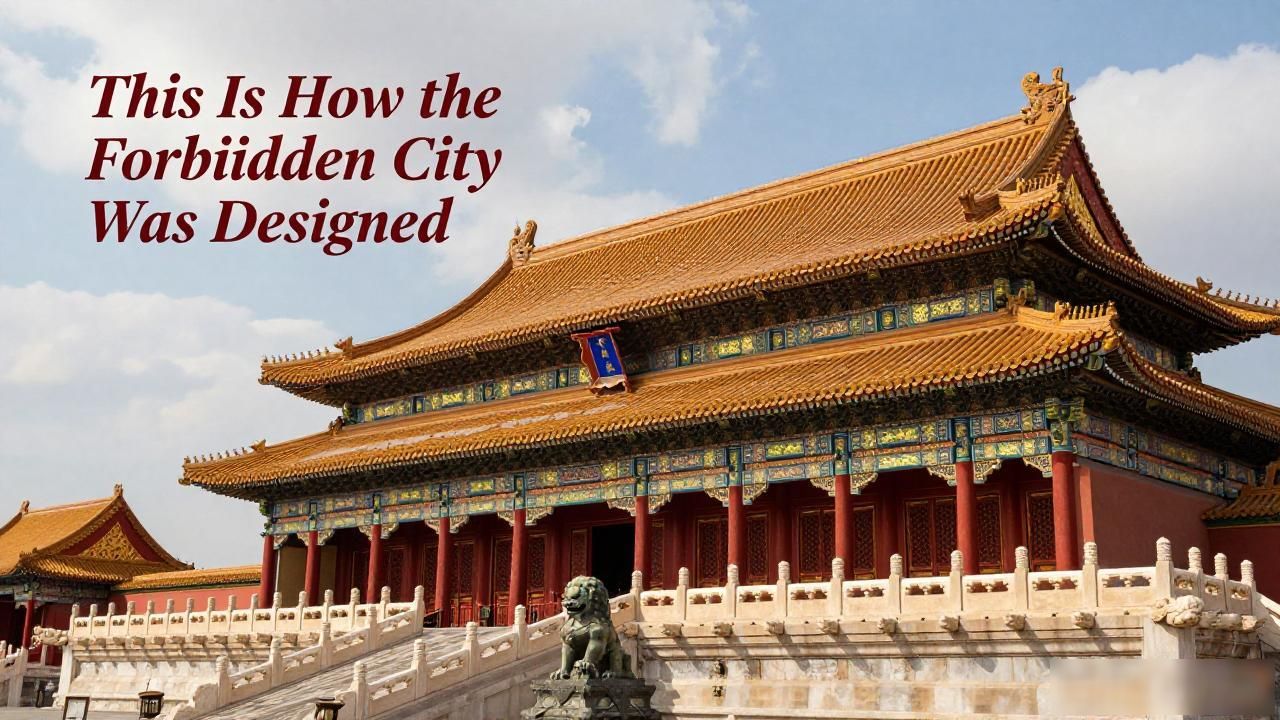
When I first walked through the Meridian Gate, I was struck by how every stone, every roof curve, every courtyard axis seemed deliberate — almost mathematical. The Palace Museum isn’t just a collection of palaces; it is architecture as philosophy made visible. Emperor Yongle spent fourteen years planning this complex, and he didn’t stop at aesthetics. He embedded cosmology, power, and Confucian order into every structural decision. What you see today — the vast symmetry, the golden glazed tiles, the towering walls — tells you something far deeper than imperial wealth. It tells you how a civilization believed the universe itself was organized.

The layout of the Forbidden City follows a strict north-south axis that runs through the heart of Beijing. This central line isn’t arbitrary. It reflects the ancient Chinese concept of 天地之道 — the way heaven and earth align. The main halls sit exactly on this axis, while side structures mirror each other perfectly on either flank. Even the names of the buildings carry meaning. The Hall of Supreme Harmony, or Taihe Dian, stands at the center of the outer court and was where emperors held major ceremonies. Its position isn’t just central — it is symbolic. The axis represents the emperor’s role as the bridge between heaven and earth, a belief that shaped not only architecture but governance itself.
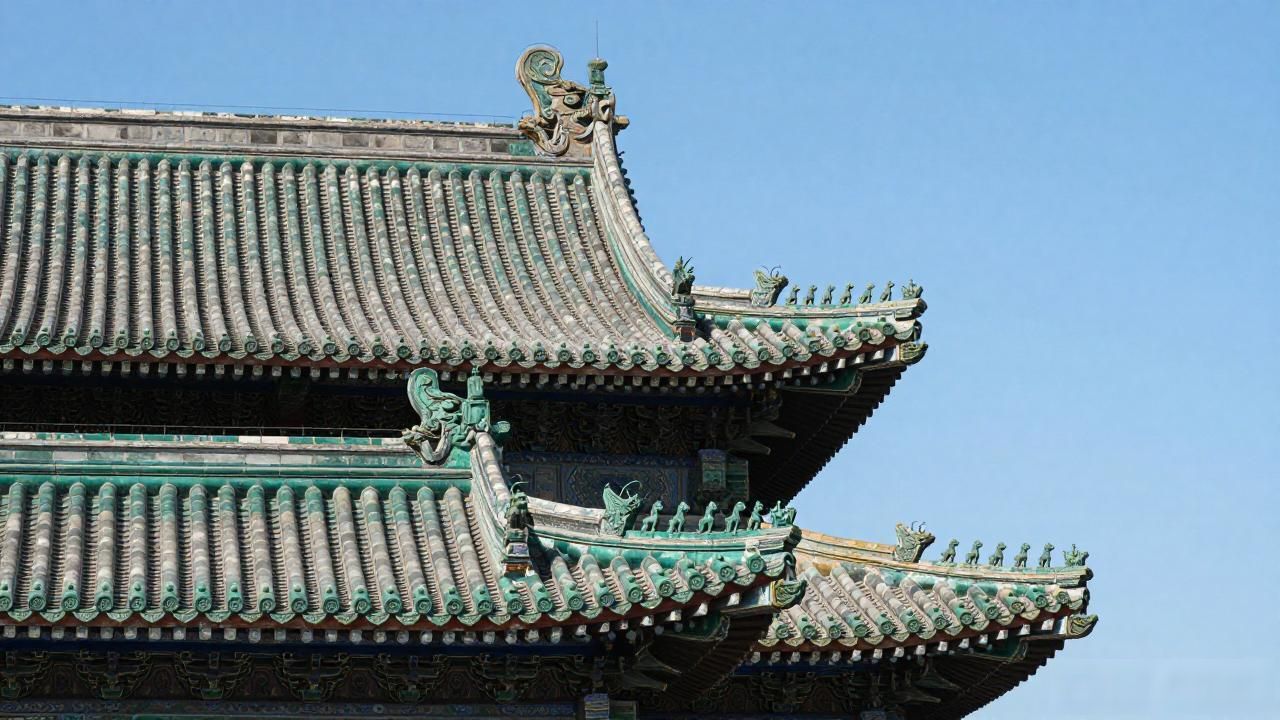
Roof design reveals another layer of intention. In traditional Chinese architecture, roof curvature isn’t decoration — it’s structural engineering refined over centuries. The sweeping eaves, upward-curving corners,and decorative ridge figures all serve functional purposes while carrying deep symbolic weight. The number of mythical creatures lining a roof edge indicates the building’s importance. Only the Hall of Supreme Harmony features the rare ten-figure ridge, a distinction reserved for the most sacred imperial structure. Below, the triple-tiered marble terrace rises nearly seven meters, elevating the hall above everyone who approaches it. The stairs alone take up an entire courtyard, forcing visitors to walk slowly, deliberately, upward toward imperial authority. Stone railings carved with flowing clouds and dragons wrap the terrace, each detail reinforcing the message that this space belongs to someone above mortals.
Color tells its own story. Imperial yellow — reserved exclusively for the emperor — covers nearly every roof in the complex. This wasn’t Simply aesthetic preference. Yellow symbolized centrality and supremacy in Chinese cosmology, linked to the earth element and the center of the five directions. Contrasting blue-green glazes on subsidiary buildings, red palace walls, and white marble platforms create a palette that would be nearly impossible to replicate today without special permission from the State Administration of Cultural Heritage. The color system functioned as an invisible hierarchy, one that any visitor could read at a glance, understanding immediately who held power and who did not.
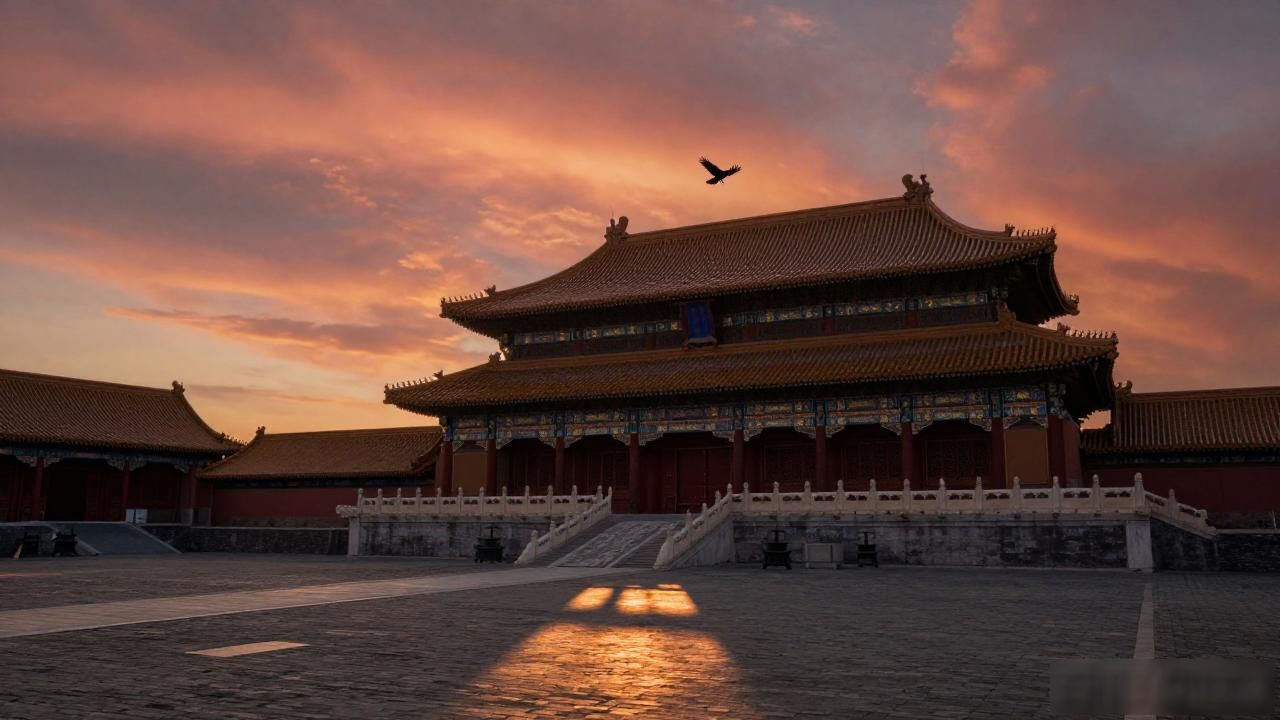
I still remember standing in front of the Gate of Divine Prowess at dusk, watching shadows stretch across the enormous courtyard. A single crow circled above the highest roofline. No crowds, no noise — just ancient wood and stone holding centuries of silence. That moment made something click inside me. Architecture like this doesn’t merely shelter people. It outlives them. The Palace Museum stands today not Because it was well built, but Because every beam, every tile, every stone was placed with intention so precise that time itself could barely erode its meaning.