
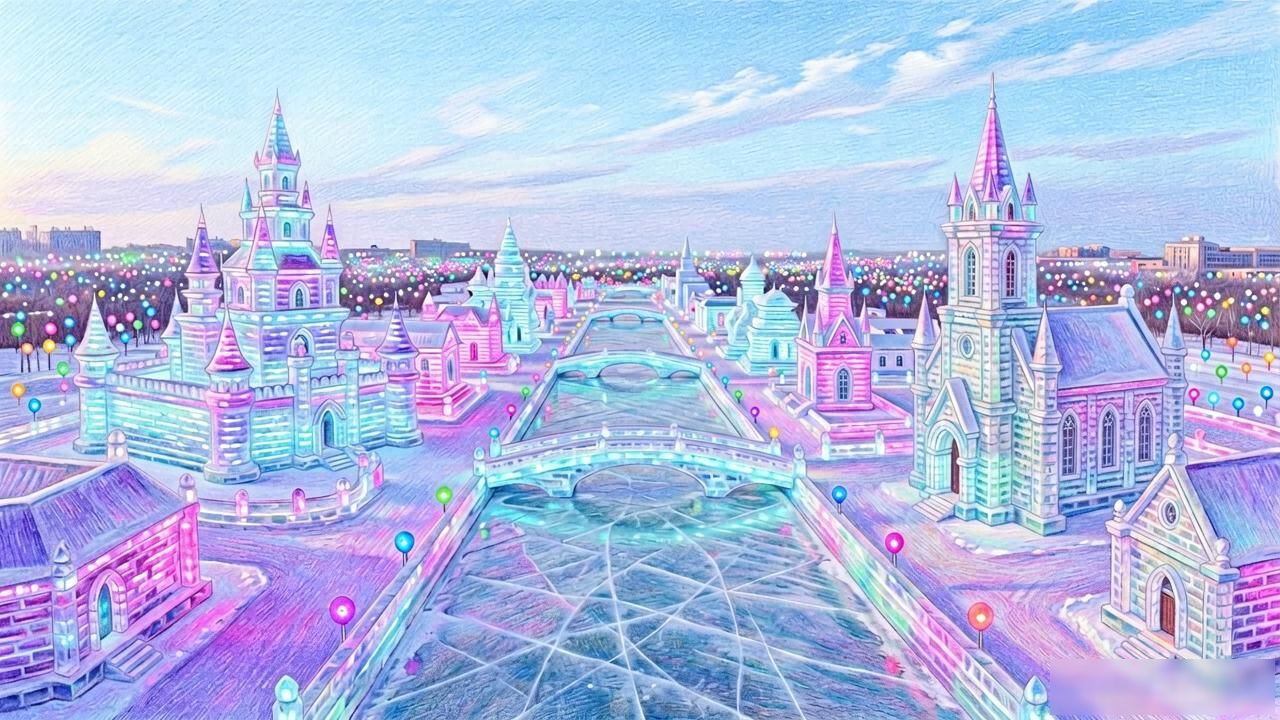
Harbin is not a city you simply visit during winter, it is a city you enter headfirst into another world. The Songhua River becomes a frozen highway, the air smells of sugar and cold iron, and every surface glows like something between a dream and a memory. I have walked these streets through half a dozen winters now and I still find myself stopping mid-step at ordinary corners, surprised by how much light and color can exist in temperatures that cut through your gloves.
What makes Harbin winter scenery so special to see

The magic here starts with scale. The Harbin Ice and Snow Festival transforms entire city blocks into structures carved from river ice, each one lit from within in colors that look impossible in daylight. These are not temporary decorations, they are massive architectural works grown from frozen water and painted with light,rising like cathedrals in the middle of a metropolis. The largest ice sculpture in the world has stood here, taller than a ten-story building, glowing blue and violet against the black sky, and visitors who arrive expecting a theme park often leave feeling quietly shaken by what they have witnessed.
But the true character of Harbin winter lies in the spaces between the festival grounds. The Central Street becomes a slow river of humanity, its Russian colonial facades capped with snow, while tram bells ring somewhere in the distance and steam rises from street food stalls into the frozen air. The Saint Sophia Cathedral stands at the center of it all, its onion domes wrapped in snow that catches every available light source, and couples and families gather on its steps as if posing for a photograph that could belong to any postcard ever made.
Where to experience the best winter scenery in Harbin
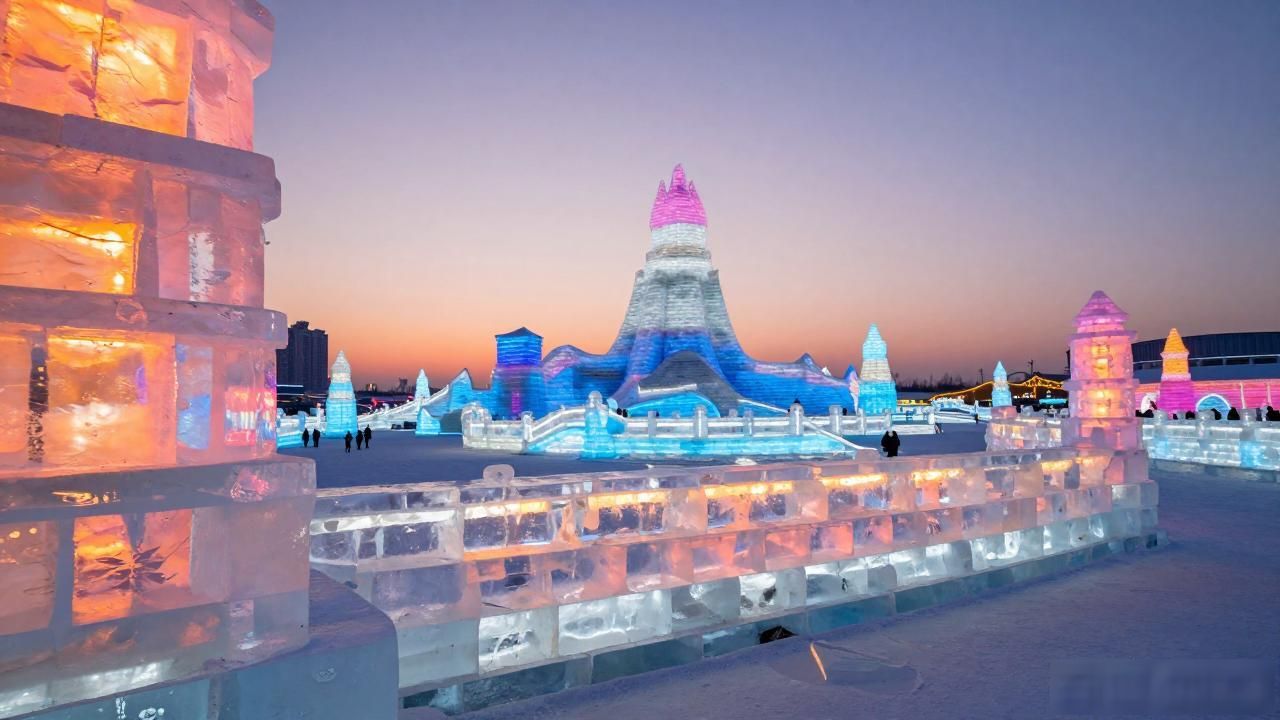
The festival area itself, known locally as the Ice and Snow World, deserves its own visit on two separate occasions. Go once in the late afternoon when the sun is still low enough to fill the ice walls with amber and rose light, and return after dark when the electric displays take over and the entire park becomes a galaxy anchored to the ground. The contrast between these two versions of the same place is something no camera will ever fully capture, and most photographers I know regret leaving too early both times.
A short distance away, the Sun Island Scenic Area offers a different kind of winter beauty, one built from snow rather than ice. The snow sculptures here are finer and more detailed, often depicting scenes from Chinese mythology or modern city life, and the open fields allow you to see them from angles you cannot find at the main festival site. The frozen Songhua River itself is worth a walk, especially in the morning when locals skate, sled, and play games on its surface, turning an entire river into a neighborhood playground that stretches for kilometers.
When is the best time to see Harbin winter scenery
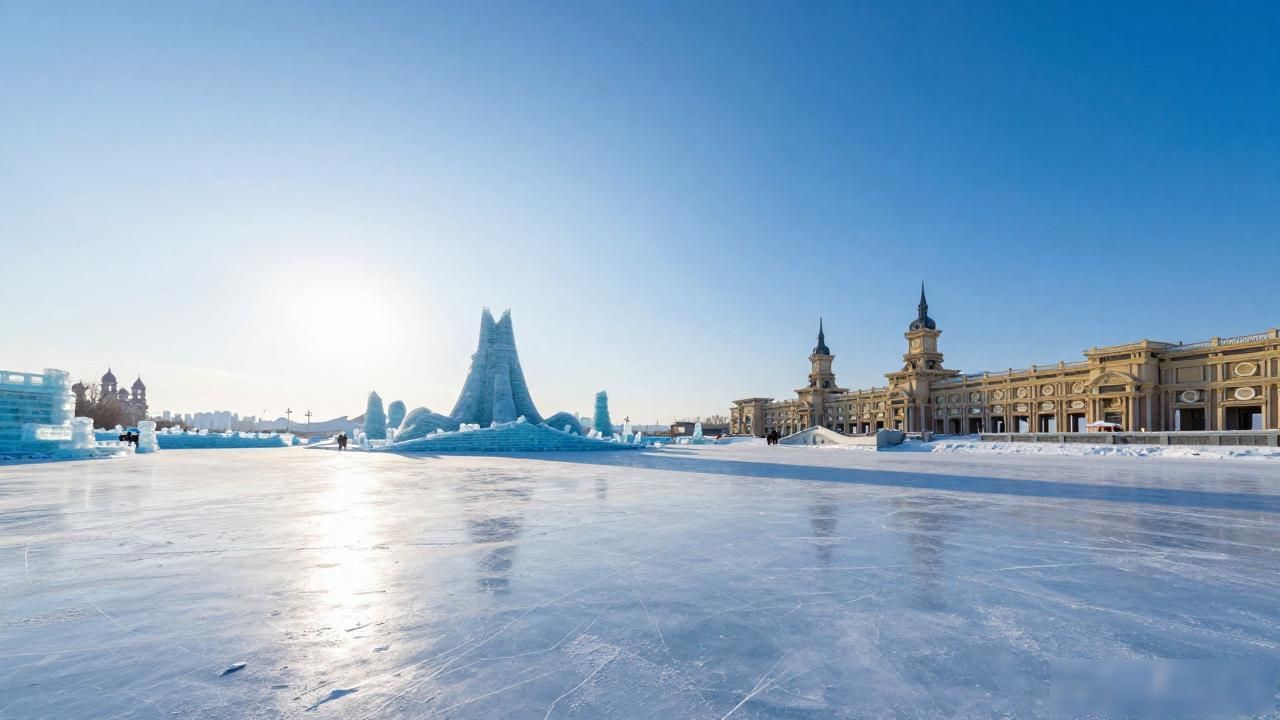
Mid-December through February is the window, though the festival usually opens around early January and runs until late February depending on weather conditions. The coldest weeks bring the clearest ice and the sharpest light, which is why professional photographers prefer January, but the crowds are also at their peak. Late February offers thinner crowds and warmer afternoons while the sculptures are still holding their shape, making it a pragmatic choice for travelers who prioritize comfort over raw temperature extremes.
The evenings grow long and dark well before sunset, which means the illuminated sculptures remain visible from roughly four in the afternoon until ten or eleven at night. A practical trick most guidebooks miss is that the first weekend after the festival opens tends to be less crowded than the second weekend, while the last ten days before closing often see reduced operating hours on some sculptures due to melting. Arriving with this kind of information changes the entire experience, turning a rushed tourist visit into something that actually feels like stepping into the city’s true winter soul.