
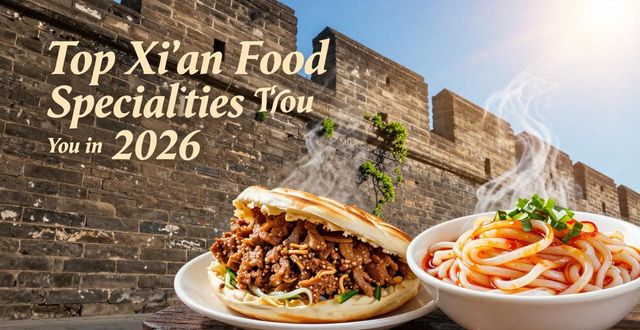
When traveling to Xi’an, the ancient capital of China, you will quickly discover that the city’s food is as rich and layered as its history. Xi‘an food specialties are famous for bold flavors, hand-pulled noodles, hearty stews, and a unique blend of Central Asian and Han Chinese influences. From the world-renowned Muslim Quarter to small family-run stalls, every bite tells a story. In this guide, I’ll walk you through the must-eat dishes, explain how to order them, and share tips to help you eat like a local.
What makes Xi’an food unique from other Chinese cuisines
Unlike the sweet dishes of Shanghai or the spicy hotpots of Sichuan, Xi‘an cuisine relies heavily on wheat, lamb, and a savory spice profile that includes cumin, star anise, and Sichuan pepper. This is because Xi’an was the starting point of the ancient Silk Road, bringing in Central Asian ingredients and cooking methods. You will notice many dishes are served with flatbreads or noodles rather than rice. The use of lamb is also much more common here than in eastern or southern China, where pork dominates.

Another key difference is the importance of vinegar and chili oil. Most noodle dishes come with a dark Zhenjiang vinegar and a fragrant, moderately spicy chili oil that you can adjust to your taste. The combination creates a tangy, numbing, and slightly smoky flavor that is hard to find elsewhere. Locals often say that Xi‘an food is “heavier” but more satisfying, especially in cold weather. Once you try a bowl of Biang Biang noodles, you’ll understand why this cuisine stands completely apart.
How to find the best Yangrou Paomo in the Muslim Quarter
Yangrou Paomo is a lamb soup with crumbled flatbread, and it’s arguably the most iconic Xi’an food specialty. To find the best bowl, head to the Muslim Quarter (Huimin Jie) after 11 a.m. but before 6 p.m. to avoid crowds. Look for shops where locals are sitting on low stools, patiently tearing bread into tiny pieces. The size of the bread pieces matters: you want them about the size of a peanut. Smaller pieces absorb more soup but won‘t turn mushy if the broth is rich enough.
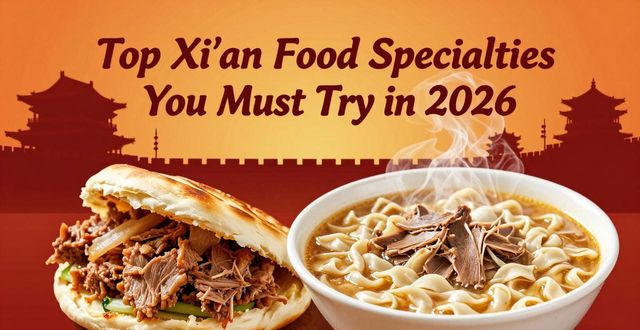
My personal favorite is Laoma Jia on Beiyuanmen Road. They use a 12-hour simmered lamb broth that’s clear yet deeply savory. When you order, you will receive a large bowl with a dry flatbread. Tear it with your fingers, then hand the bowl back to the counter. They will pour hot soup over the bread and add slices of tender lamb, vermicelli, and sometimes black fungus. Eat it with pickled garlic and a spoonful of chili oil. The soup should be consumed from the side of the bowl, never by stirring everything together – locals believe stirring ruins the texture.
Which noodle dish should you try first Biang Biang or Roujiamo
If you only have time for two noodle-based dishes, start with Biang Biang noodles and then Roujiamo (often called the Chinese hamburger). Biang Biang noodles are thick, belt-like hand-pulled noodles served with chili oil, minced pork, tomatoes, and boiled greens. The name comes from the sound the dough makes when slapped on the table. The texture is chewy and slightly slippery,and the sauce is spicy, sour, and aromatic. Order the “youpo” version, where hot oil is poured over raw garlic and chili powder right at your table – the sizzle is unforgettable.
Roujiamo, on the other hand, is not a noodle dish but a flatbread sandwich. The bread is baked in a clay oven until crispy outside and soft inside, then stuffed with finely chopped braised pork or lamb. For a truly Xi‘an experience, try the lamb Roujiamo from a stall that also sells Yangrou Paomo. The bread should be slightly charred, and the meat must be moist, not dry. Many travelers mistakenly eat Roujiamo like a burger, but the proper way is to hold it upright so the meat doesn’t fall out. Both dishes are widely available, but Biang Biang noodles are better for lunch, while Roujiamo makes a perfect portable snack.
A quick guide to ordering street food like a local
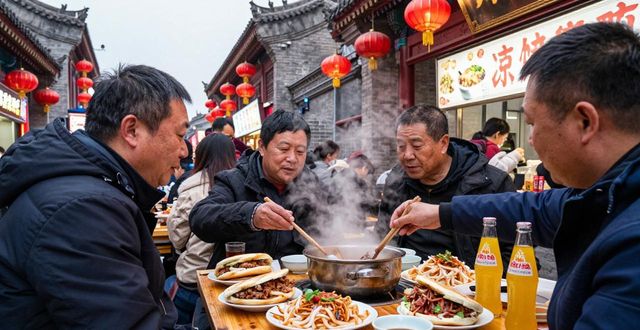
Street food in Xi‘an can be intimidating if you don’t speak Mandarin, but a few simple strategies will help. First, always point at what the person ahead of you is eating. Most stalls specialize in only one or two items, so if you see a long line, join it. Second, learn these phrases: “bu yao la” (no spice) or “yi dian dian la” (a little spice). Many vendors assume foreigners want mild food, but locals eat their noodles very spicy. I recommend starting with “half spicy” – you can always add more chili oil from the jar on every table.
Another insider tip is to carry small change. Most small food stalls do not accept cards or mobile payments from foreign accounts, so keep 10 and 20 RMB notes handy. Also, avoid the stalls that have no local customers, even if the owner speaks perfect English. The best food is usually found at places where you have to gesture and smile. Finally, drink yogurt or sour plum juice with your meal – the probiotics help with the rich lamb dishes, and the sweetness balances the heat. Now I have a question for you: Have you ever tried a dish that completely changed the way you think about a city’s food culture? Share your story in the comments below, and don’t forget to like and share this guide with your travel buddies
Honestly, your tip about tearing the flatbread into peanut-sized pieces for Yangrou Paomo brought back so many memories! I love how you explained the exact ‘local etiquette’—like not stirring the bowl and eating from the side to preserve the texture. It’s those little details that really separate a generic travel review from an authentic local experience. Thanks for sharing such a personal and practical guide!”