
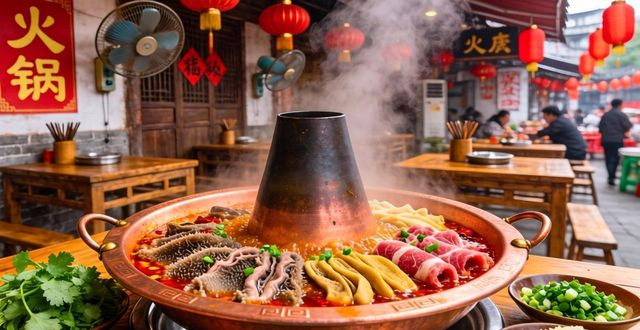
When travelers think of Sichuan cuisine, hot pot is usually the first dish that comes to mind. Both Chengdu and Chongqing offer world‑class hot pot experiences, but they are surprisingly different in flavor, atmosphere, and ingredient choices. After spending months eating my way through dozens of restaurants in both cities, I have put together this practical guide to help you find the best hot pot for your taste. Whether you prefer a numbing, aromatic broth or an explosive, oil‑heavy kick, this article will tell you everything you need to know before you dip your first slice of meat.
Chengdu or Chongqing which is better for hot pot
The short answer is that neither city is universally “better” – it all depends on what you are looking for. Chengdu hot pot is known for its complex, fragrant broth that balances chili heat with Sichuan peppercorns (hua jiao). The numbing sensation (ma la) is more pronounced, but the spiciness is often slightly milder, allowing the natural flavors of ingredients to shine through. Chongqing hot pot, on the other hand, is famously bold and aggressive. Its broth is thick with beef tallow, which gives it a rich, meaty depth, and the chili level can be overwhelming even for locals. If you want a smooth, aromatic experience, head to Chengdu. If you crave a fiery, gut‑warming challenge, Chongqing is your destination.

Beyond the broth, the eating culture also differs. In Chengdu, hot pot restaurants tend to be more relaxed and trendy, with creative dipping sauces and a wider variety of non‑spicy broths (like mushroom or tomato) for those who need a break. Chongqing eateries are often no‑frills, hole‑in‑the‑wall joints where the only choice is red oil, and the air is thick with steam and laughter. Neither style is superior; they simply cater to different moods. For first‑time visitors, I recommend starting in Chengdu to build your tolerance, then moving to Chongqing for the real test.
How to order hot pot like a local
Ordering hot pot can be intimidating if you do not read Chinese, but a few simple tricks will make you feel like a regular. First, always ask for “yuan yang guo” (split pot) – one side spicy red oil, the other side plain broth. This gives you a safe zone to cook vegetables or tofu while you gradually explore the spicy side. Many restaurants in both cities now have English menus or picture cards, but learning the words for “beef” (niu rou), “lamb” (yang rou), and “mushroom” (xiang gu) will go a long way. Do not be shy about pointing at what the next table is eating; locals do that all the time.
Next, understand the dipping sauce ritual. Unlike Japanese shabu‑shabu, Sichuan hot pot does not use raw egg or ponzu. The classic Chengdu‑Chongqing dipping sauce is simple: raw garlic, chopped cilantro, and a spoonful of sesame oil (zhi ma you). You can add a dash of vinegar or soy sauce, but resist the urge to add more chili – the broth already provides plenty of heat. The sesame oil cools down the spicy food and coats your throat, reducing the burning sensation. Many tourists skip this step and regret it. Also, remember to stir the pot occasionally so the ingredients do not stick to the bottom, and always cook tripe or other offal using the “seven‑up, seven‑down” method (dip in the boiling broth for a few seconds, lift, repeat) to keep it tender.
What are the must-try hot pot ingredients
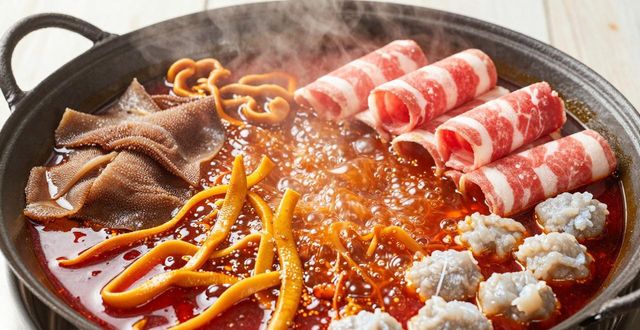
To truly enjoy Chengdu and Chongqing hot pot, you need to go beyond the usual beef and shrimp. The signature ingredient is “niu bai ye” (beef omasum, a type of tripe) – it has a delicate, crunchy texture that soaks up the broth perfectly. When you order it, look for fresh, greyish‑white pieces; frozen ones are inferior. Another local favorite is “ya chang” (duck intestine), which requires precise timing: dip it for exactly 10 to 15 seconds until it curls slightly, then eat it while still crisp. For a milder option, try “hua yu” (sliced grass carp) or “xia hua” (pork kidney slices). Vegetables like lotus root, potato, and napa cabbage work well in the non‑spicy side, but avoid leafy greens in the spicy broth – they become oil sponges.
You should also explore the “xia jian” (lunch meat or spam) and “tou pi” (bean curd sheets). In Chongqing, it is common to order “mao xue wang” (duck blood curd) – a silky, iron‑rich block that absorbs flavor like tofu. For the adventurous, “zhu nao hua” (pork brain) has a creamy, mousse‑like texture when cooked thoroughly. Do not forget the carbohydrates: at the end of the meal, ask for “mian tiao” (hand‑pulled noodles) or “fan tuan” (rice cakes) to cook in the remaining broth. This is the most satisfying way to finish a hot pot session. And always order a cold drink – local beer (like Chongqing Beer) or a bottle of sour plum juice (suan mei tang) cuts the grease and refreshes your palate.
Where to find authentic hot pot in Chengdu and Chongqing
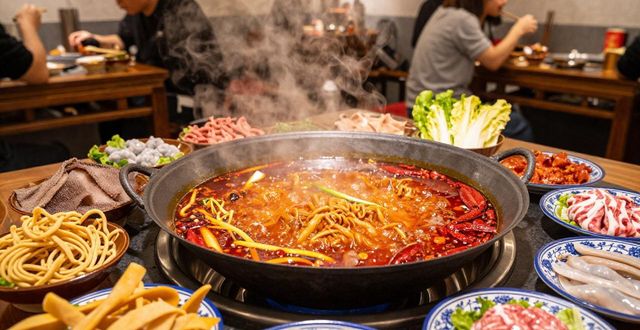
In Chengdu, skip the tourist‑trap chains near Jinli Street. Instead, head to “Da Miao Hot Pot” (大庙火锅) in the Yulin neighborhood – it has been serving a balanced, aromatic broth for over 20 years. Another excellent choice is “Chuan Xi Ba Zi” (川西坝子), where you can pick fresh ingredients from open refrigerators. For a more modern vibe, “Xiao Long Kan” (小龙坎) offers consistent quality and English menus, though it is slightly pricier. If you want a truly local experience, look for a restaurant with a long queue of office workers at lunchtime – that queue never lies. Avoid places that advertise “international buffet” or have staff shouting in English outside; those are rarely authentic.
In Chongqing, the benchmark is “Pei Jie Hot Pot” (佩姐火锅) on Jiefangbei. Their nine‑grid pot (jiu gong ge) is legendary – each compartment has a different temperature, allowing you to cook tripe, meat, and vegetables simultaneously without searching for lost ingredients. For a more rustic setting, try “Dong Zi Old Hot Pot” (洞子老火锅), located in a former air‑raid shelter; the damp, cave‑like atmosphere adds to the experience. “Liu Yi Shou” (刘一手) is a reliable chain with branches throughout the city,perfect if you are nervous about language barriers. Remember that Chongqing hot pot gets spicier as the meal goes on because the broth reduces and concentrates. Order a side of “la you” (chili oil) only if you are absolutely sure – and have yogurt ready.
Now I want to hear from you: Have you tried hot pot in either Chengdu or Chongqing, and which ingredient or restaurant surprised you the most? Share your story in the comments, and if this guide helped you, give it a like and pass it along to fellow food lovers.