
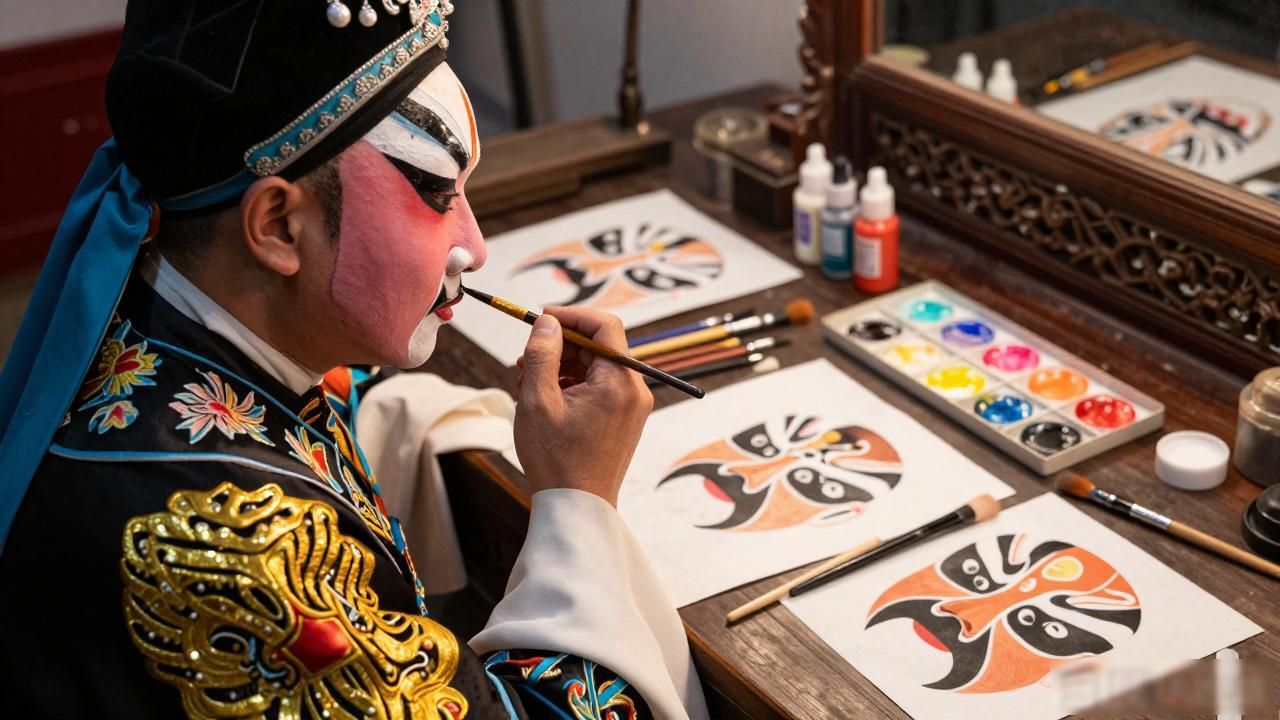
Sichuan Opera makeup is not just about decoration—it tells the audience who a character is before a single word is spoken. The colors, lines, and patterns reveal personality, status, and even fate. Understanding these techniques requires looking at both the symbolic language behind the paint and the practical skills used to apply it.
What do the colors in Sichuan Opera makeup mean

The most important thing to know is that every color has a job. Red stands for loyalty and bravery, often used for heroic generals. Black represents honesty and roughness, like the fierce but upright Zhang Fei. White signals cunning or betrayal, famously seen on the scheming Cao Cao. Blue and green suggest fierce or supernatural beings, while yellow means fierceness and ambition. Gold and silver are reserved for gods, spirits, and mythical creatures.
A single character’s face can combine two or three colors, with the dominant color spread across the forehead, cheeks, and chin. The secondary colors are applied around the eyes and mouth to highlight specific traits. For example, a red base with black stripes around the eyes can show a brave but hot-tempered warrior.
Artists like Liao Jun, a master of Sichuan Opera, emphasize that the color placement is not arbitrary. It follows oral traditions passed down for centuries. Knowing the color code is the first step to understanding the performance itself.
How do performers apply the makeup step by step
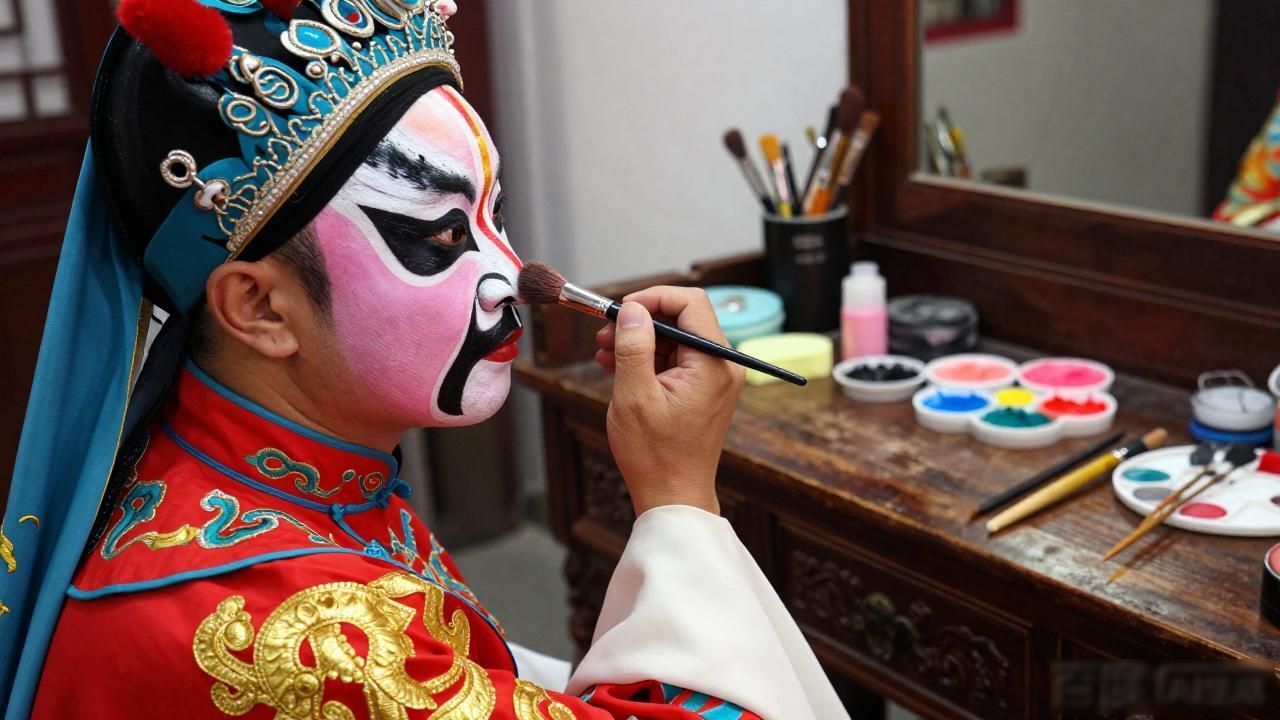
The process begins with a clean,oil-free face. A thin layer of base cream is applied to protect the skin. Then white or flesh-colored foundation is spread evenly as the base, covering the entire face and neck. After that, the dominant color is painted using a sponge or brush, starting from the forehead and working downward.
Once the base color dries, artists outline the eyes, eyebrows, and mouth with black or dark ink. These lines are often exaggerated—eyebrows might stretch up toward the hairline, and eye corners are drawn sharply outward. This distortion helps the expressions read clearly from far away, especially under stage lights.
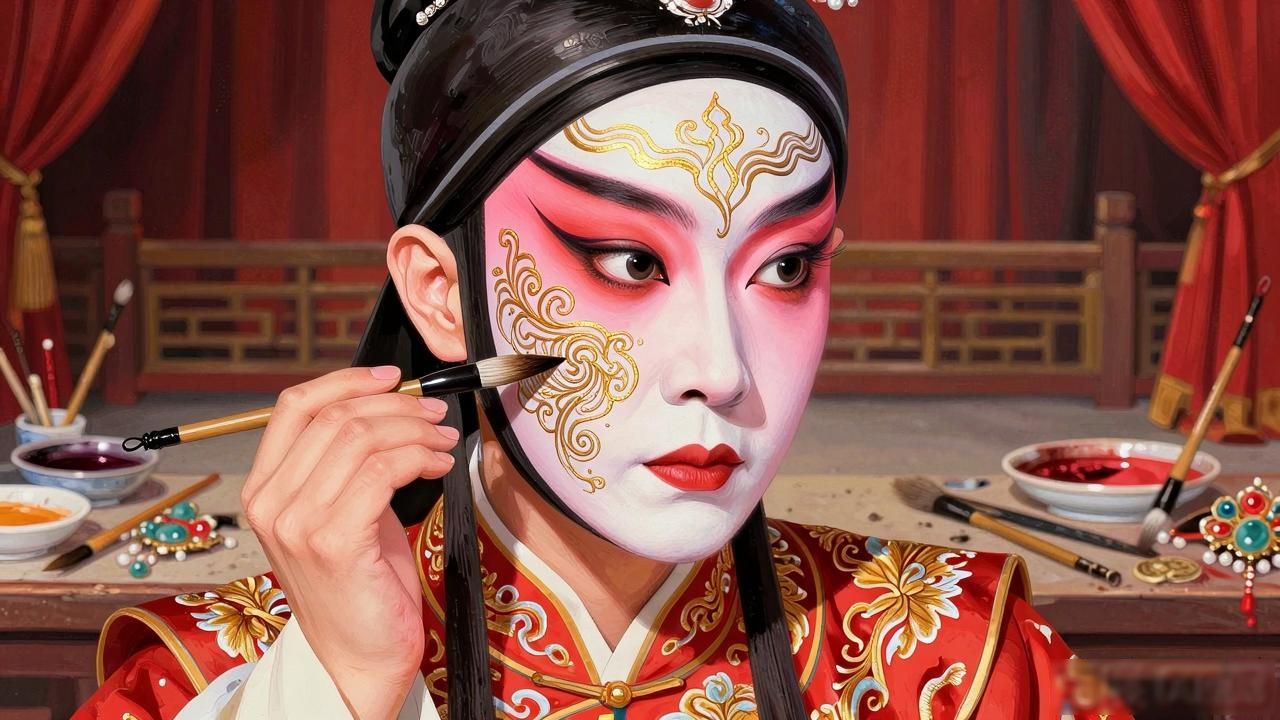
The final step is adding decorative patterns: swirls, waves, or animal shapes on the cheeks or forehead. These are done with fine brushes and require steady hands. Some performers spend up to two hours on a single makeup application, especially when multiple colors and complex designs are involved.
Speed and precision come with practice. Many performers train for years to apply their own makeup without mirrors, relying on muscle memory and touch. This skill is especially important during quick-change acts, known as bian lian, where masks are swapped in seconds. The makeup underneath must match the next character perfectly.