
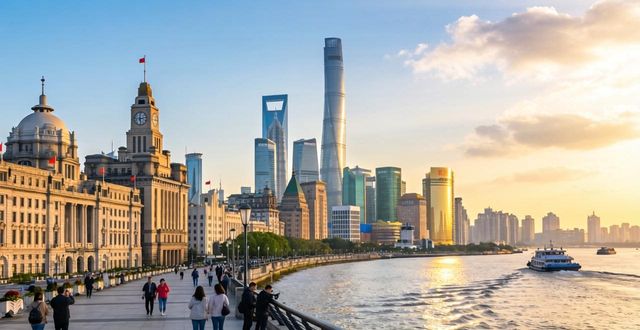
Shanghai is one of China’s most exciting cities, blending futuristic skylines with deep-rooted history. This guide covers the must-see attractions, practical tips, and local insights to help you plan an unforgettable trip.
What to see in Shanghai for a first visit

Start your journey on the Bund, where colonial-era buildings face the dazzling Pudong skyline across the Huangpu River. Walk along the promenade early in the morning or after sunset for the best views. Just behind the Bund, the narrow lanes of the Old City lead to the Yu Garden, a classical Ming Dynasty garden with rockeries, ponds, and pavilions. Nearby, the City God Temple offers a lively market for snacks and souvenirs. For a taste of old Shanghai, explore the French Concession, with its tree-lined avenues, art deco architecture, and boutique cafés. Don’t miss the Shanghai Tower, the second tallest building in the world, for a breathtaking panorama from its observation deck on the 118th floor. If you have time, take a day trip to Zhujiajiao Water Town, an ancient canal village about an hour from downtown.
How to get around Shanghai easily

Shanghai’s metro system is one of the best in the world, covering almost every major attraction. Buy a Shanghai Public Transportation Card or use Alipay to scan QR codes at turnstiles. Taxis and ride-hailing apps like Didi are affordable, but avoid rush hours between 8–10 AM and 5–7 PM. Walking is ideal for short distances, especially in the French Concession or along the Bund. For a unique experience, take the Maglev train from Pudong Airport to Longyang Road Station, reaching speeds of 431 km/h in just seven minutes. Bicycles are also a good option for short hops, and you can rent them through mobile apps like Meituan or HelloBike,though bike lanes can be chaotic. Always keep your passport with you, as police checks are common near train stations and tourist spots. Download a VPN before you arrive, since many Western websites and apps are blocked in China.
Where to eat and stay on any budget
For food, start your day with a bowl of shengjianbao, pan-fried pork buns, from a local shop. Din Tai Fung offers reliable xiaolongbao, while street stalls along Huanghe Road serve affordable noodle soups and skewers. For a splurge, book a table at Ultraviolet, a multi-sensory dining experience. In terms of accommodation, budget travelers can find hostel dorms near People’s Square for under 200 RMB per night. Mid-range hotels in the French Concession or Jing’an district offer comfort and style for around 500–800 RMB. Luxury hotels like the Waldorf Astoria on the Bund or the Ritz-Carlton in Pudong provide top-tier service and iconic views. Book early if you plan to visit during Chinese New Year or National Day holidays, when prices spike and rooms sell out fast.
Essential tips for a smooth trip
Carry cash or a WeChat Pay account, as many smaller vendors don’t accept international credit cards. Always have your hotel’s name and address written in Chinese to show taxi drivers. Learn a few basic phrases like “xièxiè” (thank you) and “duōshao qián” (how much), as English is not widely spoken outside hotels and tourist sites. Tap water is not safe to drink, so buy bottled water or boil it. Tipping is not customary in China, and may even be refused. Keep your belongings secure in crowded areas like metro stations and markets, though violent crime is very rare. Finally, check the air quality index before outdoor activities, and bring a face mask if pollution levels are high. With these tips, you’ll navigate Shanghai like a local and make the most of your visit.