
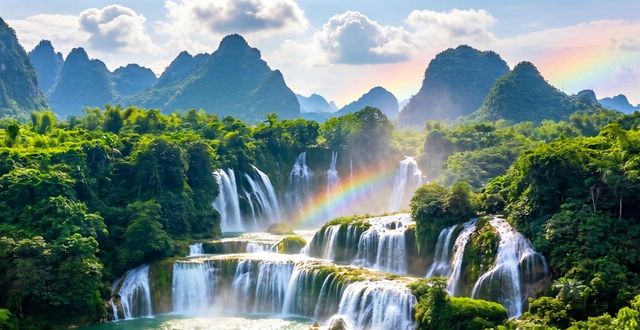
Nestled on the border between China and Vietnam, the Detian-Ban Gioc Waterfall is one of Southeast Asia’s most stunning natural wonders. Stretching across two countries, this waterfall offers a rare chance to experience a shared landscape that is both majestic and peaceful. For travelers exploring Vietnam or southern China, it’s a scenic detour that rewards with breathtaking views and cultural encounters.
How to visit the waterfall from both sides

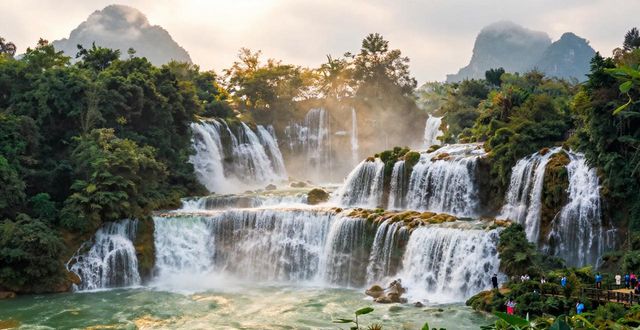
Accessing the waterfall depends on which country you start from. On the Chinese side, the waterfall is part of the Detian Waterfall Scenic Area in Guangxi Province, near the town of Shuolong. You can take a bus from Nanning or Chongzuo,and the journey takes about four hours. The entrance fee is around 80 RMB, and once inside, you can walk along wooden pathways that lead directly to the base of the falls. Bamboo rafts are available to get you closer to the spray, and you can even cross a small section of the river to stand on Vietnamese soil briefly.
On the Vietnamese side, the waterfall is called Ban Gioc and sits in Cao Bang Province. It’s less developed, which means fewer tourists and more raw nature. Most visitors drive from Hanoi, a trip of about six hours. You can rent a motorbike or join a tour. The entrance fee is around 45,000 VND, and local guides often take you on small boats to the foot of the waterfall. The experience feels more intimate, with local vendors selling snacks and handmade souvenirs along the riverbank.
Is the waterfall worth the trip
Many travelers hesitate because the waterfall is far from major cities. But the journey itself is part of the appeal. The surrounding countryside is filled with limestone peaks, rice paddies, and small villages. You will encounter ethnic minority communities, such as the Zhuang on the Chinese side and the Tay on the Vietnamese side. Their daily life, from farming to market trading, adds depth to the trip.
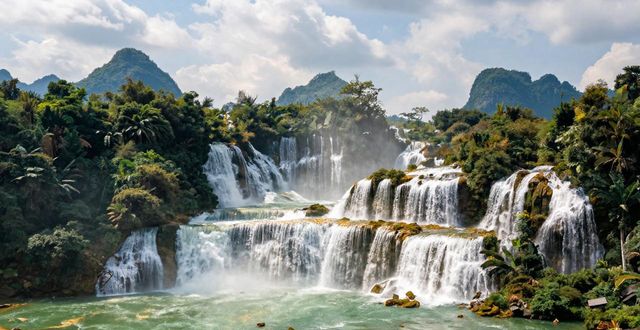
The waterfall itself is about 70 meters tall and 200 meters wide, making it the largest跨国 waterfall in Asia. The best time to visit is between June and October, when the rainy season fills the river. During dry months, the water flow decreases but the scenery remains beautiful. You can spend a full day exploring the area, taking photos, and enjoying local food. On the Chinese side, try the sour fish soup. On the Vietnamese side, don’t miss the grilled sticky rice.
For photographers and nature lovers, this spot delivers. The mist rising from the falls creates rainbows, and the layered cliffs behind the water make for dramatic compositions. Even if you only have a few days in the region, a day trip here is worth the effort. It’s not just a waterfall. It’s a place where two cultures meet over a shared natural treasure.