
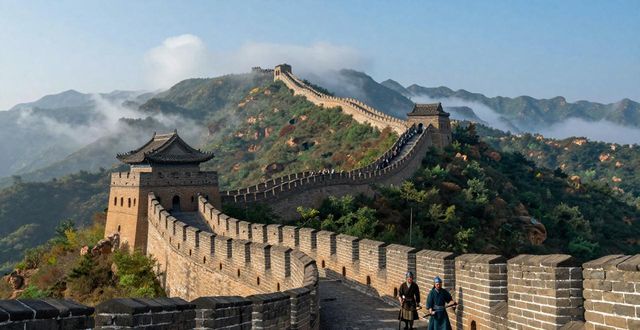
The Great Wall of China is one of the most recognizable structures in the world, but many people don’t know how it was actually built. Stretching over 13,000 miles across mountains, deserts, and plains, its construction was not a single project but a series of efforts spanning more than two thousand years. The wall was built by different Chinese dynasties for defense, communication, and border control. Most of what we see today comes from the Ming Dynasty, which used advanced techniques and massive labor forces. Understanding the construction of the Great Wall helps us appreciate not just the scale of the work, but the ingenuity and hardship behind it.
Why Did They Build the Wall in Such Difficult Places

One of the first things people wonder is why the wall was built across such rugged and remote terrain. The reason is simple: the wall was designed to follow natural barriers like mountain ridges and steep cliffs. By building on high ground, defenders could spot enemy movements from far away and use the height as a tactical advantage. In many sections, the wall itself is not just a wall but a series of watchtowers, beacon towers, and garrison stations. These were placed at regular intervals so that smoke signals or fire beacons could quickly send warnings across long distances. Building on mountains also made it harder for invaders to approach with siege weapons. Horses and carts could not easily climb the steep slopes, so the wall acted as both a physical barrier and a psychological one. The builders did not have the luxury of choosing flat, easy land. They had to place the wall where it would work best, even if that meant cutting through rock or hauling materials up dangerous cliffs.
What Materials Did They Use and Where Did They Come From
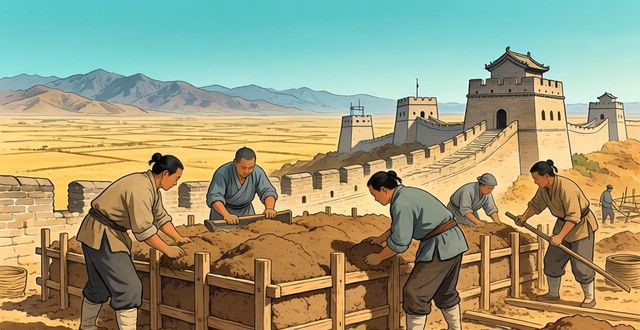
The materials used in the Great Wall changed depending on the region and the time period. In the early days, builders used rammed earth, which is simply soil packed tightly between wooden frames. This method was cheap and effective in the flat plains of northern China. In the mountains, workers used local stone, breaking it into rough blocks and stacking them without mortar. In some places, they even used bricks made from kiln-fired clay, especially during the Ming Dynasty. These bricks were uniform in size and much stronger than mud or stone alone. What is surprising is that almost all materials were sourced locally. It was too expensive and slow to transport stone or bricks over long distances. So if a section of the wall was being built near a forest, workers might use timber for support structures. If it was near a river, they might use river stones. In the Gobi Desert,where little wood or stone was available, they used a mix of sand, gravel, and tamarisk branches. This shows that the builders were practical and adapted to whatever the environment gave them.
How Did They Manage the Huge Workforce
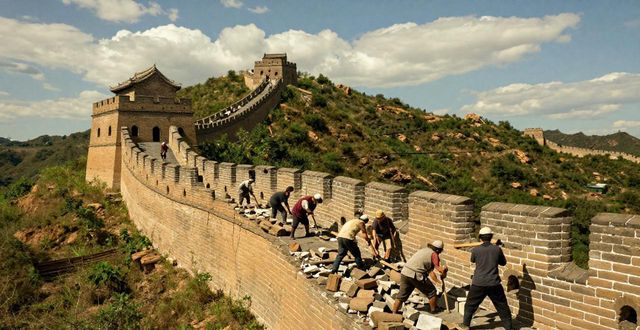
Building the Great Wall was not just about materials and design. It was also about people. The workforce included soldiers, peasants, prisoners, and even scholars who had fallen out of favor with the emperor. At the peak of construction during the Ming Dynasty, over a million people may have been involved. Workers were organized into teams, each responsible for a specific section of the wall. They lived in temporary camps near the construction site, often in harsh conditions. Food and water had to be brought in from nearby villages, which put a heavy burden on local communities. Many workers died from accidents, starvation, or disease, and it is said that their bodies were buried inside the wall itself. While this might be an exaggeration, it reflects the brutal reality of the project. The work was dangerous and unforgiving, but the central government saw it as a necessary investment for national security. Supervisors kept strict records of progress and punished those who fell behind. Despite this, the wall was built with remarkable precision, especially the Ming sections, which still stand today after more than 400 years of weather and war.
The construction of the Great Wall was a monumental achievement that combined military strategy, engineering skill, and enormous human effort. It was not a single wall but many walls built over centuries, each adapted to the local landscape and available resources. Today, it stands not just as a tourist attraction but as a reminder of what people can achieve when they work together under extreme conditions. Whether you are a history lover or a curious traveler, understanding how the wall was built gives you a deeper respect for the people who shaped it.