
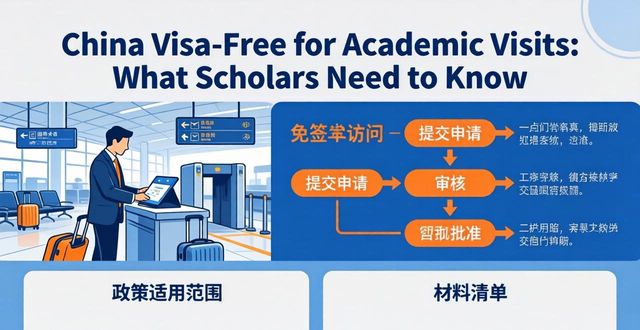
China has recently expanded its visa-free policies to include academic visitors, a move that simplifies entry for scholars, researchers, and students from eligible countries. This policy allows short-term academic stays without the traditional visa application process, which often involved lengthy paperwork and waiting periods. For foreign academics planning conferences,collaborative research, or teaching engagements, this change removes a significant bureaucratic hurdle, making China more accessible for scholarly exchange.

How does the visa-free policy work for academic visits
The policy applies to citizens of specific countries who hold valid passports and meet certain conditions. Eligible travelers can enter China without a visa for academic purposes such as attending academic conferences, conducting short-term research, or delivering guest lectures. The stay is typically limited to 15 to 30 days, depending on the specific agreement with each country. To benefit, scholars must arrive through designated ports of entry and may need to present an invitation letter from a Chinese academic institution or host organization. It is important to check the official list of eligible countries and any updates, as the policy is periodically reviewed and expanded. For example, nationals from Singapore, Brunei, Japan, and several European countries are currently included, but the list changes. Before traveling, verify your eligibility through the Chinese embassy or consulate in your home country. Also, ensure your passport has at least six months of validity remaining. While the visa-free entry is convenient, it does not permit paid employment or long-term stays beyond the allowed period.

What documents should I prepare for a visa-free academic visit
Even without a visa, preparation remains key for a smooth entry. First, secure a formal invitation letter from your host institution in China. This letter should clearly state the purpose of your visit, dates, and details of the academic activity. It is advisable to have the letter in both English and Chinese. Second, carry a printed copy of your flight itinerary, hotel reservations, and proof of sufficient funds for your stay. Immigration officers may ask to see these documents. Third, register your accommodation with local police within 24 hours of arrival, as required by Chinese law. If you stay at a hotel, they will handle this automatically. For longer academic collaborations, consider a multiple-entry visa instead if your visit exceeds 30 days or involves frequent travel. Also, note that visa-free access typically allows only a single entry. If you plan to leave and return to China during your trip, a regular visa might be more practical. Finally, bring contact information for your host institution in case you need assistance at the border.

The visa-free policy for academic visits reflects China’s growing openness to international academic exchange. For eligible scholars, it cuts down on administrative delays and encourages more direct collaboration. However, careful preparation with the right documents and awareness of the policy’s limitations is essential to avoid complications at immigration. By understanding these requirements, foreign academics can take full advantage of this streamlined process and focus on their research and teaching activities in China.