
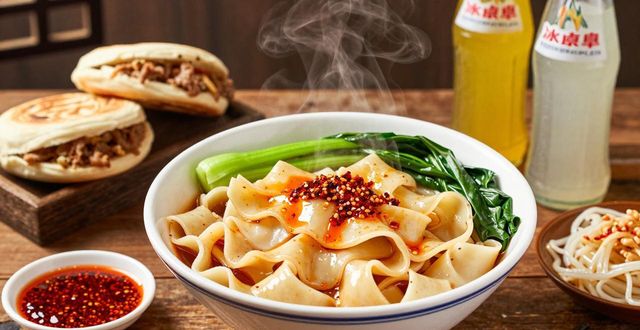
As a resident who has watched Xi’an’s culinary waves ebb and flow over the years, I see Xi’an food treasures not as static museum pieces, but as a dynamic interplay of history, coarse grains, and vibrant street life. Beyond the famed Terra Cotta Warriors, the city’s soul is truly tasted in its bustling Muslim Quarter alleyways, smoky street-side grills, and dough-stretched kitchens. For a traveler seeking authentic flavors, understanding these essentials transforms a simple meal into a cultural journey. This guide delves into the heart of the local food scene, moving past common tourist spots to reveal where you can savor the deep, historical flavors that define this ancient capital.
What are the must-try Xi’an food treasures for a first-timer?
Navigating Xi’an’s food scene can be overwhelming. The foundational must-try is the iconic biangbiang noodle. This belt-like noodle, hand-pulled to a spectacular length and width, is served in a large bowl with chili oil, minced pork, and vegetables. Its chewy texture and bold, savory sauce encapsulate the hearty character of Shaanxi cuisine. Another non-negotiable is the Yangrou Paomo,a stew of mutton soup, crumbled flatbread, and tender meat. The ritual of breaking the bread into thumbnail-sized pieces before the soup is poured over it is as integral to the experience as the rich, comforting flavor itself. Omission of this dish is akin to visiting Rome without seeing the Colosseum.
Where to find authentic Xi’an food on a budget

The greatest misconception among visitors is that fine dining is essential for authenticity. The reality is starkly different. For authentic and inexpensive food, the hunt begins in the local neighborhoods, especially the Beiyuanmen and Huimin Jie (Muslim Quarter). For Rou Jia Mo, often called the Chinese hamburger, avoid the glossy food courts and seek out the unassuming stalls with perpetual lines. A proper vendor will bake the crisp mo (flatbread) on a griddle all day and fill it with savory, slow-braised fatty pork that melts in your mouth, all for a handful of yuan. The same principle applies to cold-skin noodles (liangpi). The best versions are found in small eateries where you see the gelatinous starch being steamed into sheets fresh daily and served with a piquant mix of vinegar, chili, and mustard.
How to distinguish traditional Xi’an snacks from tourist traps
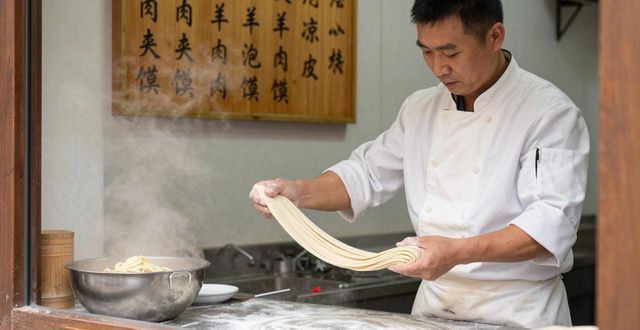
The clarity between a true culinary treasure and a mass-produced imitation lies in the process and location. Look for operations that specialize in one or two items. A chef laboriously pulling noodle dough in the shop window is a good sign, whereas a menu with dozens of photogenic “local dishes” often signals compromise. Additionally, specific dishes have specific origins. The tea-hued sweet rice porridge (Xifeng Maliangzhou) can, in its authentic form, still be found near the ancient city wall, simmered by vendors whose families have perfected the recipe for generations. Pay attention to the crowd composition. A place buzzing with local families or elderly residents enjoying a simple breakfast is always a safer and more rewarding bet than a restaurant with exclusively tourist clientele and picture menus on the street.
The beauty of Xi’an’s food treasures lies in their accessibility and unpretentious history. They are not revered in hushed, exclusive rooms but celebrated in the clatter of bowls and lively chatter of shared tables. By focusing on these fundamental tastes and seeking them out in their traditional habitats, you ingest more than just calories; you connect with the enduring, resilient spirit of a city that has been a crossroads of cultures and tastes for millennia.