
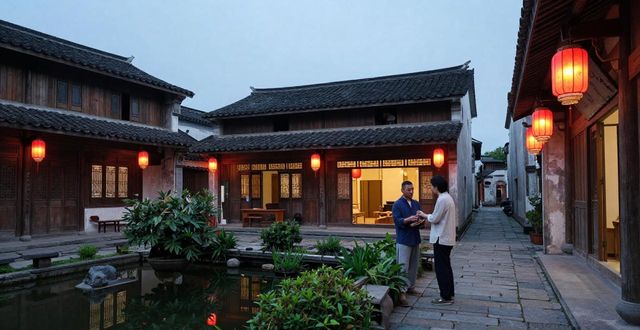
China’s old town architecture is a living tapestry woven from centuries of history, regional diversity,and profound cultural philosophy. It offers a tangible connection to the past far beyond what any museum can provide. For travelers seeking authentic cultural immersion, these ancient quarters are not mere backdrops but the heart of the Chinese historical and spiritual landscape. The harmony between the built environment, natural elements, and community life creates a uniquely serene and captivating atmosphere that feels worlds away from the glass and steel of modern megacities.
What defines the architectural style of Chinese old towns
The architectural style is not a single, uniform design but a rich collection of regional vernacular traditions, all governed by fundamental principles. The most prominent systems are the siheyuan (courtyard house) of northern China, famously seen in Beijing’s hutongs, and the waterways-and-courtyard layout prevalent in southern towns like Zhouzhuang and Tongli. These styles are deeply influenced by Feng Shui, emphasizing harmony with nature, directional orientation, and the flow of qi (energy).
Beyond the layout, the decorative elements speak volumes. Intricately carved wooden lattice windows, ornate brickwork, and the graceful sweep of upward-curving pagoda or residential roofs are hallmarks. The use of local materials—grey bricks, black tiles, and timber—gives these towns an organic feel, as if they grew from the land itself. This careful integration with the natural landscape, whether a river, mountain, or garden, is a core tenet, making the architecture feel settled and timeless.
How to experience daily life within China’s ancient towns
To move beyond sightseeing, one must slow down and engage with the town’s rhythm. Rise early and wander the cobblestone alleys as the locals do, observing the morning rituals: vendors setting up shop, residents practicing Tai Chi by a canal, or the scent of breakfast steaming from a family-run eatery. The magic often lies in the mundane details—the laundry hanging between buildings, the elderly playing Mahjong in a shaded courtyard, the sound of a wooden boat pole dipping into water.

Staying overnight in a traditional guesthouse, often a renovated old residence, is transformative. The experience allows you to hear the quiet of the town after the day-trippers leave and witness the soft glow of red lanterns reflecting on still water at dusk. Engaging with artisans in their workshops, whether a silk weaver, a bamboo craftsman, or a calligrapher, provides a deeper understanding of the living cultural heritage that these architectural spaces are designed to nurture and protect.
What are the best preserved old towns for foreign visitors
While China has countless ancient towns, some are particularly accessible and rewarding for international visitors. Pingyao in Shanxi province offers an exceptionally intact example of a Han Chinese walled city from the Ming and Qing dynasties, its fortress-like walls encircling a grid of traditional streets and courtyard banks. For the classic water-town experience, Zhouzhuang or Wuzhen near Shanghai present the iconic postcard scenes of stone bridges arching over canals lined with whitewashed houses.
For a more mountainous setting, Fenghuang in Hunan, with its stilt houses perched over the Tuo River, and Lijiang in Yunnan, a UNESCO site with a unique Naxi ethnic minority influence, offer stunning landscapes intertwined with ancient architecture. Each provides a distinct regional flavor, from the arid north to the lush, watery south, showcasing how local geography and culture shaped the built form. These towns have managed to preserve their essence while providing the necessary infrastructure for visitors.
The enduring appeal of China’s old towns lies in their ability to tell a human-scale story. They are repositories of collective memory, community spirit, and an aesthetic philosophy that values balance and tranquility. Walking their narrow lanes is a journey into a different pace of life, offering profound insights into the Chinese worldview. Protecting these spaces is not just about preserving bricks and mortar, but about safeguarding the soul of a civilization for generations, both local and global, to appreciate and learn from.