
Ming Qing dynasty architecture represents one of the most refined chapters in Chinese building history, spanning roughly 600 years from 1368 to 1912. Imperial palaces, temples, gardens, and residential compounds from this era showcase a mature aesthetic that balanced rigid symmetry with subtle ornamentation. Foreign visitors often find these structures both familiar and strangely alien, shaped by a philosophy of harmony between humanity and nature that Western architecture rarely replicates in quite the same way.
What defines Ming Qing dynasty architecture style
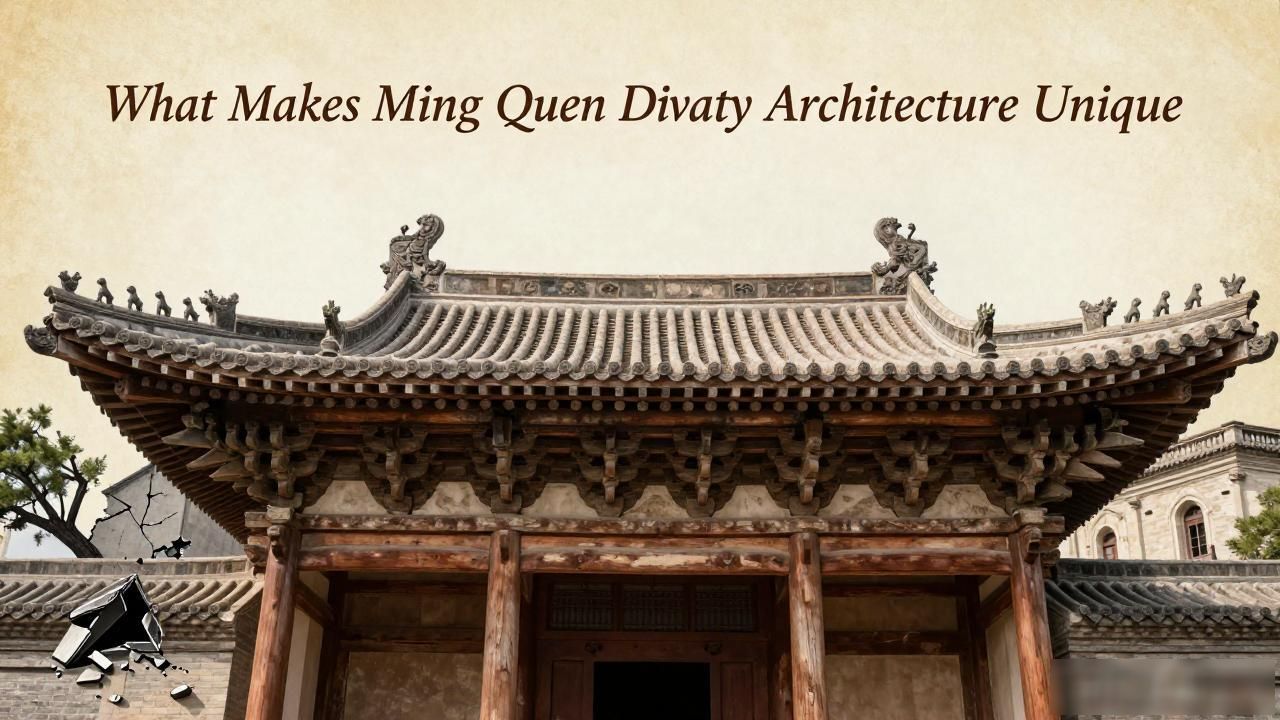
The visual language of this period is immediately recognizable. Curved hip roofs crowned with glazed tiles dominate the skyline of Beijing, Nanjing, and countless smaller cities across China. These sweeping rooflines are not merely decorative—they channel rainwater away from wooden structures in a climate where summer monsoons are relentless. The famous upturned eaves, often adorned with small mythical figures along the ridges, serve a practical purpose while carrying deep symbolic weight.

Wood became the primary material, and unlike the stone cathedrals of Europe, Chinese builders favored flexibility over permanence. Wooden frames could flex during earthquakes, a crucial advantage in a seismically active region. Bracket sets called dougong transfer roof weight onto columns without nails, a technique perfected over centuries and reaching its most elaborate form during the Ming and Qing periods.
Color palettes were strictly regulated by social hierarchy. The imperial palette—yellow glazed tiles, vermilion walls, and blue-green painted beams—was reserved for the emperor and his family. Ordinary citizens were prohibited from using these combinations, a system that turned every building into a visual statement about status and power.
How did Ming Qing dynasty architecture influence design

The architectural legacy of these two dynasties extends far beyond Chinese borders. Japanese and Korean builders studied Chinese imperial structures closely, adapting bracket systems and roof profiles to their own climates and tastes. The Forbidden City’s layout, with its nested courtyards and axial symmetry, became a template that echoed throughout East Asia.
In modern times, Chinese architects have revisited Ming Qing aesthetics with striking results. The National Centre for the Performing Arts in Beijing, designed by Paul Andreu, incorporates sweeping curved forms that recall traditional rooflines while employing cutting-edge engineering. Contemporary Chinese architecture increasingly blends historical vocabulary with global modernism, creating buildings that feel rooted yet forward-looking.
The gardens of Suzhou, many dating to or renovated during the Ming and Qing periods, continue to influence landscape architecture worldwide. Their principle of “borrowed scenery”—framing distant mountains or pagodas as living paintings—has found admirers among designers from Europe to North America who seek alternatives to rigid geometric layouts.
Why is Ming Qing dynasty architecture important today
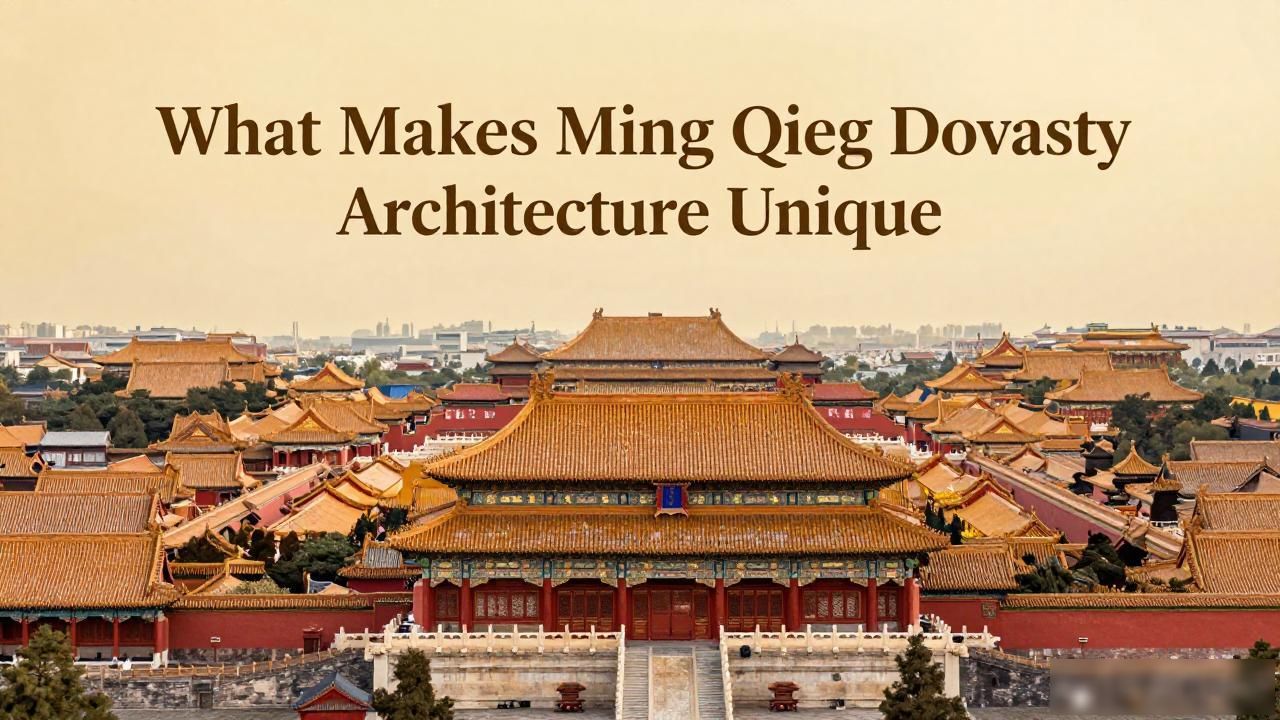
These structures survive as tangible links to a civilization that valued order, cosmology, and artistic refinement in equal measure. The Forbidden City houses over 9,000 rooms and remains the largest surviving wooden structure complex on Earth. Walking through its courtyards, one understands why UNESCO designated it a World Heritage site in 1987.
Beyond tourism and scholarship, Ming Qing architecture offers lessons in sustainable design. Traditional buildings used locally sourced materials, natural ventilation strategies, and passive cooling techniques that modern engineers are now studying for energy-efficient construction. The emphasis on harmony with the environment, rather than domination over it, resonates strongly in an age of climate crisis.
Preservation efforts face real challenges. Rapid urbanization has destroyed countless historic neighborhoods, and some restoration projects prioritize visual spectacle over authentic craftsmanship. The tension between modernization and conservation remains unresolved, but growing public interest and international support offer cautious optimism for the future of these irreplaceable structures.