
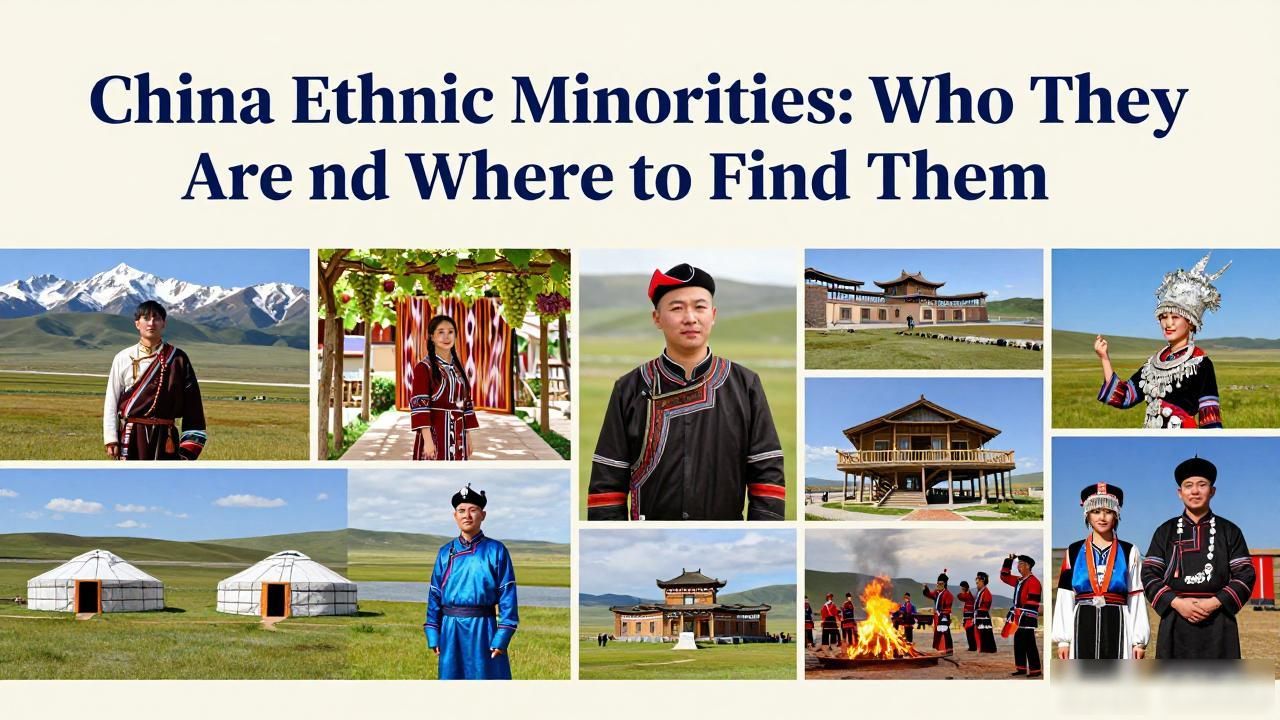
China is home to 56 officially recognized ethnic groups, with the Han Chinese making up about 91% of the population. The remaining 55 ethnic minorities, collectively known as shaoshu minzu, account for roughly 8% of the total population—around 113 million people. These groups are scattered across vast regions of the country, each carrying distinct languages, traditions, and ways of life that have survived centuries of change.
What Are the Main Ethnic Minorities in China
The Zhuang people, numbering over 16 million, are the largest ethnic minority and primarily live in Guangxi Zhuang Autonomous Region in southern China. Their vibrant festivals, embroidered costumes, and folk songs remain an important part of daily life in rural villages.
The Uyghur population of around 11 million is concentrated in the Xinjiang Uyghur Autonomous Region in the far west. Known for their Turkic language, Central Asian-influenced cuisine, and rich musical traditions, Uyghur culture is one of the most distinctive in the country.
The Tibetan people, numbering approximately 6 million, inhabit the Tibetan Plateau across Qinghai, Sichuan, Yunnan, and the Tibet Autonomous Region. Their Buddhist traditions, monastic architecture, and high-altitude lifestyle set them apart from the rest of China.
Other notable groups include the Miao, Hui, Yi,and Mongol peoples, each with their own languages, clothing styles, and annual celebrations that draw visitors from around the world.
Where Can You Experience Ethnic Minority Culture in China
Yunnan Province is arguably the best destination for experiencing ethnic diversity. Home to 25 recognized minority groups, the province offers everything from the terraced rice fields of the Hani people in Yuanyang to the ancient towns of the Naxi in Lijiang. The Shaxi Market on the sixth day of each lunar month is a living snapshot of minority trade and social life.
Guizhou Province in southwest China is another must-visit. The Miao and Dong communities here maintain stilt-house villages, silver jewelry craftsmanship, and the famous Lusheng festival. The Huangping region near Kaili is particularly rich in traditional culture.

Xinjiang and Tibet offer dramatically different experiences. In Xinjiang, the Kashgar Sunday Market and the ancient Silk Road towns reveal a Central Asian flavor rarely found elsewhere in China. In Tibet, the Potala Palace in Lhasa and the monasteries of Shigatse provide a spiritual and cultural immersion unlike anywhere else on Earth.
Understanding China’s ethnic minorities is not about ticking boxes on a travel list. It is about recognizing that the country’s story extends far beyond its cities and its majority population. These communities have shaped the landscape, the food, and the soul of China in ways that are impossible to overlook. For anyone willing to look beyond the guidebooks, the reward is a deeper and more honest connection with a country that is far more diverse than most realize.