
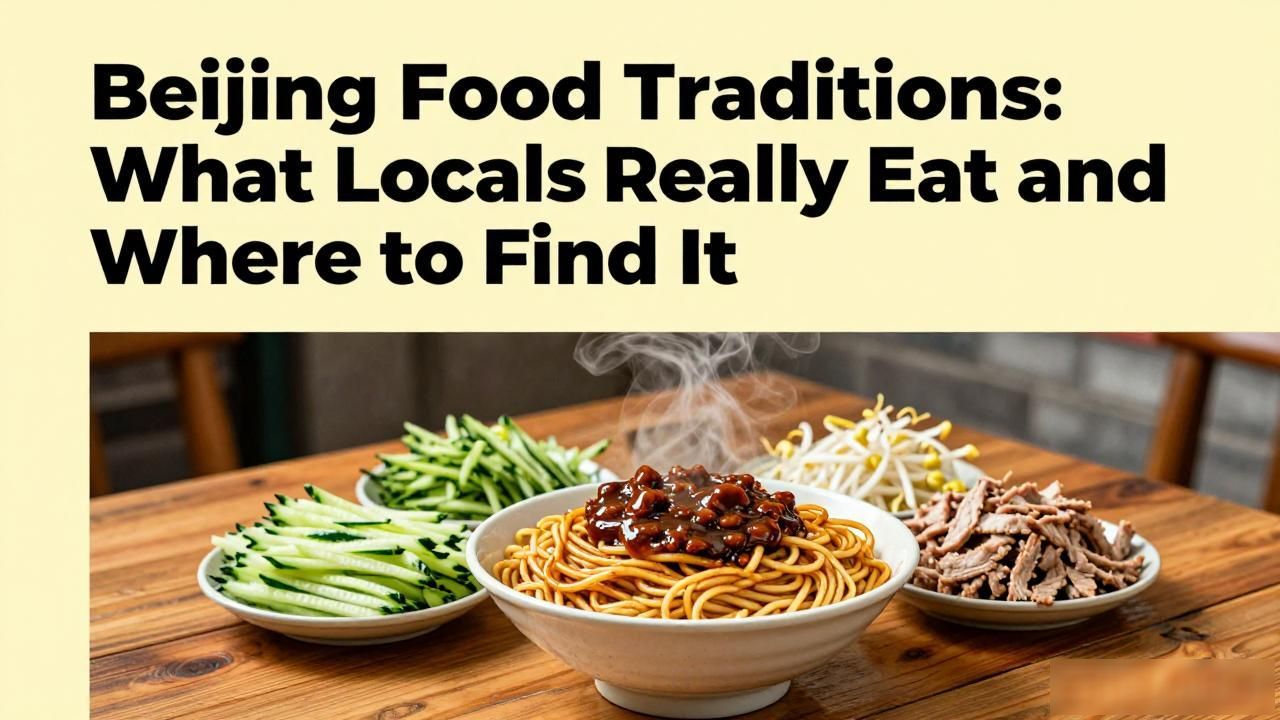
Beijing’s food traditions are far more than Peking duck and tourist set menus. They are rooted in everyday habits, seasonal eating, and a deep respect for preserved ingredients. For anyone wanting to understand the city through its palate, the real story lies in the alleys, morning markets, and family kitchens where these customs have survived for generations.
What Are the Must-Try Classic Dishes in Beijing

When locals talk about traditional food, they rarely start with the famous roast duck. They mention zhajiangmian, noodles thickly coated in fermented soybean paste, often topped with fresh cucumber, bean sprouts, and shredded pork. It is a working-class meal, filling and salty, and every family swears their version is the best. Another staple is jianbing, a crispy breakfast crepe spread with egg, scallions, and a sweet-spicy sauce, folded around a crunchy fried wafer. You will find it sold from carts before 9 a.m., and eating it hot on the street is part of the ritual.
Then there are the hotpot-style dishes adapted to northern tastes, especially shuan yangrou, or flash-boiled lamb slices dipped in sesame sauce. This is a winter tradition, meant to warm the bones against the dry cold. What makes these dishes “traditional” is not just the recipe but the context: they are eaten at specific times, in specific settings, often with family, and always with a certain no-nonsense practicality.
How Do Local Eating Habits Shape These Food Traditions
Beijing’s food culture is shaped by the city’s long winters and its history as a political capital. Preserved vegetables, pickled cabbage, and dried tofu appear constantly because they were once necessary for survival. Even today, many older residents still stock up on suan cai (sour pickled cabbage) in late autumn, storing it in large jars to ferment through the season. This habit is not just about taste; it is about continuity, a way of keeping the past present in daily life.
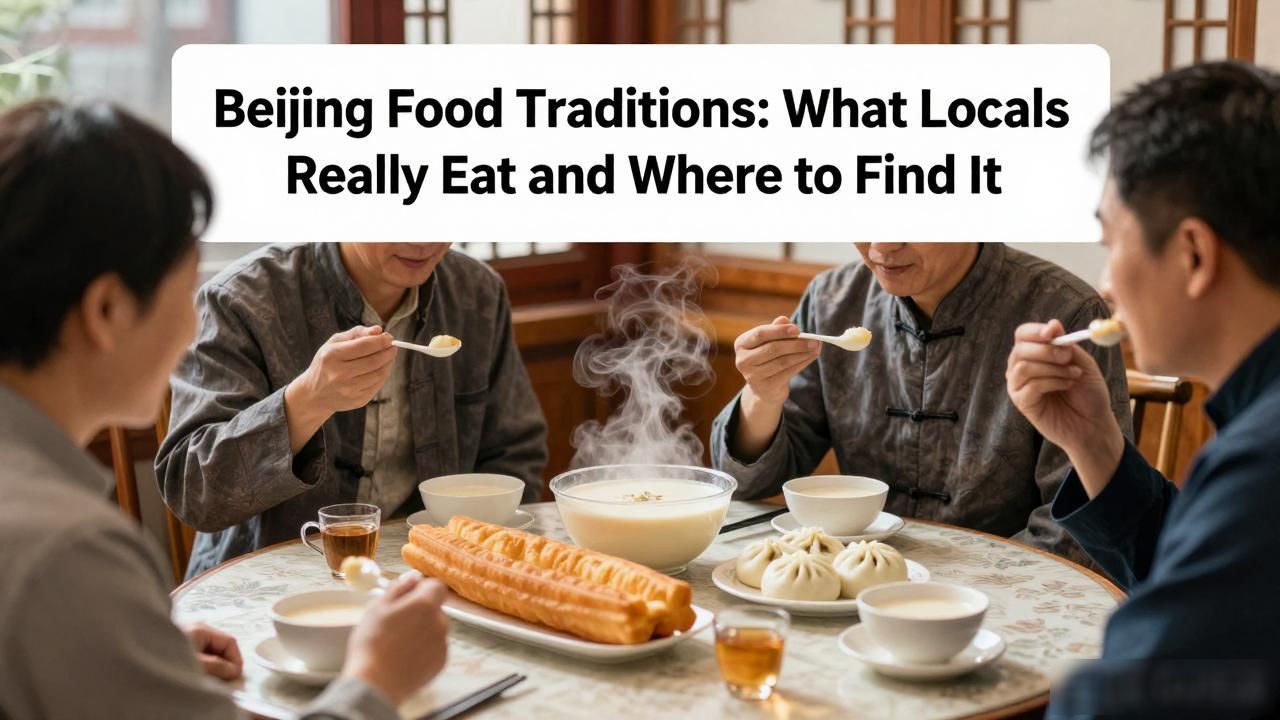
Another key habit is the importance of breakfast. Unlike Western cities where breakfast is often quick and portable, Beijing’s traditional morning meal is a sit-down affair. Soy milk, fried dough sticks, and steamed buns are consumed slowly, often with tea. The pace matters. Rushing a traditional Beijing breakfast is considered slightly disrespectful to the food itself. This slower rhythm extends to lunch and dinner, where shared dishes are placed in the center of the table, and everyone eats from their own small bowl of rice or noodles.
The rise of modern restaurants has not erased these customs. Instead, it has pushed them into new spaces. You can now find zhajiangmian in upscale noodle bars, but the core preparation remains unchanged. The tradition survives because it is practical, affordable, and deeply tied to the city’s identity. For visitors, the best way to experience it is not through a curated food tour but by following the morning crowds into a local hutong eatery,ordering what the person next to you is eating, and asking no questions. That is the Beijing way.