
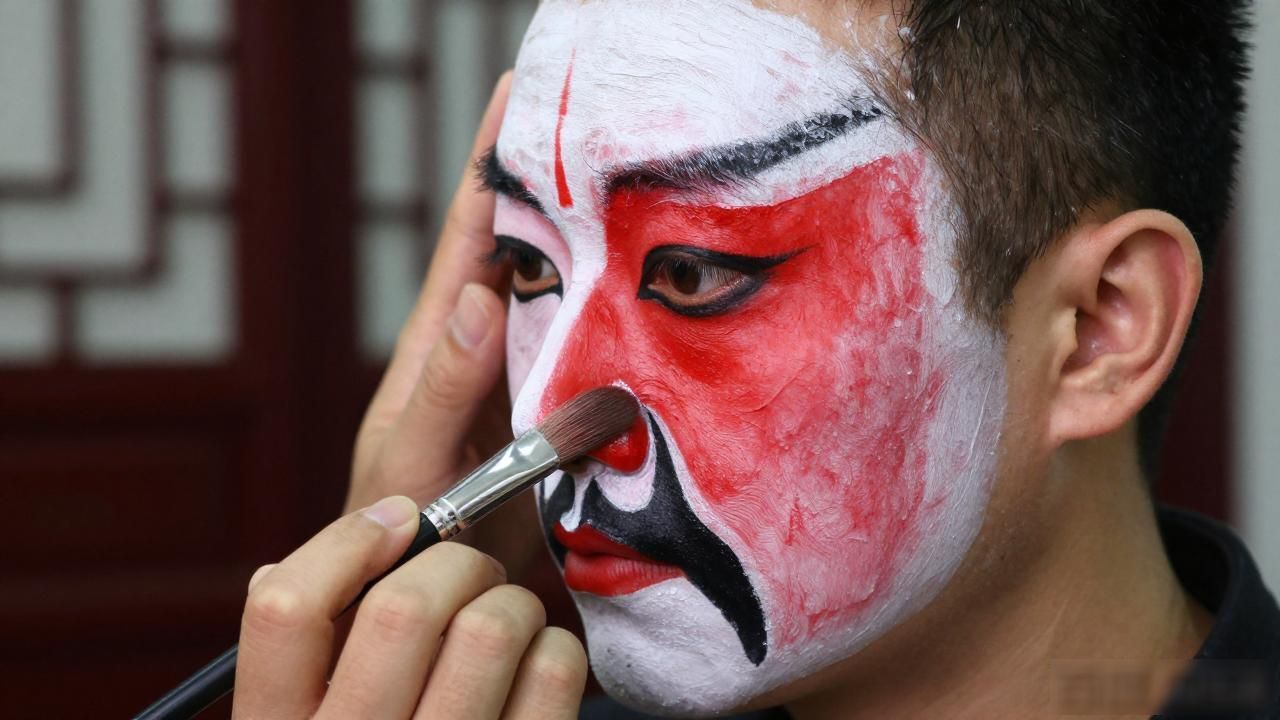
For most people, Sichuan opera on stage looks like a painted face—bold colors, exaggerated lines, a performer who seems to belong to another century. But the craft behind that mask is disciplined and precise. After twenty years at the Chengdu Stage Art Center, I see Sichuan Opera makeup techniques not as decoration but as a visual language, one that tells the audience who is on screen and what they are feeling before a single word is sung.
how is Sichuan Opera makeup applied

The process starts with a thin white base called dan that covers the entire face and neck, sometimes extending to the ears. From there, mineral pigments are layered—red for loyalty, black for uprightness, blue for ferocity. Each color goes on with a flat brush in broad, confident strokes. The key principle is symmetry: left and right mirror each other almost perfectly, because the audience reads the face from quite a distance. I’ve watched young apprentices spend three full years just learning to keep that symmetry without smudging or bleeding at the edges.
What surprises newcomers is simply how long a full application takes. A lead role can need forty-five minutes to an hour,built up in careful stages. You can’t rush the drying between coats—the mineral powders need real time to set, or they crack and flake the moment the actor moves, sweats, or throws a head-spinning flip.
what colors mean in Sichuan Opera makeup
Color is never arbitrary in this tradition. Red signals a loyal, upright hero. Black means integrity and a no-nonsense temperament. Blue or green marks a warrior with a rougher, wilder edge. Worn in white, the color often flags a schemer or outright villain. The palette works as a character shortcut: the audience in the back row doesn’t need to follow the libretto to know whether to root for you or flinch.
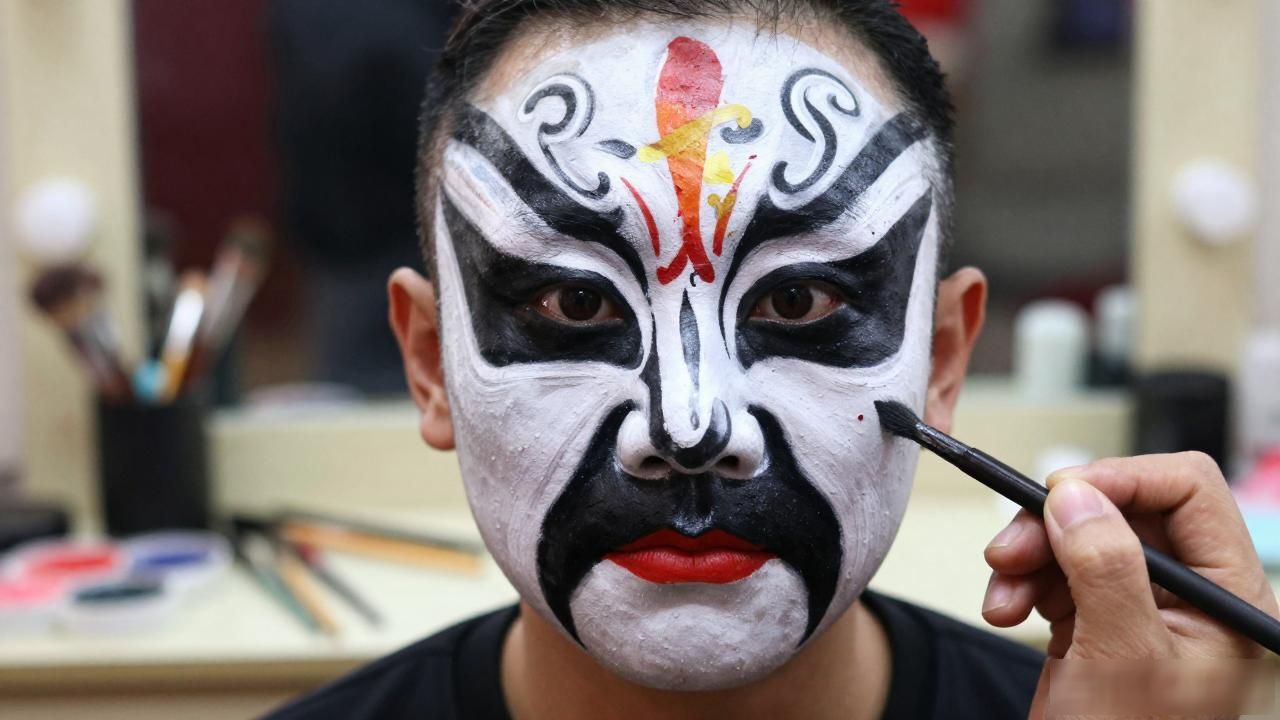
Then there’s the lian face—fully painted, symmetrical patterns that map a character’s nature in abstract lines and shapes. A tiger-stripe pattern around the eyes might say “fierce but honorable.” A swirling cloud could mean “trickster.” These patterns are inherited, almost codified, passed down through generations. You don’t improvise them; you learn each line from your master’s hands and a worn reference book.
Standing backstage, watching an actor press his freshly painted face to the mirror before curtain-up, I still feel that quiet electricity every time. The makeup is where the character first comes alive, before costume, before music, before a single note. Everything else builds on that painted foundation, and it has for centuries.