
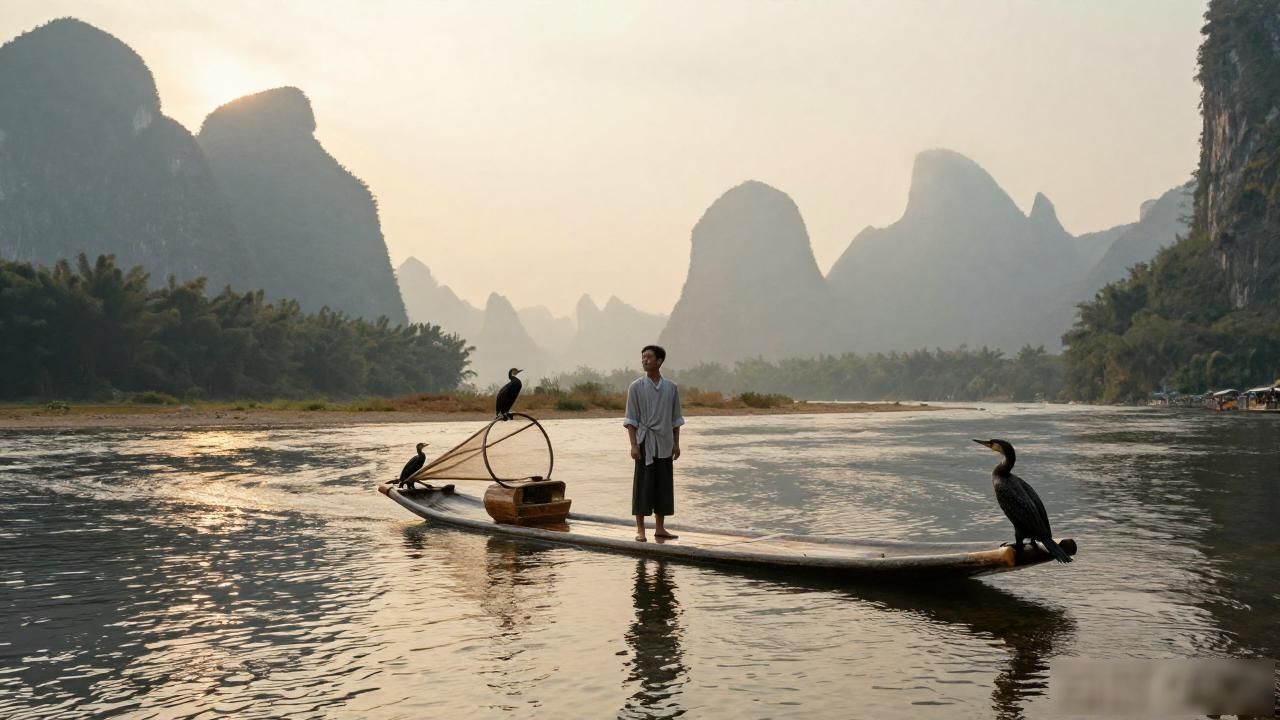
The Li River fishing boats are those weathered wooden vessels floating between the karst peaks of Guilin and Yangshuo. They’re not just working transport anymore; most now serve as ride-along experiences for tourists who want to feel the slow current against a hull that’s been poled the same way for a hundred years. What you actually see and feel when you step onto one differs wildly from the polished Instagram shots. Here’s what the experience is really like.
Are Li River fishing boats safe

Most visitors worry about tipping over in choppy water, but the Li River moves slower than you’d expect, especially in the stretch between Guilin and Yangshuo. The wooden hulls are narrow, maybe two meters across, and they sway noticeably when another boat brushes past. You’ll stand or crouch on a small deck, gripping a bamboo railing worn smooth by decades of hands. The risk is low, though not zero during the rainy season when the water rises and the current picks up sharply. If you struggle with balance or feel uneasy in enclosed low spaces, this isn’t the ride for you.
The boats carry six to ten people at most. The “fisherman” on board is usually a local villager who’s been running these trips for twenty years or more. He doesn’t speak much English. He polishes his pole, reads the water, and occasionally points at a karst formation with a flat hand. The real safety net here is familiarity; these men know every bend, every shallow patch, every place where the current tugs the hull sideways.

What do Li River fishing boats cost
The price shifts by stretch and season,but as a rough baseline, a half-hour ride along the Yangshuo section runs about 80 to 120 yuan per person. Longer excursions toward the upstream bamboo forests push it past 200 yuan. You can haggle, though the margins are thin for the boat owners. What you’re paying for isn’t comfort; it’s the creak of untreated wood, the smell of river water mixed with a faint diesel hum, and a slow unscripted drift through scenery no cruise ship will take you past.
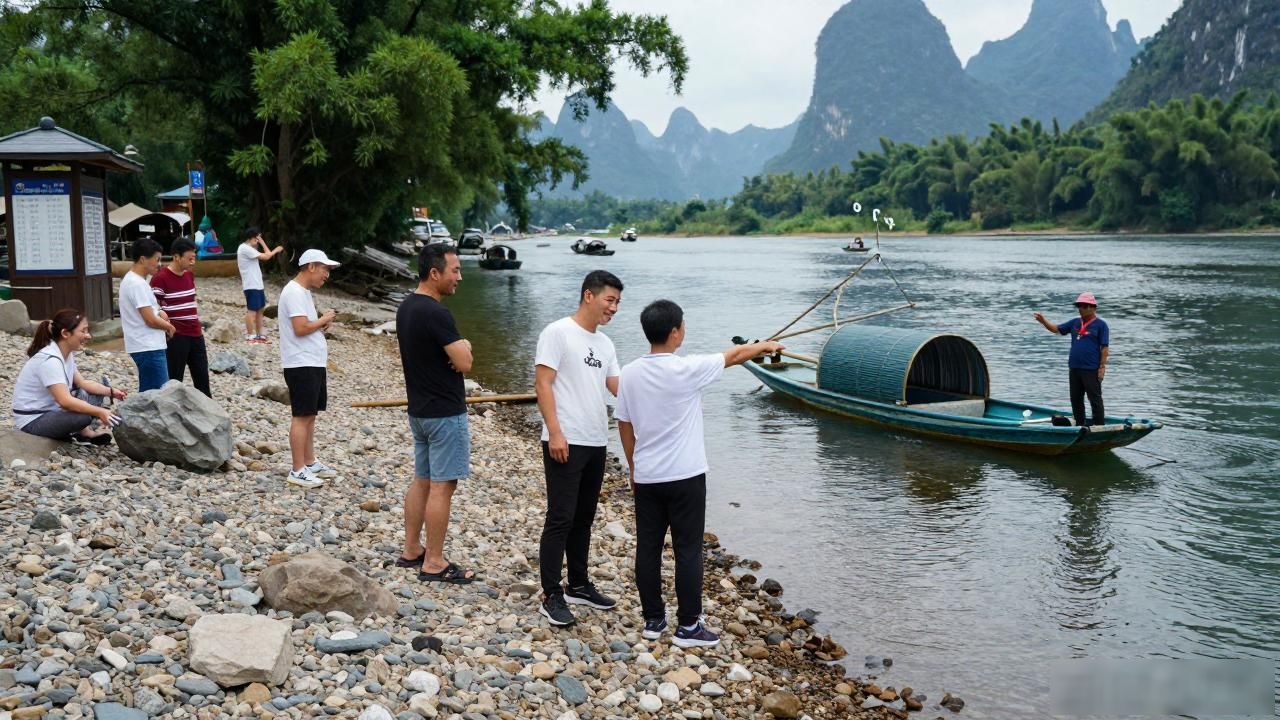
One thing that catches first-time riders off guard: there’s no ticket booth, no schedule, no app booking. You walk to a narrow gravel landing, point at the boat you want, and settle a price in broken English or gestures. The whole transaction takes ninety seconds.
Stepping off onto the bank at the end of the ride, you’ll have river mud on your shoes and the smell of wet timber stuck to your jacket. It’s not polished. It’s not “authentic” in the way a gift shop sells it. But it’s the closest you’ll get to how the Li River has actually looked for the people who’ve fished these waters for generations. The karst peaks don’t change. The water doesn’t change. Only the tourists leaning on the railing get a slightly different angle.