
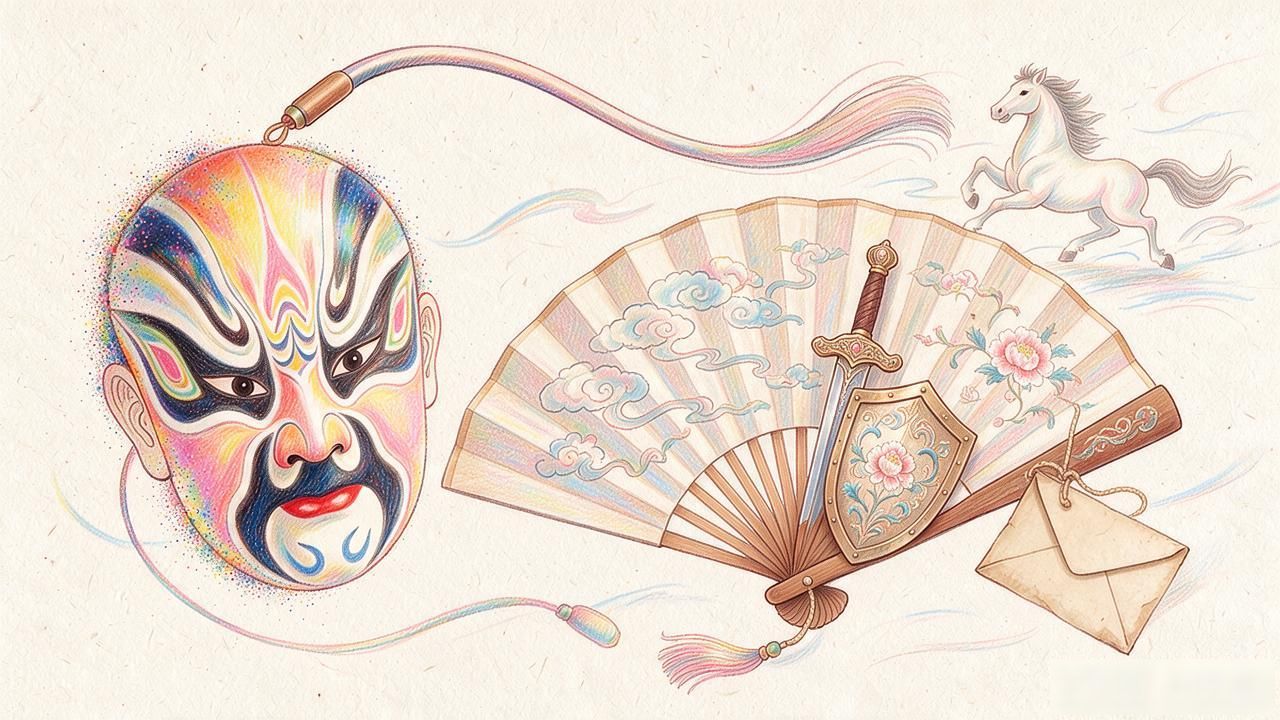
Sichuan Opera props are more than painted sticks and embroidered headpieces. They are the hands, the face, and sometimes the entire body of a story told without a single spoken word. For anyone stepping into a smoky teahouse in Chengdu, these objects on stage carry a weight no script can explain.
What makes Sichuan Opera props unique

The face-changing masks, the horse whip that becomes a galloping steed,the tiny embroidered fan that doubles as a sword, a shield, and a letter—all of it is deliberately underbuilt. A prop in Sichuan Opera is never “real.” It is a suggestion. A willow-branch whip tells the audience a horse is running. A single cup on a bare table says an entire banquet is underway. This economy of objects forces the actor’s body to do the heavy lifting, and the prop maker’s job is to build that invitation, not the destination.
I have watched apprentices in the Jinjiang district bend bamboo for masks for eleven consecutive years before they are allowed to paint a single one. The bamboo must dry for three winters. The lacquer layers—no fewer than forty—take another two years to cure. You cannot rush the bone of a face.
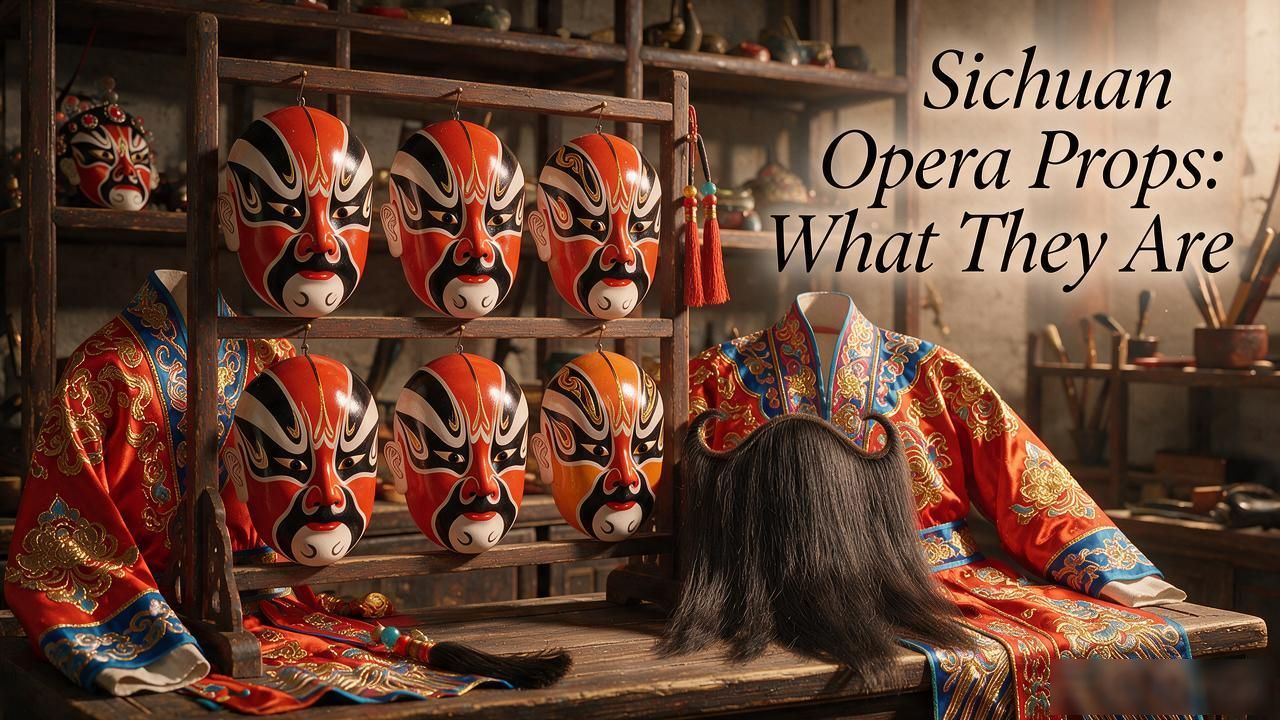
Where can you buy Sichuan Opera props
The honest answer: you can buy a replica at nearly every souvenir kiosk along Kuan Alley, and they will look fine on a shelf. But if you want something carved by the same hands that supply the Chengdu performing troupes, the market is small and not very tourist-friendly. The workshop on Wuhou Shrine’s east side sells only to registered troupes. What leaks out to private collectors changes hands through a handful of WeChat groups that most foreign buyers never see.
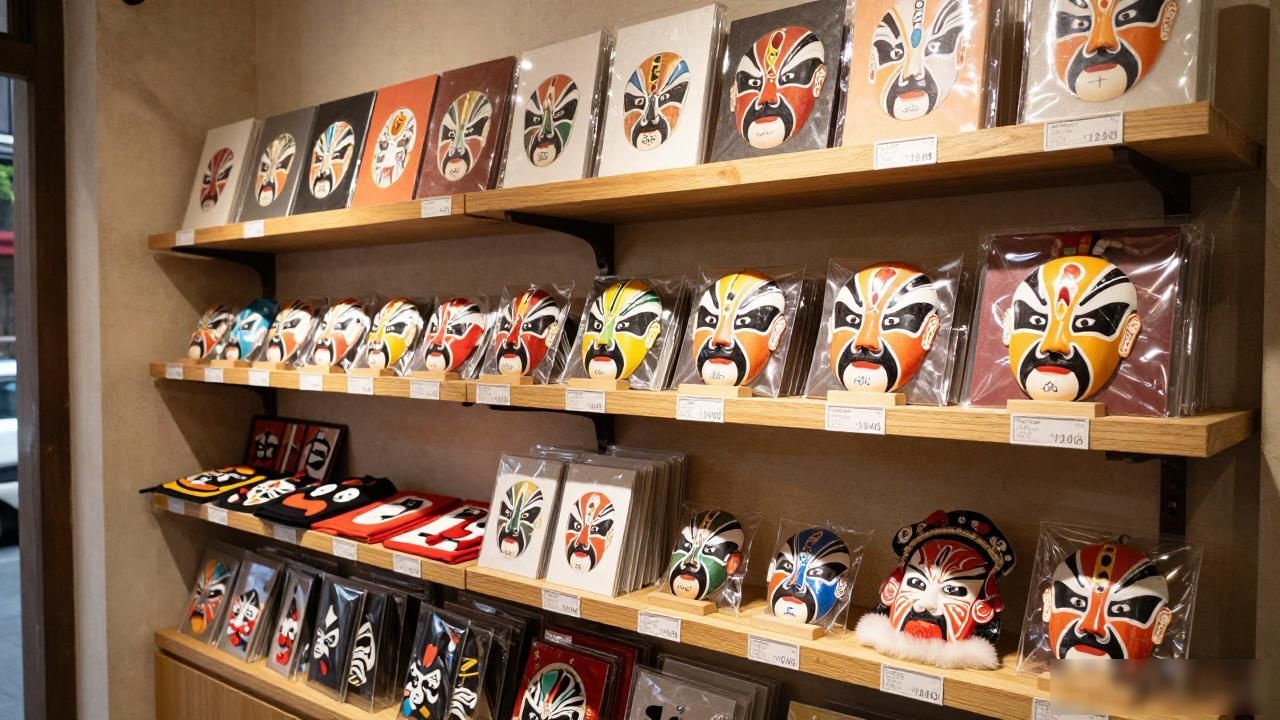
A middle option is the municipal cultural-creatives shop near Xingshan Road. The pieces there are one step removed from the stage—same motifs, same dye formulas, but at a scale and finish that make them shelf objects rather than performance tools. Expect to pay between two and six hundred yuan for a hand-painted fan, and several thousand for a lacquered mask.
What sticks with me after thirty years of watching these things leave the workshop is how quiet they are. No label, no barcode, just a small charcoal mark on the reverse side telling you which troupe it belonged to. You are not buying a product. You are borrowing a piece of someone’s Tuesday afternoon.
This is an exceptionally well-articulated discussion on “sichuan opera props what they are”. Thank you for sharing such a constructive piece—definitely a valuable reference for anyone following this field.