
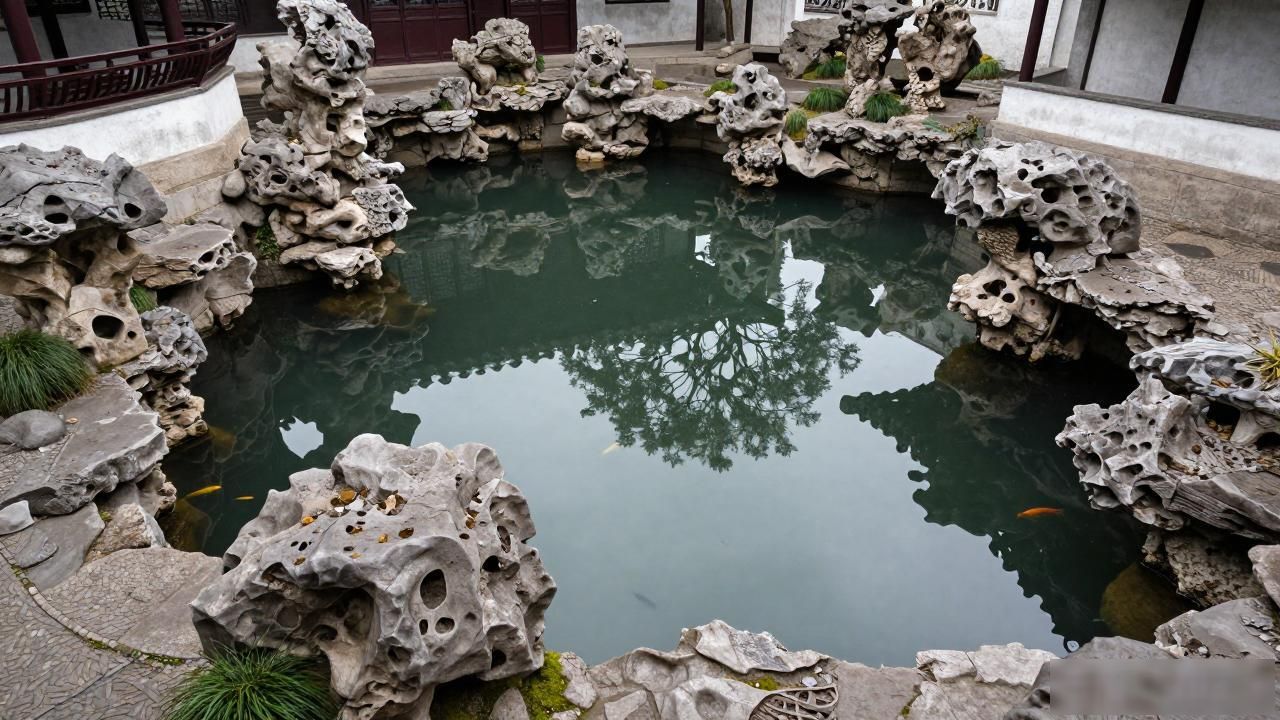
The water in Suzhou Gardens is not decoration. It is the skeleton that holds the entire composition together. After two decades of walking through Humble Administrator’s Garden, Lingering Garden, and a dozen others, I’ve come to see water as the quiet engine of these spaces. What follows is what actually makes them work, stripped of all romance.
Why Suzhou Gardens water features look so natural

The trick is that no pond in these gardens is a perfect shape. At the Lingering Garden, the main water body has eleven distinct edges, each curving in a different direction. The rocks along the shore are placed specifically to break the visual line so you never encounter a clean, straight border. The water looks natural precisely because it isn’t—every curve is calculated to avoid symmetry while still containing the space within readable boundaries.
The masters also buried the real edges under thick moss and low shrubs. Where you’d expect to see stone cutting into water, instead you see green spilling over into blue. The boundary becomes so soft you can’t point to exactly where one ends and the other begins. This softness is what separates a garden pond from a decorative fountain.
How do Suzhou Gardens water features work
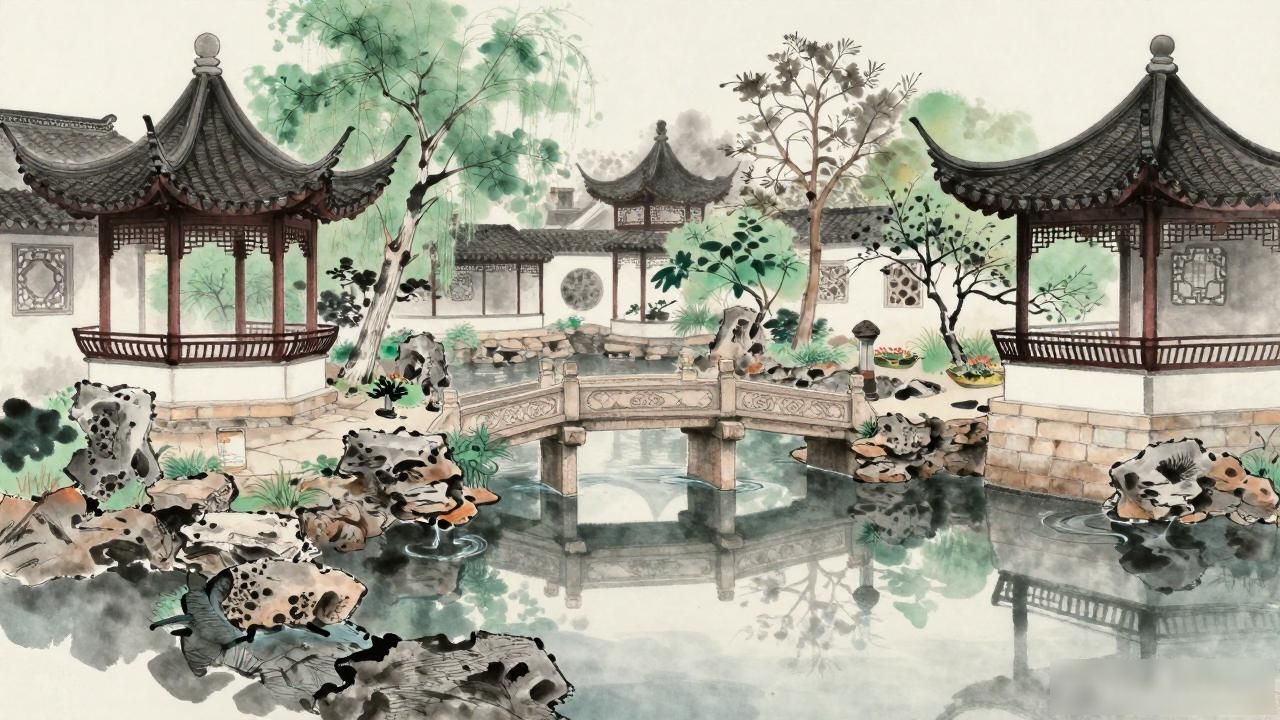
Water moves, and that is the key most first-time visitors miss. In Humble Administrator’s Garden, a small stream enters from the north gate, threads through three pavilions, and vanishes into a rock grotto in the back. The sound changes as it travels—light rustling at the entrance,a deeper trickle near the grotto. You walk through the garden and the audio track shifts beneath your feet. The whole design functions as a water-powered soundscape.
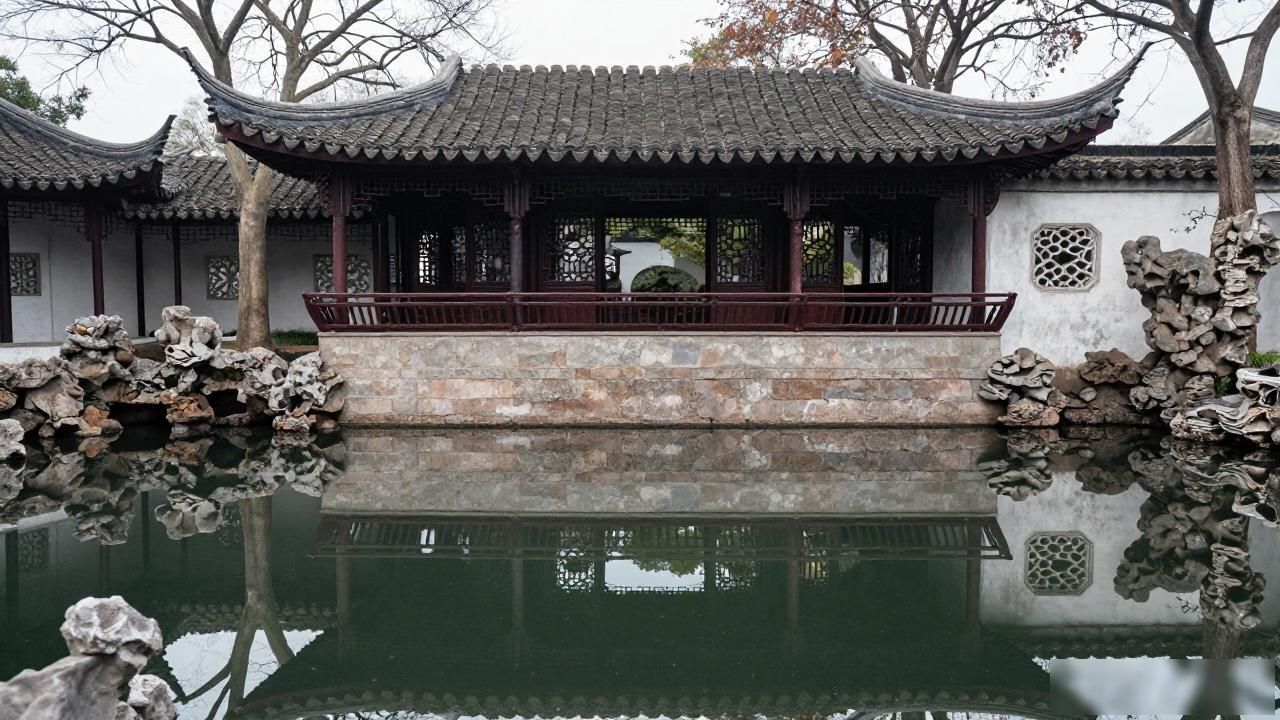
Reflection handles the second job. A flat, still section of pond sits directly beneath a covered corridor, turning the timber architecture above into a shimmering mirror image that doubles the perceived space without adding a single square meter of actual construction. It feels like the garden is twice as wide. It isn’t. The water simply folds the space in half.
None of this is mysterious. It is two thousand years of hydraulic thinking dressed in poetry. The next time you stand at the edge of a Suzhou garden pond and feel the space stretch wider than the walls around you allow, you are watching that quiet engineering do its work.