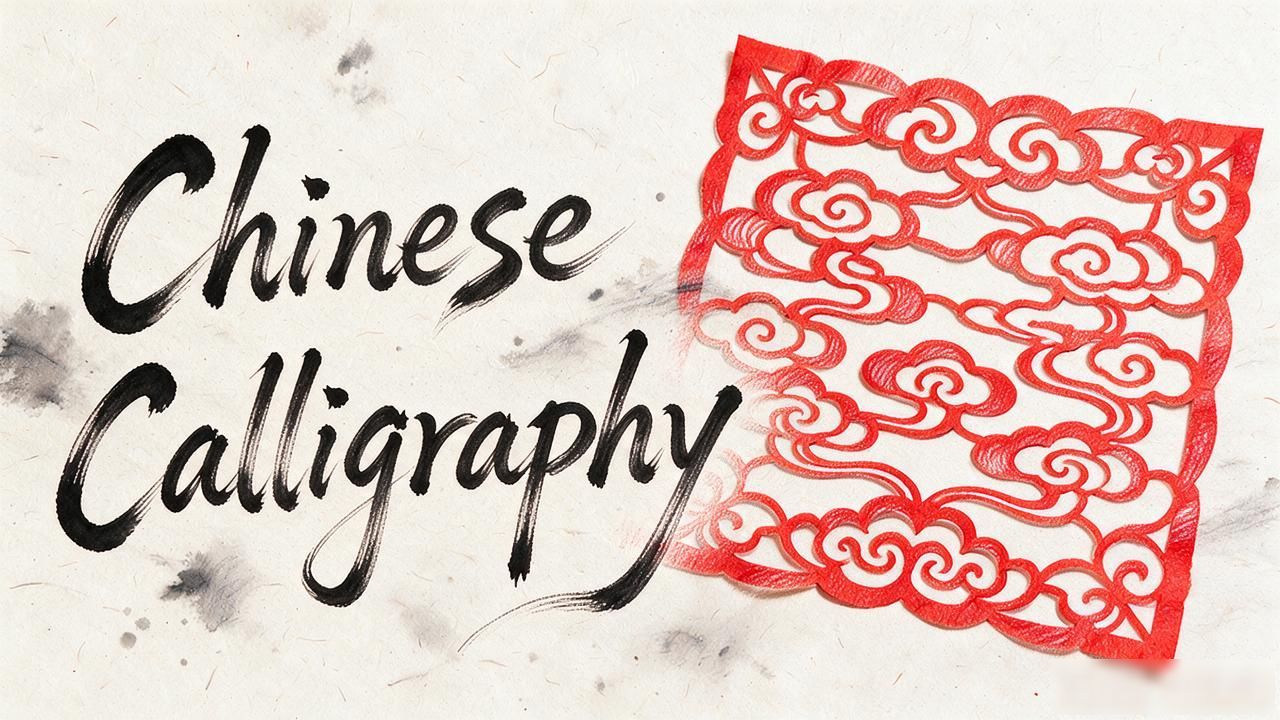
I’ve spent thirty years grinding ink and folding red paper in a tiny courtyard workshop in Chengdu. Every week, a handful of curious foreign students walk through my gate,clutching a brush like a toothpick and asking if paper cutting is “just scissors.” They want to understand Chinese calligraphy & paper cutting, and that’s exactly where I’ll start, from the ground up, no mystique.
Why Chinese calligraphy & paper cutting matter

People think these two arts are decorative, something you hang above a sofa in a guest house. They aren’t. Calligraphy was the only form of visual expression the literate class trusted for centuries. Paper cutting, meanwhile, was never just festival window paper. It carried prayers, patterns of luck, and regional identity into homes across the north and south of China, generation after generation.
When I hold up a Ming-dynasty brushstroke next to a Shanxi paper-cut bridal window, students finally see the same hand logic: negative space doing the real work, the shape you don’t make defining the one you do. That single connection is what makes the two arts a paired study rather than two separate hobbies on a bucket list.
## How do you start Chinese calligraphy & paper cutting
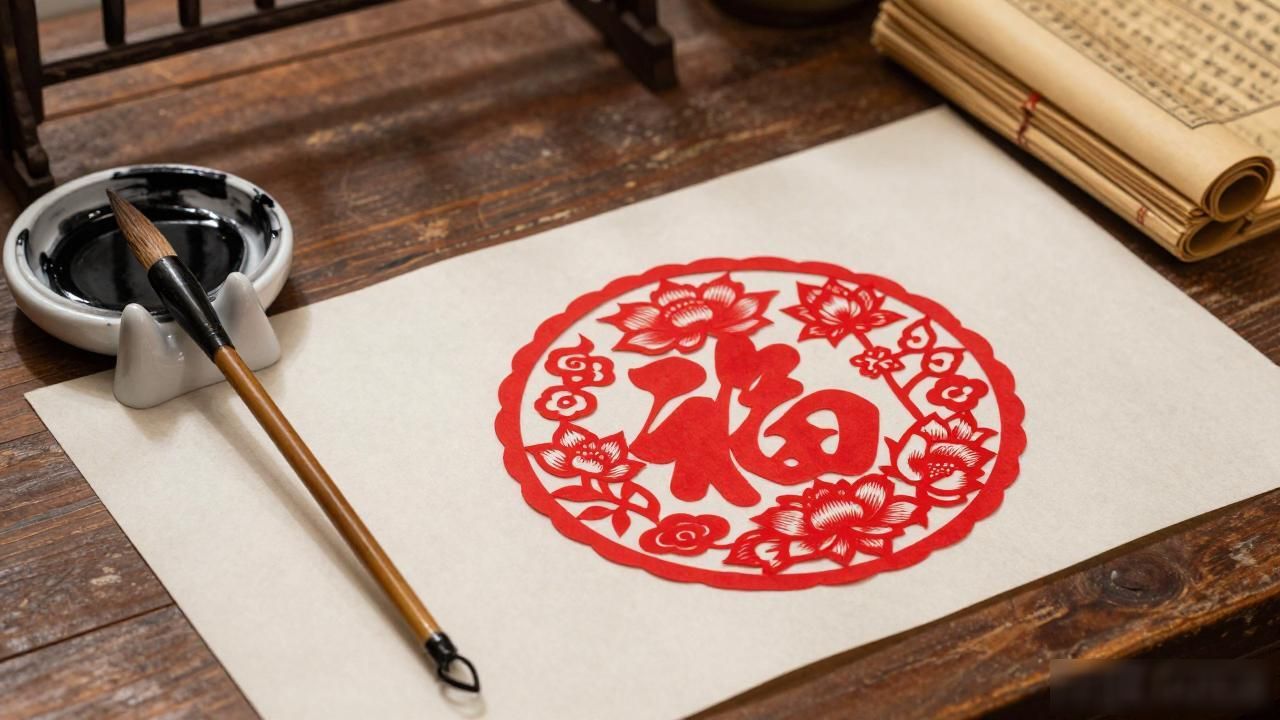
For calligraphy, skip the fancy brushes and the mountain of expensive ink cakes at the souvenir shops. A stiff wolf-hair brush, a small bowl of ground ink, and a sheet of rice paper will carry you through your first month. Practice the vertical stroke until your wrist stops shaking. That’s the whole exercise. The rest follows from there, slowly.
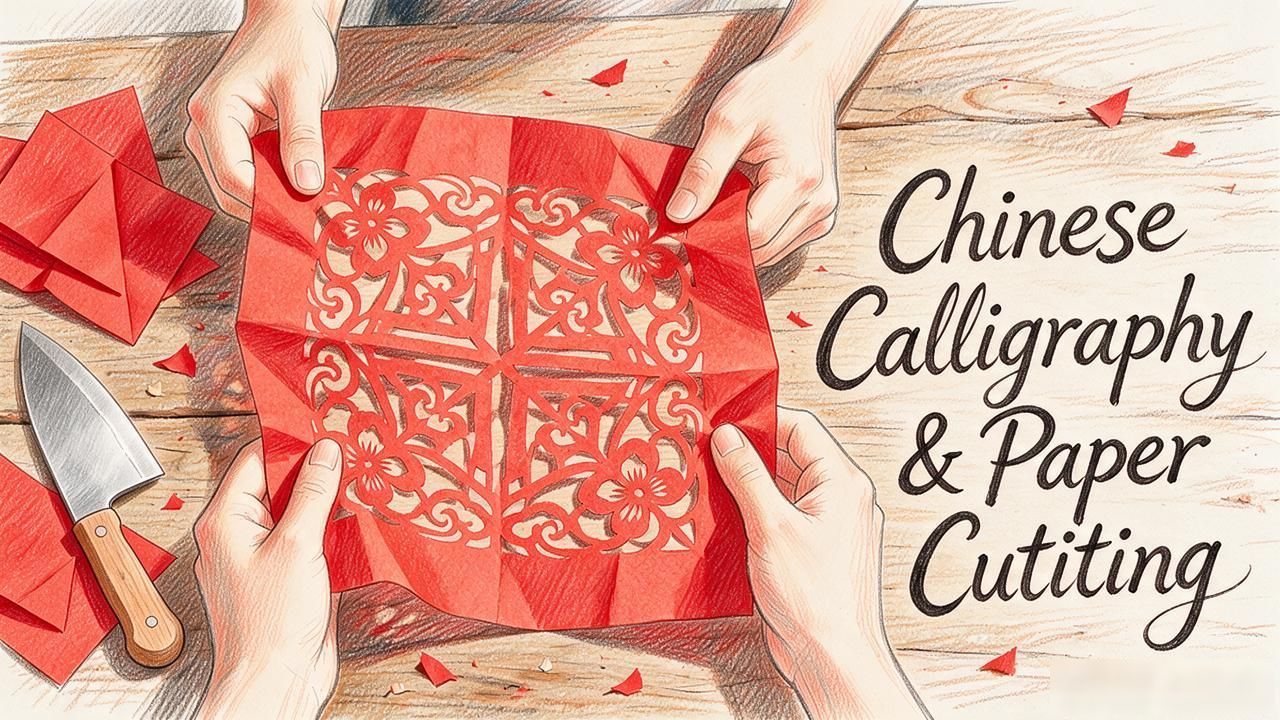
Paper cutting is more forgiving. A sharp kitchen knife and a single sheet of red printing paper will get you through basic symmetrical patterns. I tell my students: fold, cut, open the paper, and don’t touch that first surprise until you’ve photographed it. The red crinkle under your fingers teaches you more than any YouTube tutorial ever will.
My courtyard workshop is four tables, a wood stove for warming the ink in winter, and a window that catches the Chengdu rain most afternoons. The art was never in the tools. It’s in the slow, quiet act of showing up, day after day, and letting your hands learn what your eyes already know.