
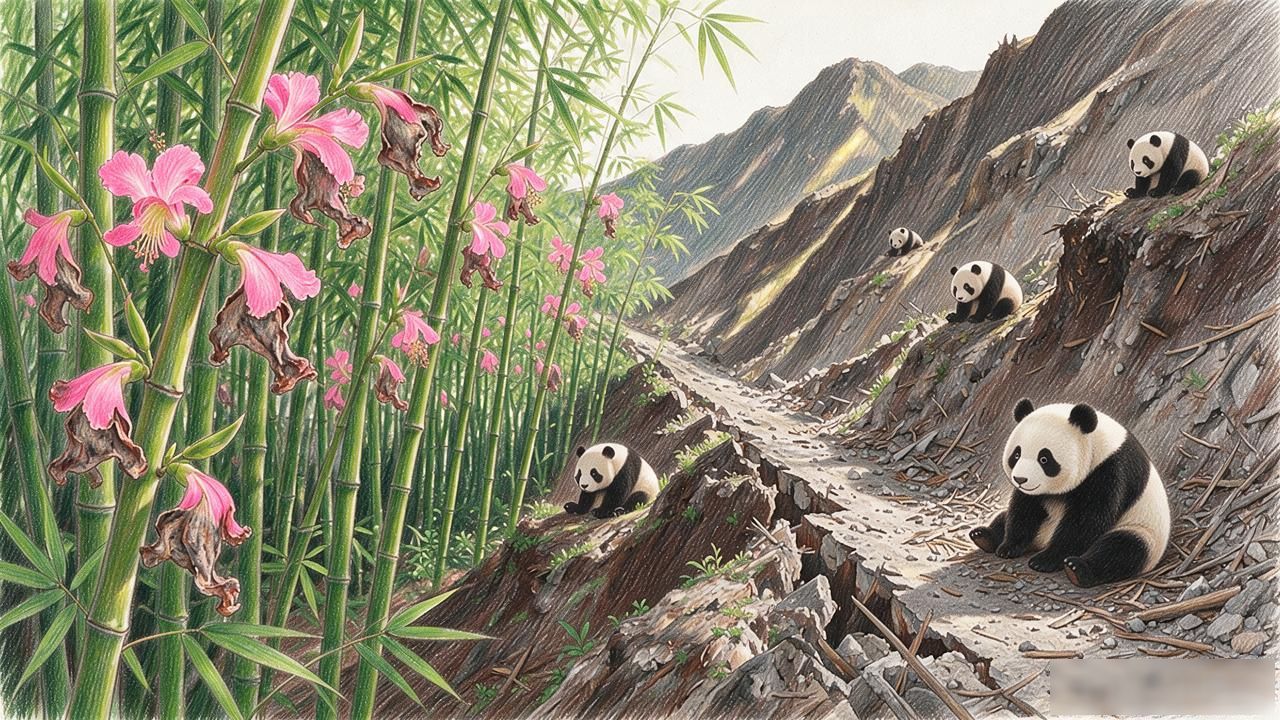
Panda habitats across central China cover roughly 25,000 square kilometers of bamboo forest, yet less than half of that area remains in structurally sound condition. I’ve spent fifteen field seasons in the Qinling and Mianning ranges mapping what these green corridors look like on the ground, and the picture is far more fragile than most travel brochures or documentary clips suggest. The core problem isn’t simply deforestation—it’s fragmentation, and that’s where the real damage hides.
Why Are Panda Habitats Shrinking

The bamboo species pandas depend on hit a mass flowering and die-off cycle roughly every sixty to one hundred years. When a stand collapses, pandas lose their only reliable food source for several weeks. Meanwhile, logging roads carved into the mountains through the 1990s split one continuous ridge into isolated pockets. A population of twelve in the Xiaoyangshan patch I track now sees only three genetic exchanges per year with the nearest cluster, down from nearly constant movement before 2005.
The 2011 Nature study that counted roughly 2,000 wild pandas wasn’t wrong on the headcount, but it badly understated the effective habitat area per animal. The corridors between reserves get trampled by goat herders, poacher footpaths, and expanding agriculture faster than bamboo can regrow on its own.
What Do Panda Habitats Actually Need
You need connected patches at least eight hundred meters wide carrying mixed-height bamboo—golden, black, and dwarf species growing in overlapping zones. My team in Mianning has been replanting dwarf bamboo strips along ridge lines since 2019, and the first marked pandas crossed those strips by early 2022. The pace is slow and unglamorous. One hectare of restored understory takes four to five years before a panda will reliably forage there.

Elevation matters more than most public discussions acknowledge. The 1,500 to 2,500 meter band is the sweet spot for both panda activity and bamboo productivity, but climate models push that window upward by two hundred meters every three decades. By 2060, roughly thirty percent of current suitable habitat will sit below the projected bamboo ceiling.
The next decade decides whether these animals keep room to move or whether every reserve becomes a sealed glass jar. I still hike the same ridgelines every spring to check the camera traps. The bamboo is coming back on the replanted strips. It’s not enough yet, but it’s a genuine start.