
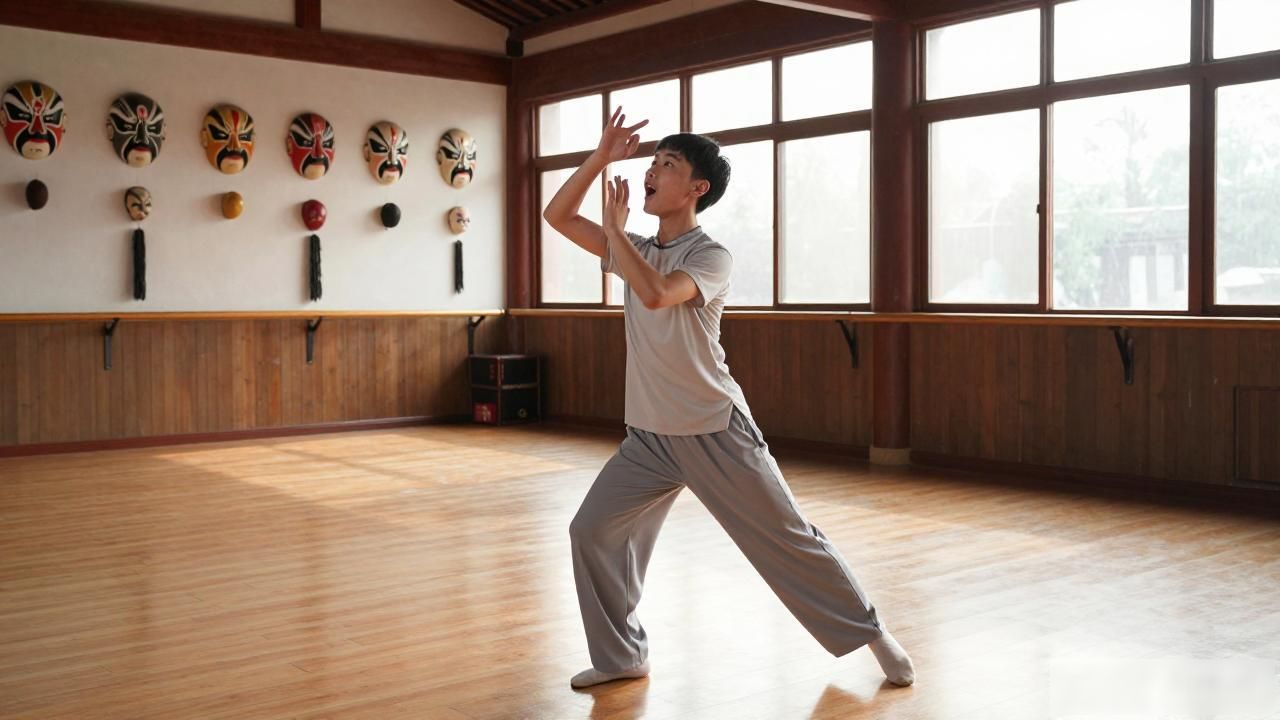
I’ve spent three decades teaching Sichuan Opera in Chengdu, and every year the same question comes up from international students: what does this training actually look like day to day? The honest answer is that Sichuan Opera training is a grueling, physical discipline disguised as a performing art. It’s not just singing. Your body becomes the instrument, and the instrument must be broken down and rebuilt.
What does Sichuan Opera training involve

The morning block is where it gets brutal. Students start at six with what we call the “iron voice” drill—holding a single high note while swinging the head in the facial change technique. I watched a French exchange student last year hold the note for forty seconds, face locked, before the mask simply moved without any facial muscle engagement. That’s the goal. The next two hours cover hand positions, footwork, and the four basic facial transformations. You don’t get to skip steps. The body must memorize before the mind catches up.
Evenings are shorter but no less exacting. We rehearse full sequences from The Legend of Liang Shanbo or Chang’e Flying to the Moon, and I correct one gesture at a time. A wrist tilt of three degrees is the difference between elegant and clumsy. Students learn to trust the mirror and their own skin, not their eyes.
How long is Sichuan Opera training
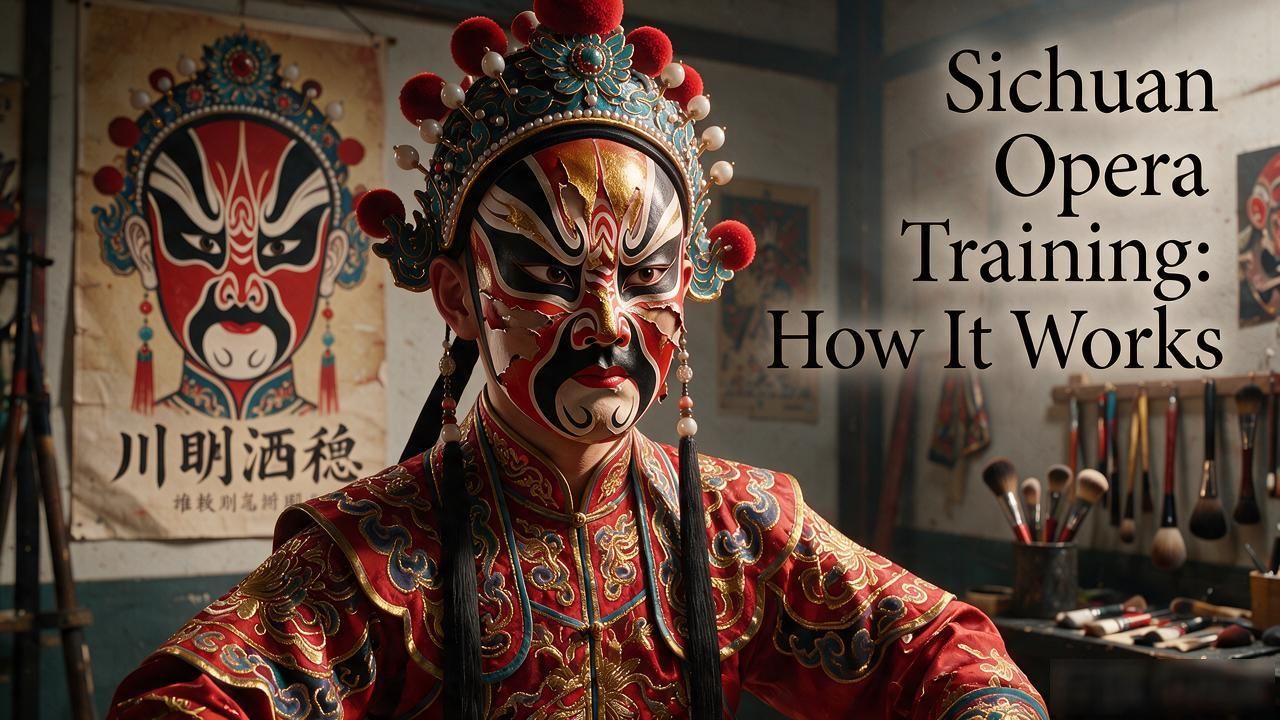
There’s no shortcut I’m willing to admit to. A full apprenticeship here runs seven years, and that’s the minimum. The first two years are pure repetition until the patterns burn into your shoulders. Years three through five introduce staging, vocal layers, and the xiebai rhythmic-speech portions that make the opera talkable to a modern audience. Years six and seven are performance-heavy—students go on stage in front of real audiences,not just the rehearsal hall.
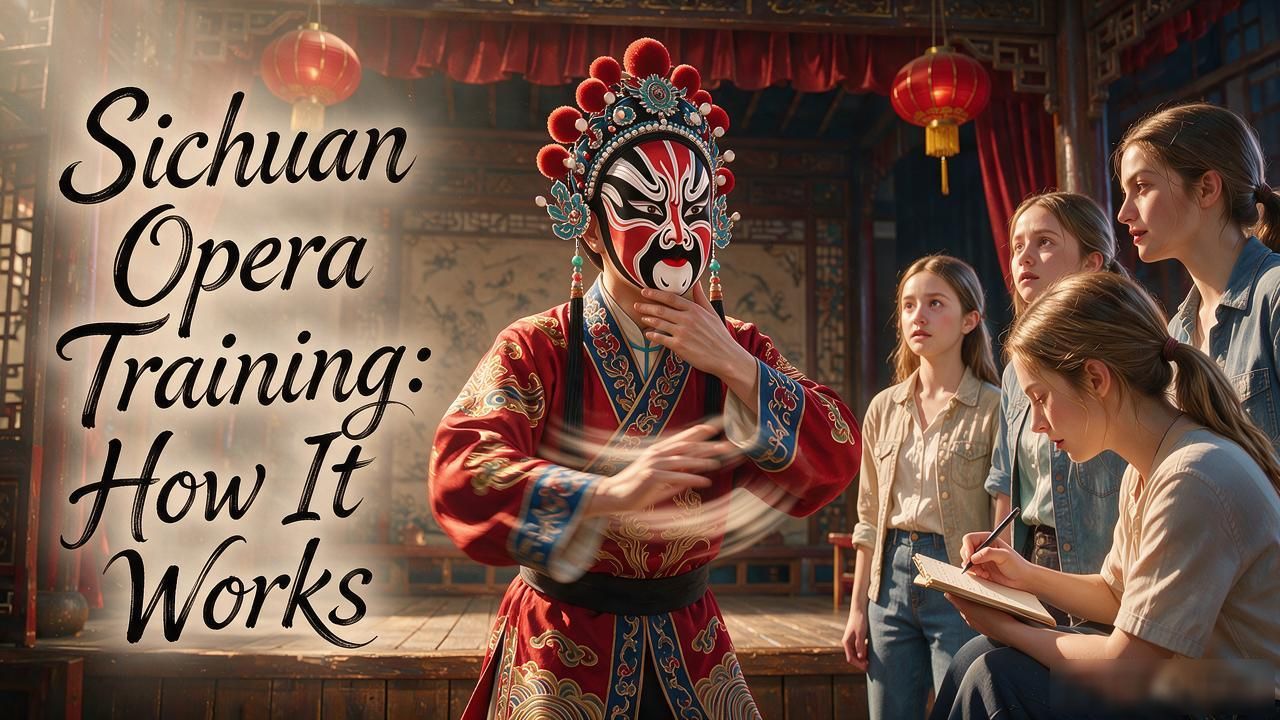
For international students joining our six-month cultural exchange program, I set different expectations. You won’t master the facial change in half a year. But you can learn to feel it, to understand why a single upward tilt of the jaw signals a different emotion than a flat pull. That shift in perception is where the real training starts, and it can’t be rushed.
I keep telling new students: the mask doesn’t belong to you yet. It borrows your face for a moment, then takes it back. The training is just the long process of learning to let it borrow.