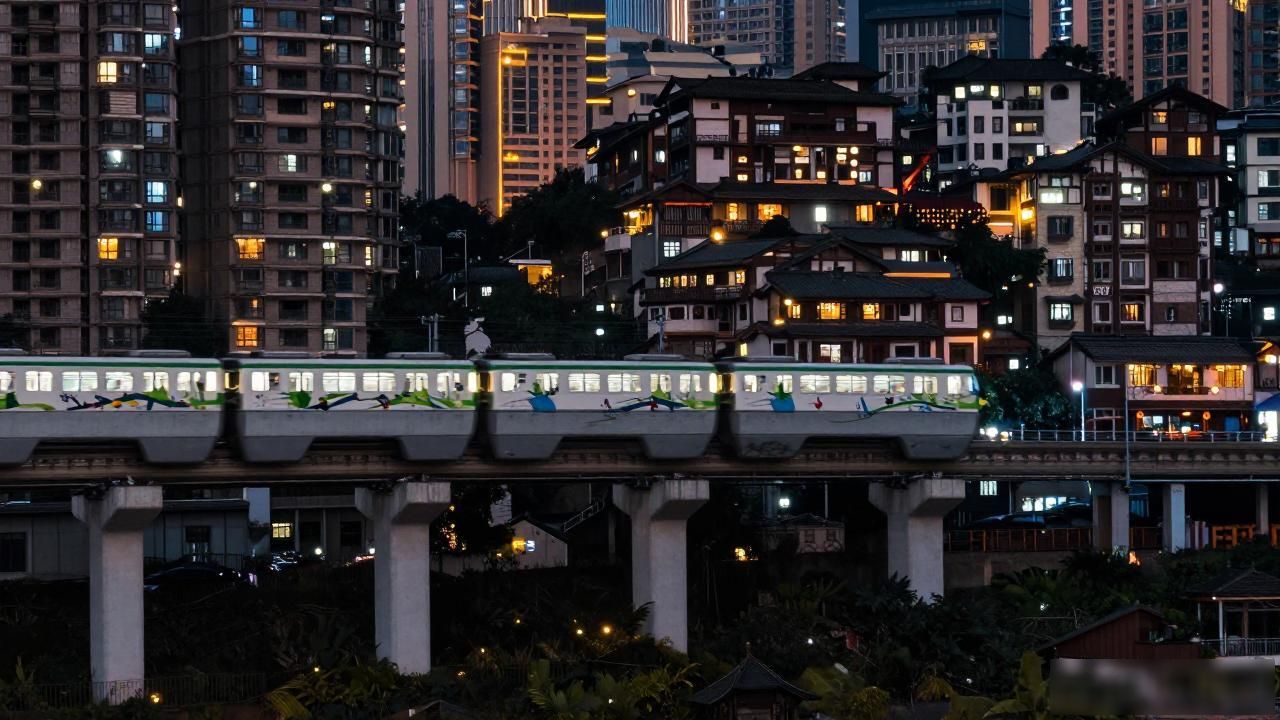
You’ve probably seen those viral clips of a small train crawling along a track that looks like it’s balanced on a steel ribcage, suspended over a neon-lit river. That’s Chongqing light rail at night, and it’s nothing like any transit system you’ve experienced before. Here’s what to actually expect when you hop on after dark.
What Chongqing Light Rail at Night Looks Like

The moment your carriage glides past the Liangjiang Bridge, the city splits into two glowing halves. One bank is dense with vertical towers stacked like playing cards, the other a sprawl of terraced buildings climbing narrow hillsides. From the window, it looks like a film set – cables, girders, and underpasses crisscross so thickly that at first you genuinely question how anything moves in this mess of concrete.
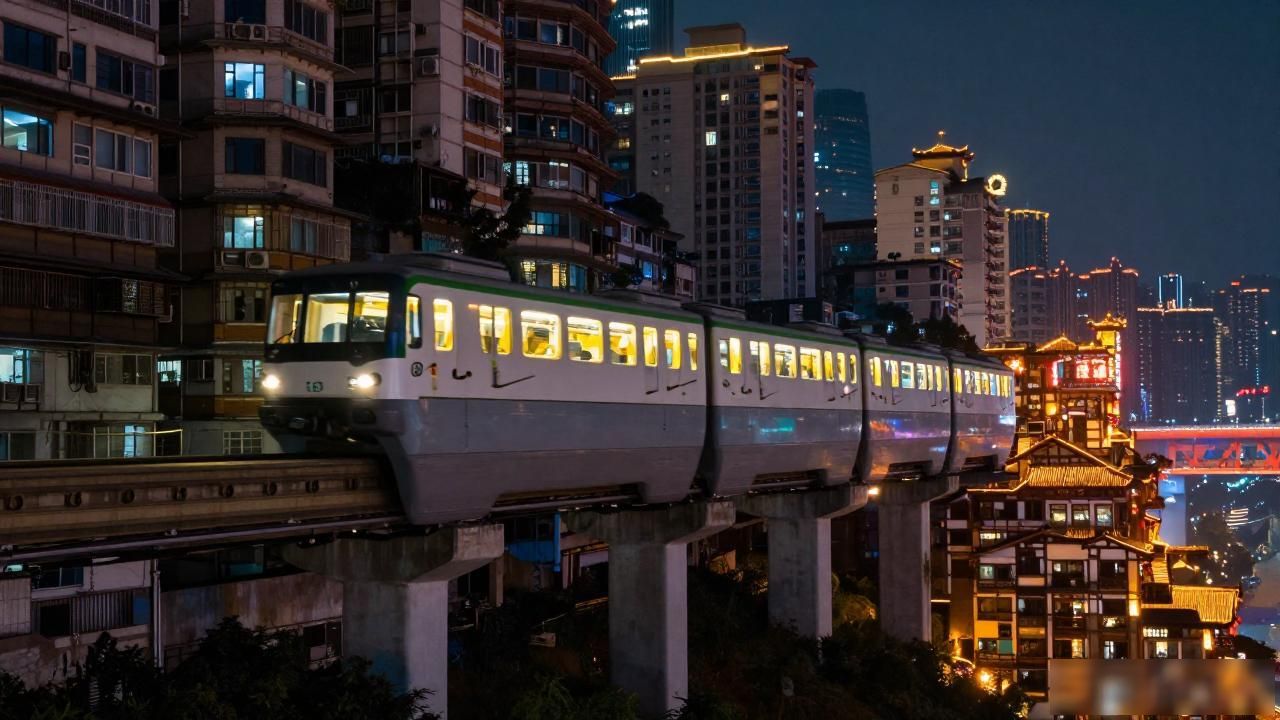
The trains themselves are compact, barely wider than two people standing shoulder to shoulder. Seats face the windows, so you end up with a front-row view of scaffolding, river mists, and the occasional stray cat perched on a ledge. At rush hour the car is packed tight; at ten p.m. you might grab the whole row and just watch the city scroll past.
How Chongqing Light Rail at Night Works
Chongqing’s Line 2 and Line 3 are elevated monorails, not underground metros. They run on rubber tires gripping a single concrete beam, which is why the car wobbles just slightly at every curve. Night service wraps around 23:30, so your real window is from when the sun dips behind Wulongshan until the last train pulls out of the depot.
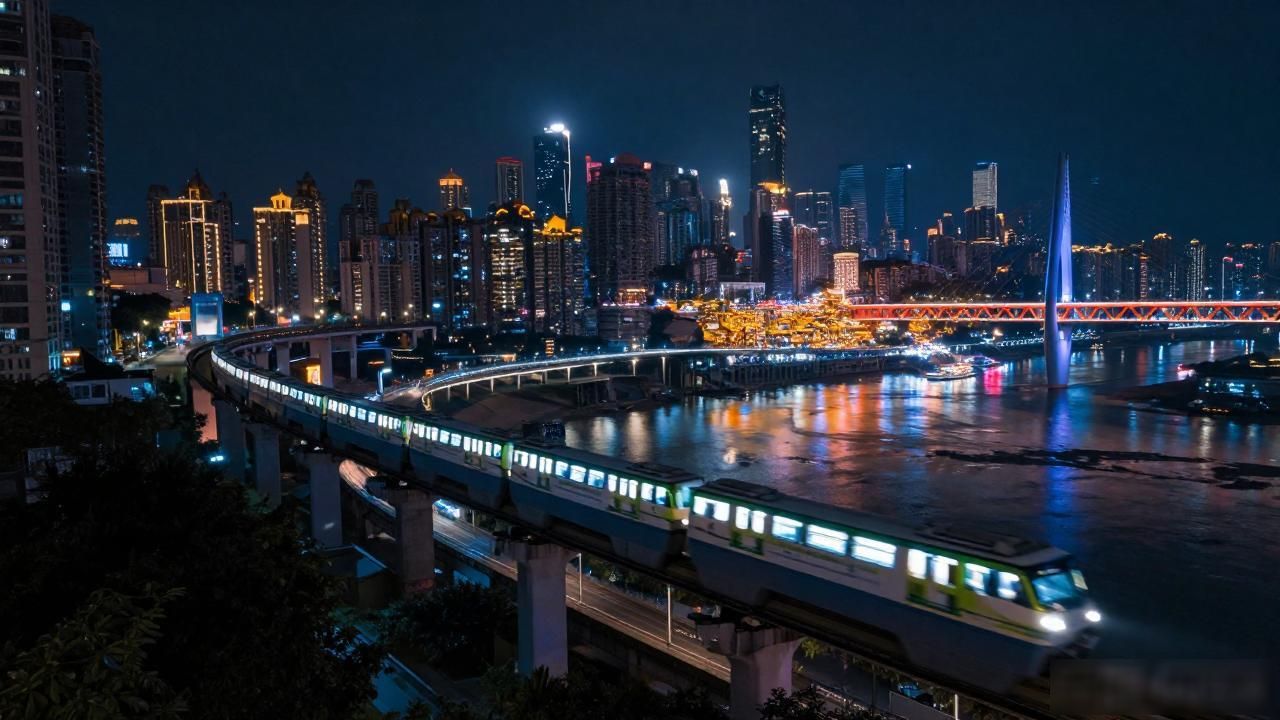
Fares are distance-based, starting at two yuan. You tap a transit card or scan a QR code at the gate. No reservations, no express options, no way to skip stops. Every ride threads you through the same winding ribbon of track suspended over the Jialing and Yangtze confluence,and after dark the overhead lights go dimmer until the whole steel tunnel turns into a dark hallway with the city as your wallpaper.
It won’t reshape how you think about public transit back home, but for a few minutes dangling over a two-river city past midnight, it’s the closest thing to a living postcard you can actually ride. Grab a window seat, pocket your phone for once, and let the skyline tick by.