
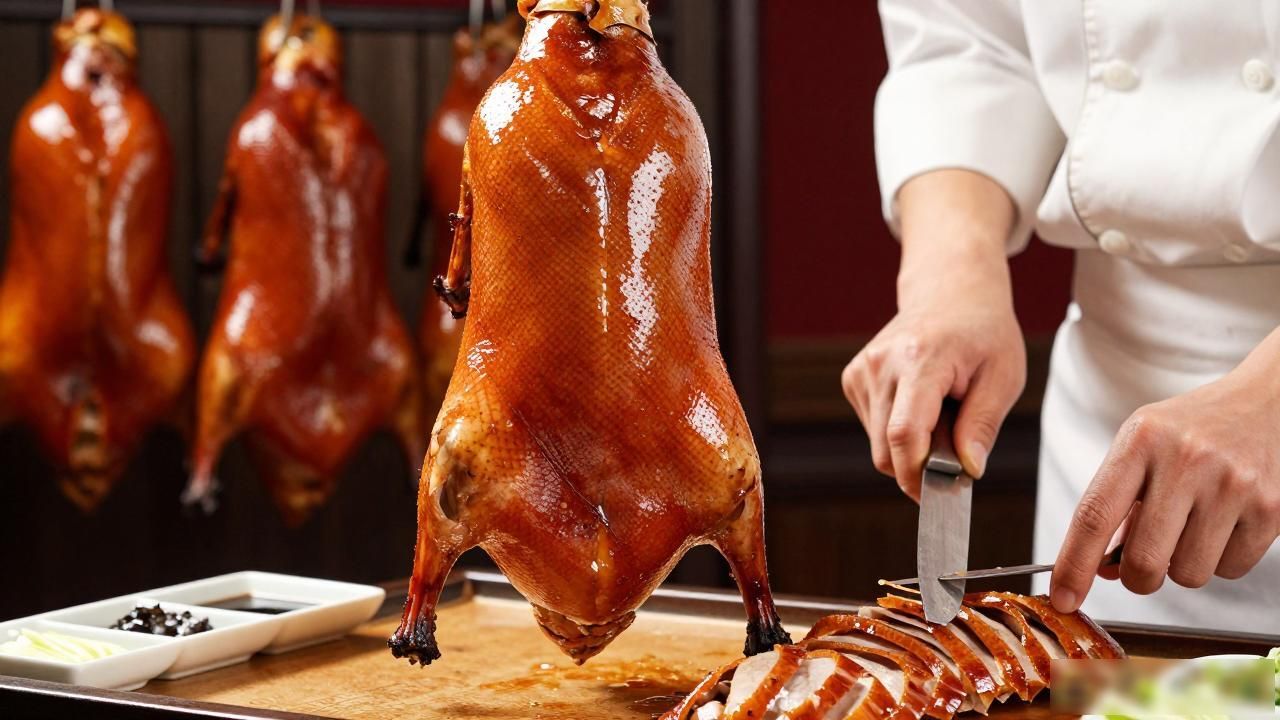
I’ve spent two decades walking the same streets where Beijing‘s duck masters first hung their copper pans. Classic Peking duck in Beijing isn’t just a dish on a tourist menu — it’s a craft that lives in the smoke, the lacquering, and the moment the slices fan out on a porcelain plate. What follows is what I wish someone had told me the first time I sat down at a proper duck house on Dongmiao.
What makes Peking duck in Beijing special

The skin. That’s the whole game. A proper roast duck from the Quanjude school gets hung for 36 hours in a closed curing room before it ever meets the flame. The chef carves it tableside, and the slices should snap, not bend. If the skin yields like rubber, you’re sitting at the wrong place.
The wrapping matters just as much. Paper-thin scallion pancakes, a ribbon of crispy skin, a smear of sweet bean sauce, a single green scallion stripe — rolled tight and eaten in one bite. I’ve watched visitors try to cram three slices into one wrap. It turns into a soggy mess. One slice. That’s the only rule that matters at the table.
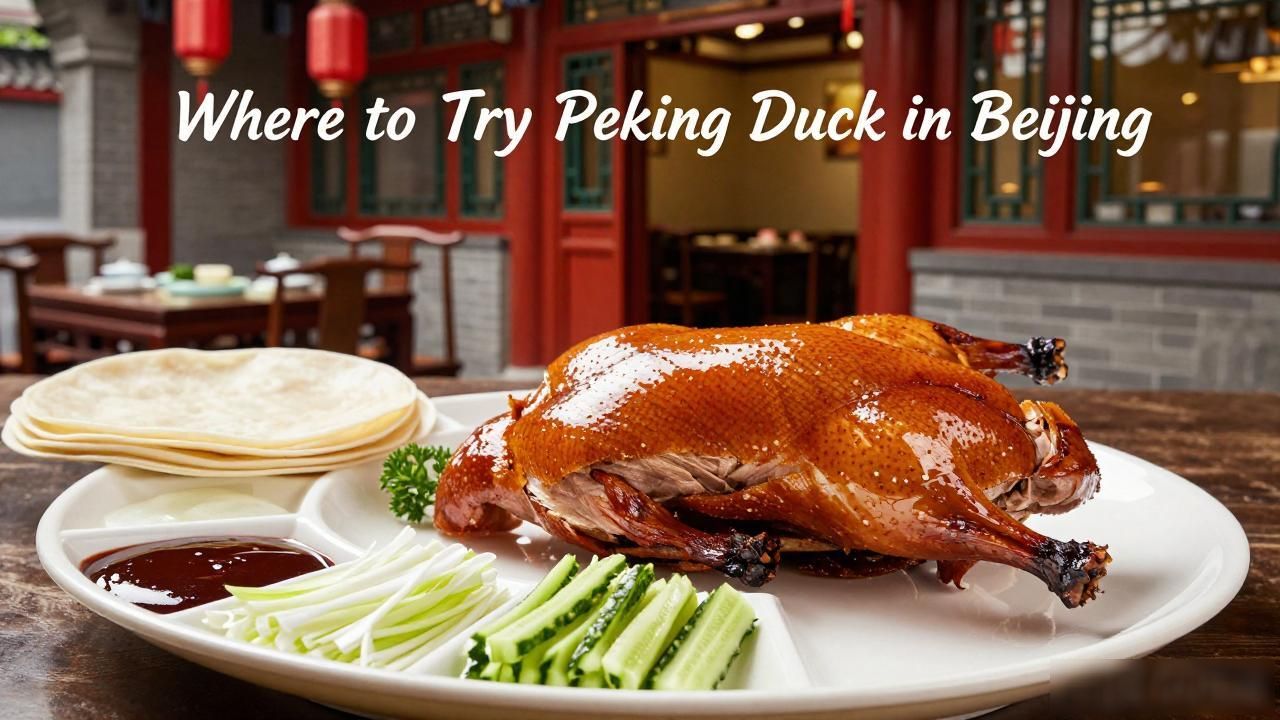
Which Peking duck in Beijing is the best
Quanjude carries the name recognition,and the heritage behind it is genuine. But step into Da Dong or the smaller family-run shops along Jingshan, and you’ll find chefs who handle the bird the way their grandfathers did — no performance, no carving show for an audience. Just a quiet table and a mountain of slices waiting to be eaten. The Jingshan neighborhood spots serve duck at around forty yuan per half, and the flavor punches well above that price tag.
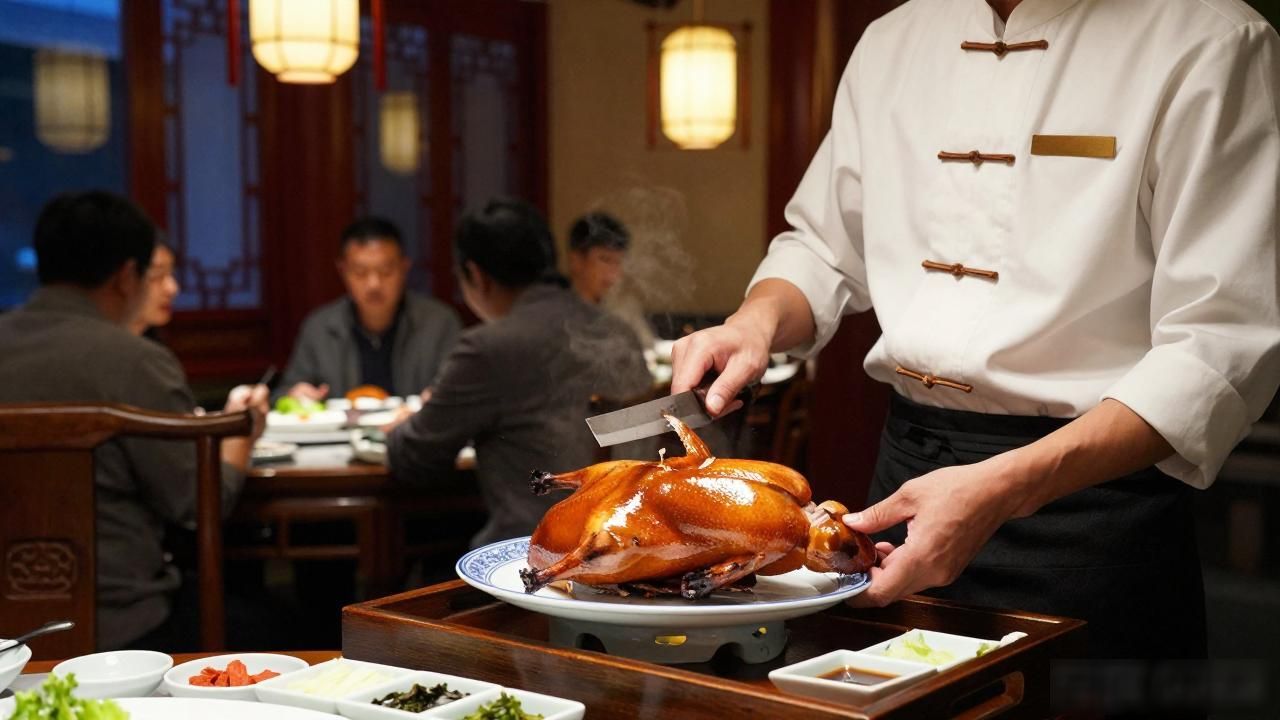
My honest take: skip the lunch rush at the big chains. Come at 5:30 in the evening, order the whole bird, and let the waiter bring the carving knife. Watch the way the first fan of skin slides off the breast. If the plate is still warm when it reaches you, you picked the right room.
You don’t need a guidebook to eat Peking duck well. You need a quiet table, a stack of fresh pancakes, and the patience to let the skin cool for ten seconds before you wrap it. The rest is just hunger talking. And in Beijing, that’s the best excuse to pull up a chair.