
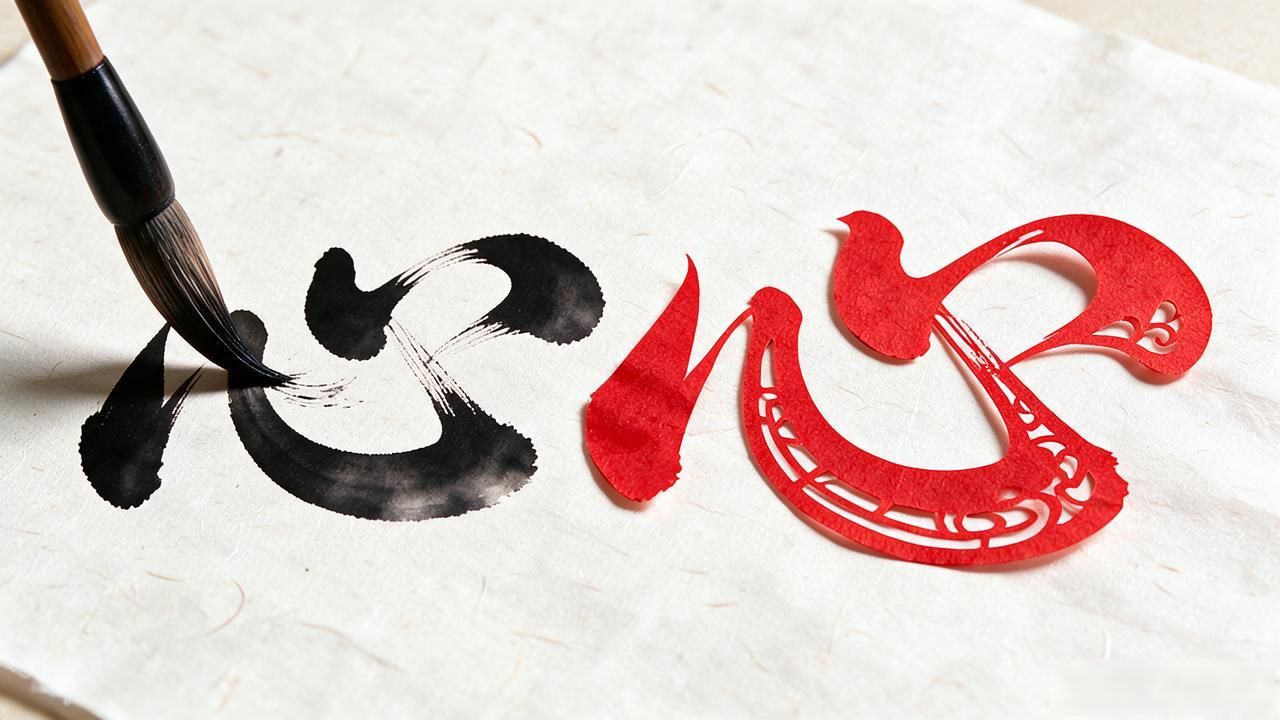
Chinese calligraphy & paper cutting are two of the most deeply rooted art forms in Chinese culture, yet many Western readers find them intimidating or confusing. They are not the same thing at all. Calligraphy is about the living hand, breath, and the weight of ink on paper. Paper cutting is about patience, scissors, and turning a flat red sheet into something that seems to breathe. Both have survived over a thousand years and remain a daily presence in Chinese homes.
What Is Chinese Calligraphy & Paper Cutting

Calligraphy, or shūfǎ, is not simply “pretty writing.” It is a meditative practice where every stroke — a horizontal line, a downward flick, a sharp hook — carries real emotional weight. Masters talk about breath flowing through the brush tip, and the rice paper absorbs that energy. A single character for “mountain” can look calm, fierce, or entirely free depending on the writer’s mood that afternoon. There is no eraser. What you put down stays, and that pressure is part of the point.
Paper cutting, or jiǎnzhī, is the quieter sister art. A red sheet, a pair of curved scissors, and steady hands produce dragons, peonies, or the character 福 (blessing). You see these pasted on doors during Spring Festival, and they have been made by rural women for centuries. The patterns are never random; each motif carries a specific wish — a fish for abundance, a peach for longevity. You can hold a cutout from a 1960s village workshop and one from last month’s market stall, and the lineage is visible in the line work.
How Does Chinese Calligraphy & Paper Cutting Work
You do not need to be Chinese to practice either art. A beginner can start with a ten-dollar brush, a pack of rice paper, and one character. The first week is humbling — strokes wobble, ink blots everywhere. Give it a month, and your hand starts to listen. For paper cutting, the real skill is reading the pattern from the inside out. You cut the negative space first,and the image slowly reveals itself like a photograph developing in a darkroom. Most people underestimate how much the cutting order matters.
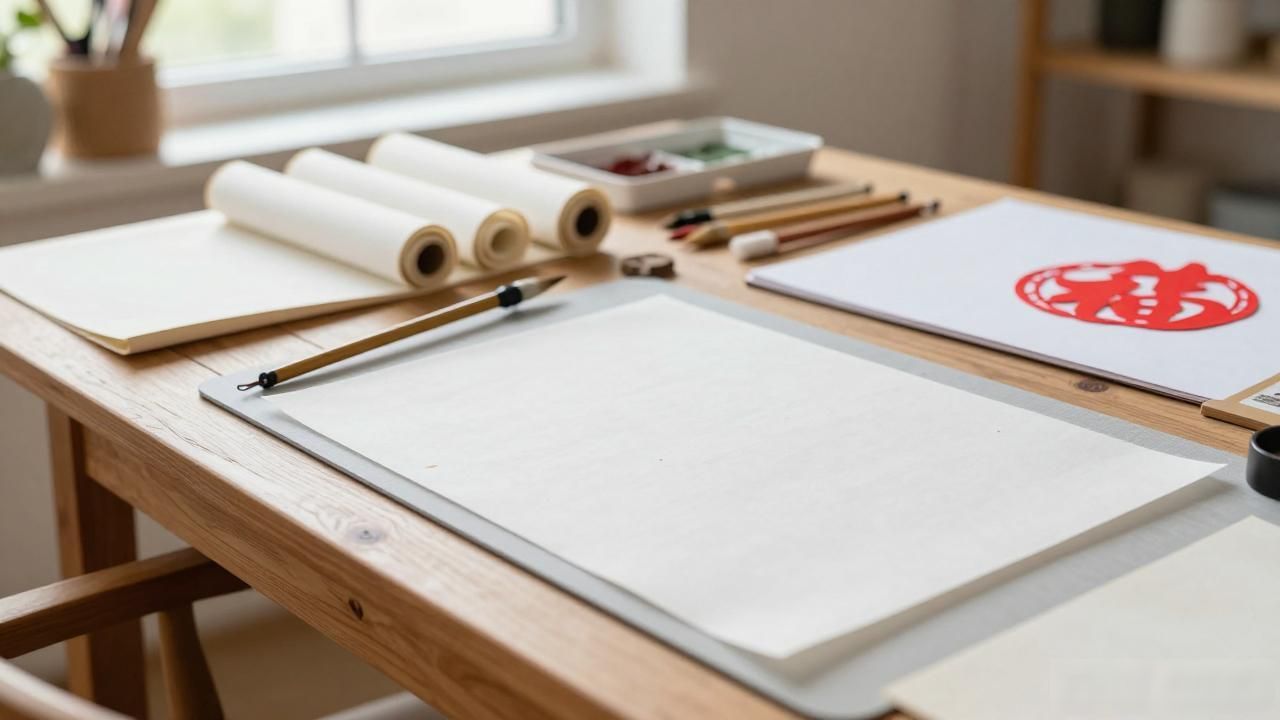
Many Western art workshops now pair the two: one hour of brush work at a table, one hour of scissors on a cutting mat. By the end of a session you finish with a small ink scroll and a red cutout sitting on your kitchen counter. It is not perfection; it is presence.
A bottle of ink, a handful of red paper, and twenty quiet minutes a day is enough to join a conversation that has been going on in China for three thousand years.