

Around Hangzhou’s West Lake, willows have shaped the shoreline for over a thousand years. Their drooping green branches create the classic “willow waves” that visitors from all over the world come to see. This guide gives you the essential spots, seasons, and history so you don’t miss a thing.
Why West Lake willows feel so special
The willow’s relationship with West Lake is not accidental. As early as the Tang dynasty,poets like Bai Juyi ordered willows planted along the embankment to stabilize the soil and add elegance. Later, the Song dynasty refined this into the famous “Su Causeway,” where six bridges are framed by thousands of willows. The combination of water, bridge, and weeping willow forms the very soul of Hangzhou’s landscape.

Today, each willow is carefully trimmed by park workers. The branches are cut back every winter so that spring growth is dense and symmetrical. When the March breeze picks up, the whole lakefront turns into a curtain of soft green. No other city in China has managed to preserve this living aesthetic so perfectly.
Best time to photograph the willows
Most travelers plan around March or April, when the new leaves are bright yellow-green and the peach blossoms next to them are in full bloom. The light at 7 a.m. is ideal, because the sun rises behind the willow canopy on the eastern shore, creating a golden haze. If you arrive in October, the willows maintain their fullness but the colors shift to deeper olive tones, contrasting nicely with autumn lotuses.
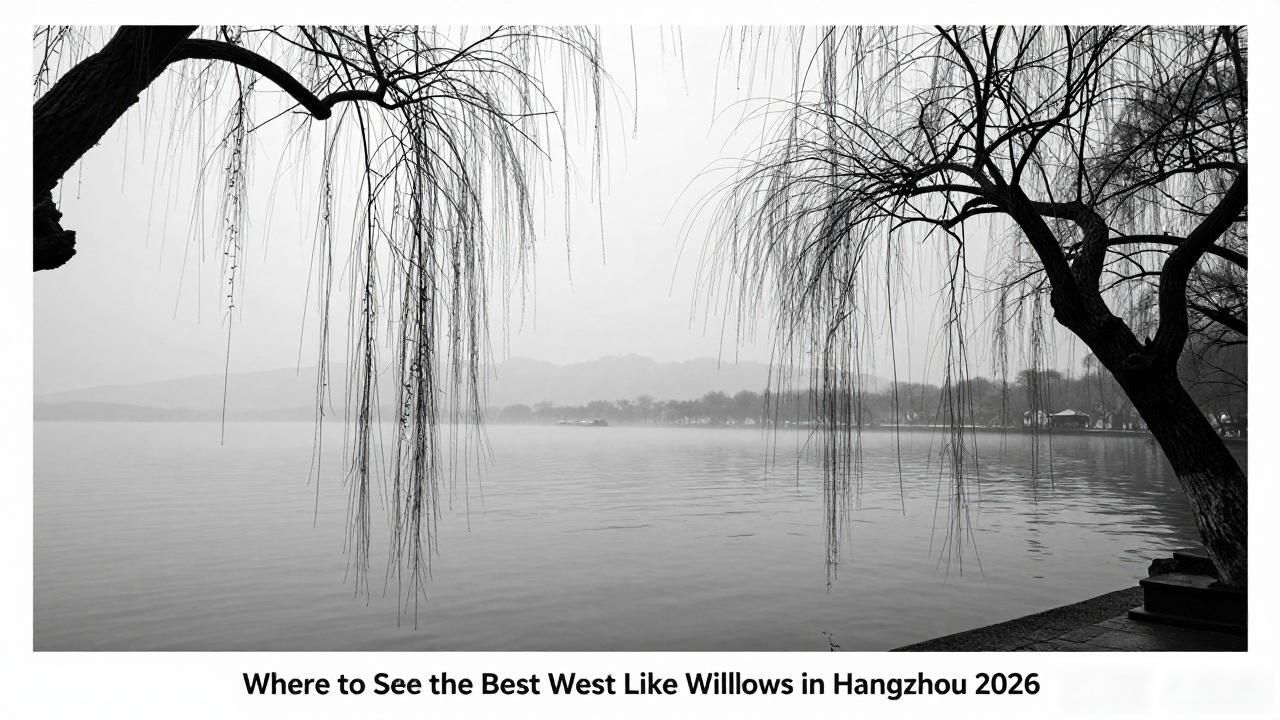
Avoid mid-summer afternoons when the leaves cast heavy shadows and the humidity makes photography tricky. The willows themselves are evergreen in Hangzhou’s mild climate, but their charm changes with every season. Winter offers a stark silhouette against the misty lake, perfect for black-and-white shots.
Where to start your willow walk
The Su Causeway is the obvious starting point, but the best stretch is from Flower Harbor Park to the south end of the causeway. This 1.5‑kilometer path has the densest cluster of old willows, some of which are over a hundred years old. The branches here dip into the lake, making it easy to frame a photo with the Leifeng Pagoda in the background.
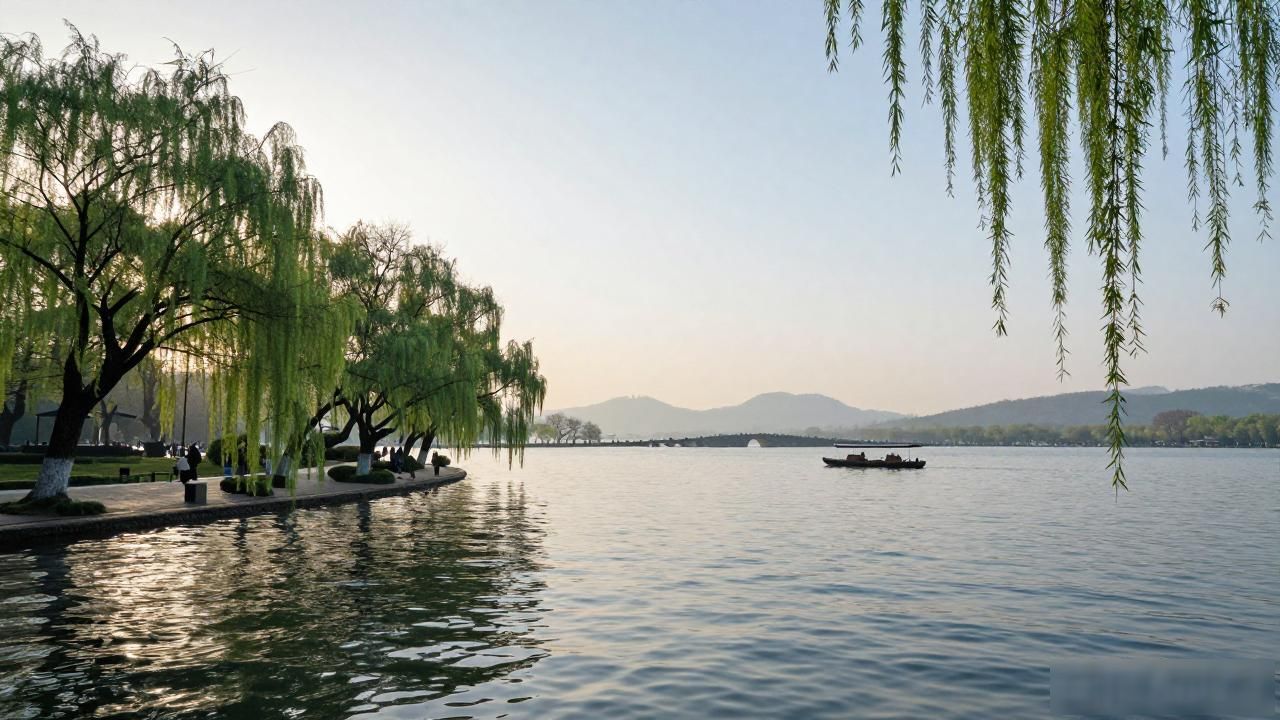
For a quieter experience, take the Bai Causeway early on a weekday. The willows there are slightly thinner but the view toward Broken Bridge and the distant mountains is unbeatable. You can also rent a small rowboat for 30 yuan per hour and glide under the low-hanging branches, which gives you the willow perspective that most tourists miss.
West Lake willows are not just trees—they are living landmarks. Whether you come in spring rain or autumn mist, they will wrap the lake in a quiet, ancient grace that stays in your memory long after you leave.