
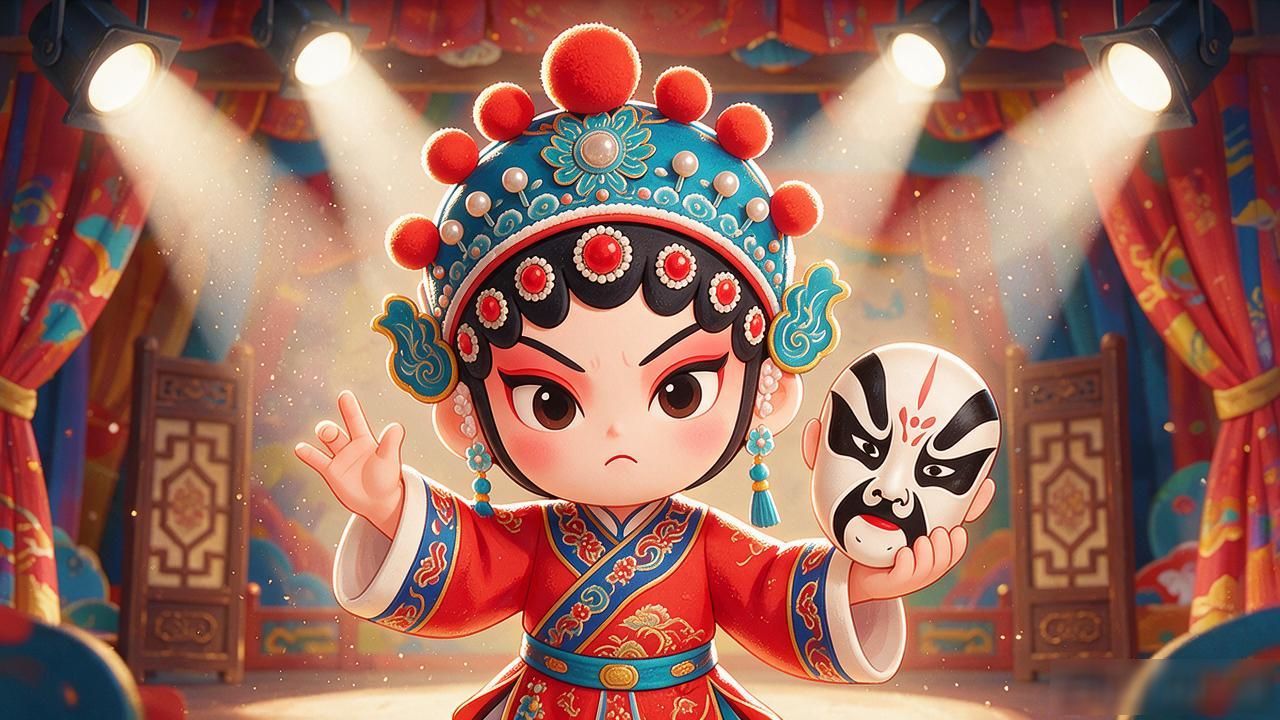
Sichuan Opera is one of China’s oldest regional performing traditions,stretching back over two hundred years through the mountainous province of Sichuan. Its most famous trick—the face-changing, or biànliǎn—has captivated audiences from Beijing to Broadway. Yet the art that once dominated village festivals and crowded teahouses is now a niche spectacle, and its survival as living heritage hangs on a thin thread.
Why is Sichuan Opera heritage fading

The craft demands years of grueling, disciplined training. A performer must memorize dozens of change sequences, practice precise hand angles until the cloth snaps into place, and learn to execute everything under the glare of a spotlight without a safety net. In the old troupe system, apprentices started at eight and spent a decade just sweeping the stage. Today, fewer than a handful of Chengdu-based troupes still run that pipeline, and the masters carrying the knowledge average well past sixty.
Meanwhile, the audience that once packed the Huiju Alley teahouses has scattered. Young Chinese scroll through short-form video on their phones; a two-hour opera with minimal plot and heavy recitation competes poorly against thirty-second clips. The ritual context that once gave the art meaning—temple festivals, community gatherings, New Year processions—has largely dissolved in fast-moving urban China, leaving the performance without its original social heartbeat.
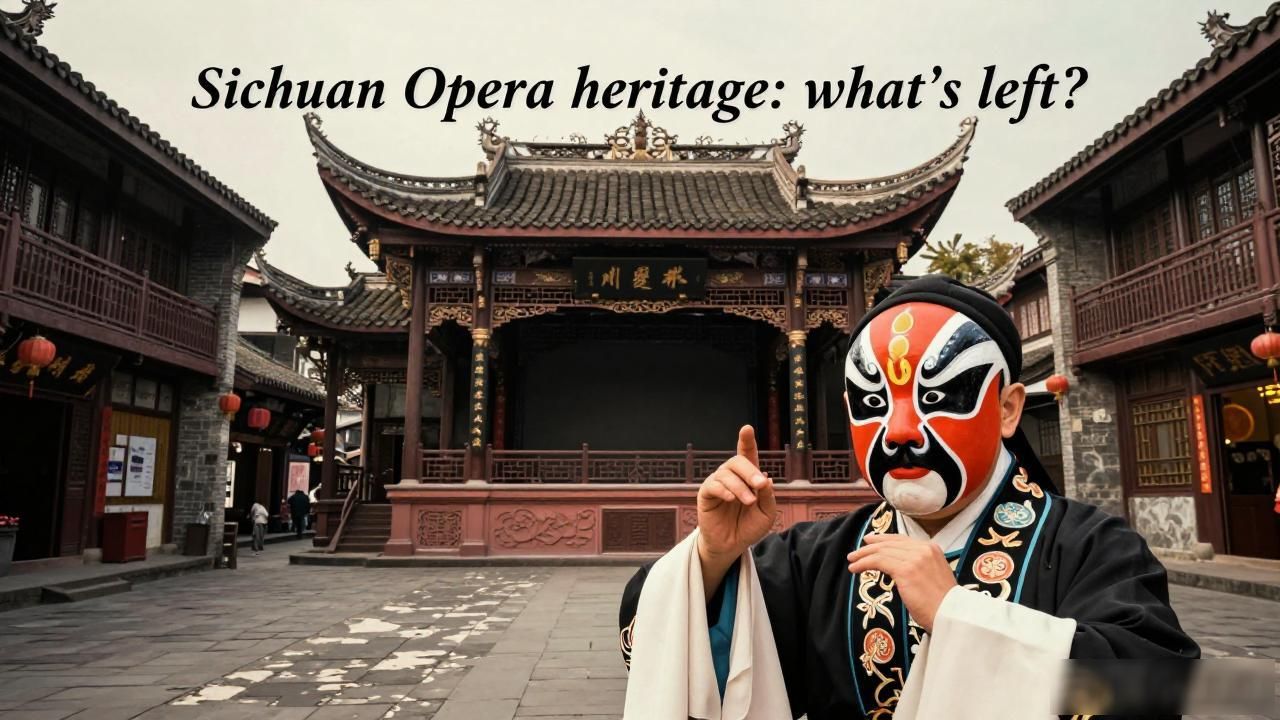
How can Sichuan Opera heritage survive
Chengdu’s Wanshou Theater has become a working laboratory for renewal. The troupe there mixes traditional face-changing with electronic sound design, interactive audience segments, and a plot that actually moves. Their shows sell out on weekend nights to a crowd mostly under thirty, and the provincial cultural bureau now funds monthly apprenticeship stipends to keep the pipeline alive. A few universities in Sichuan have quietly added performance tracks where students spend two years on stage craft before graduating.
Beyond the stage, Sichuan Opera heritage persists in documentary films, museum exhibits, and a small but growing YouTube channel run by a young costume designer in Mianyang who films the behind-the-scenes of mask-making. Tourism boards bundle opera evenings with hot-pot dinners and bar-hopping in Kuanhai Street, framing the art as a sensory night out rather than a museum piece. The trick, as one seasoned performer told me over tea, is that the mask still has to surprise you in the dark—if it doesn’t, no amount of funding changes the fact that the art is losing its grip on the next generation.