
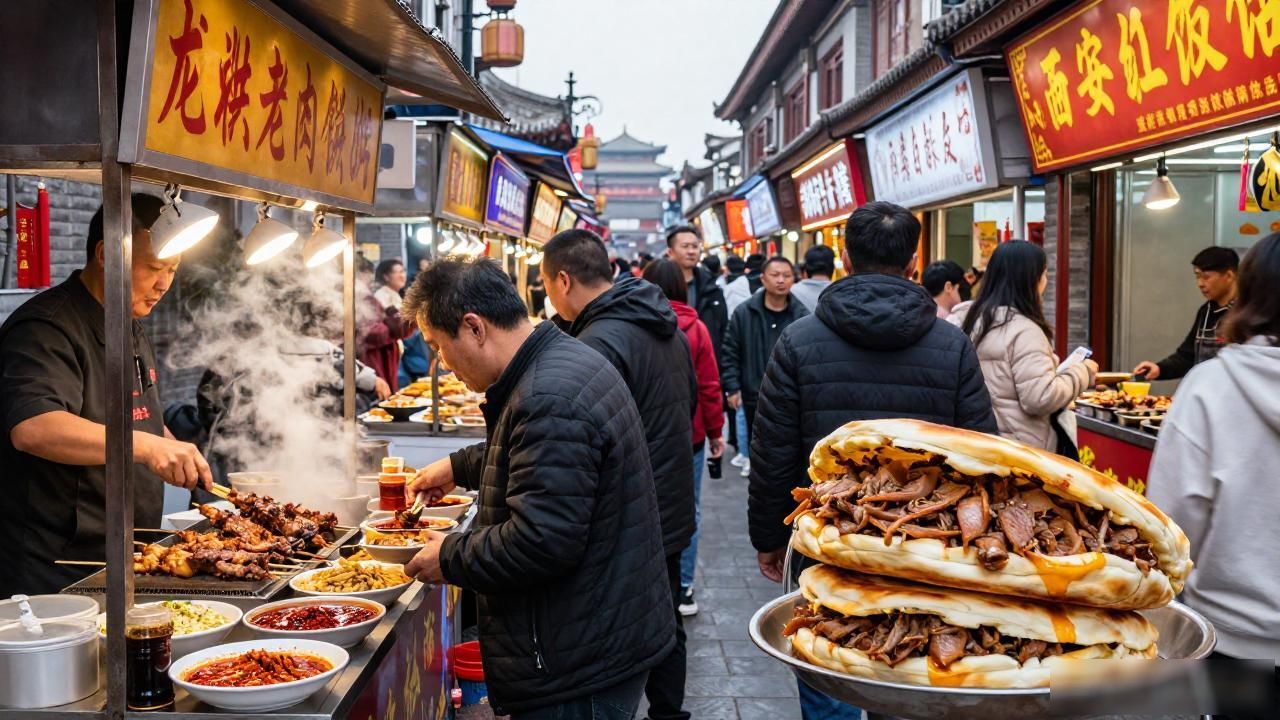
Xi’an is one of China’s oldest cities, and its food scene is just as rich in history as its ancient walls. When I first visited, I expected decent local dishes — what I got was a full-on culinary adventure. From sizzling street-side stalls to quiet family-run noodle shops, every corner seems to have a reason to stop and eat. If you’re planning a trip there, here’s what you absolutely shouldn’t miss.
What Are the Most Famous Xi’an Street Foods

You cannot walk through Xi’an’s Muslim Quarter without being surrounded by the smell of cumin, chili oil, and grilled lamb. It’s chaotic, loud, and completely unforgettable. Among the dozens of vendors lining the streets, roujiamo — sometimes called the Chinese hamburger — stands out. It’s a soft, flaky flatbread stuffed with slow-braised pork that falls apart at the touch. Every stall claims to make the best version, but finding one that gets it right is half the fun. Another local favorite is liangpi, a cold jelly noodle dish served with vinegar, garlic, and spicy chili sauce. It’s refreshing on hot days and perfect for grabbing while wandering. Skewered lamb, deep-fried dough sticks dipped in soy milk,and steaming baskets of soup dumplings round out the experience. Just follow the crowds — the busiest stalls almost always serve the best food.
Where to Find the Most Authentic Xi’an Noodle Experience
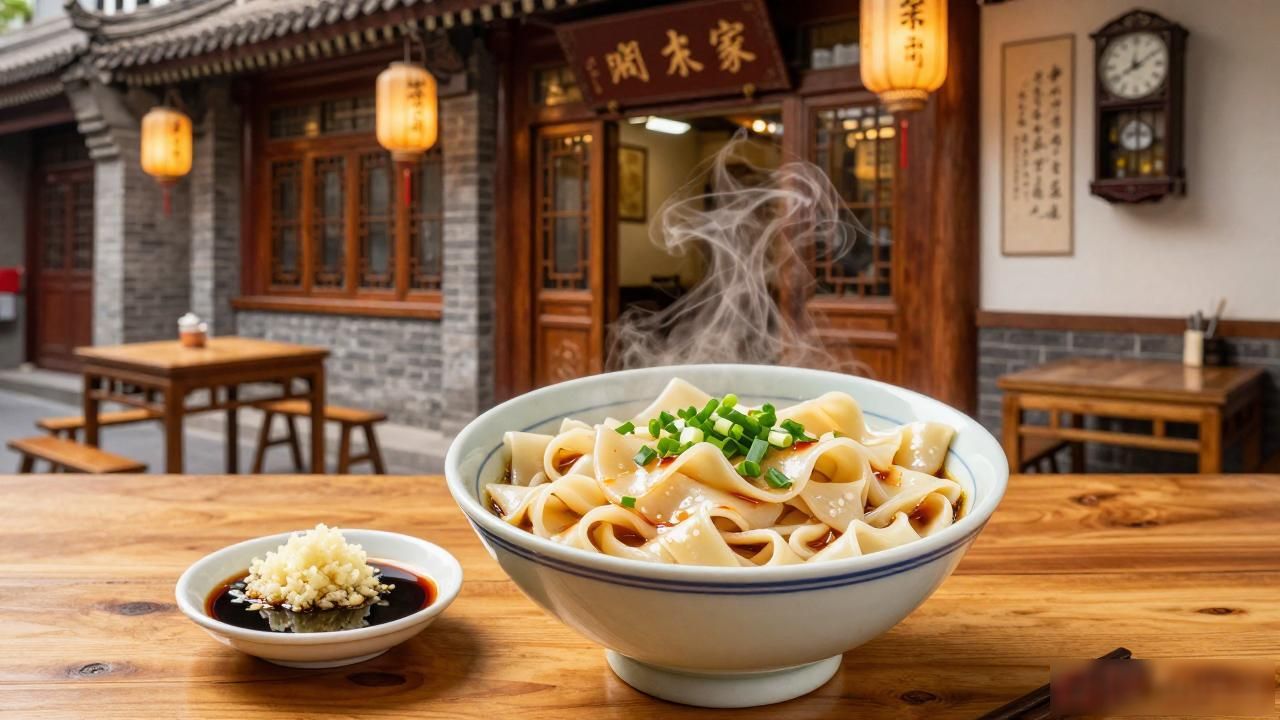
Noodles in Xi’an are not a side dish — they are a way of life. The city is home to some of China’s most iconic noodle styles, and nothing compares to eating them fresh, hand-pulled, and steaming hot. Biangbiang noodles are legendary for their thickness and chewy texture. These wide, belt-like noodles are slapped against the counter — the distinctive slapping sound gives the dish its name — then topped with garlic, chili flakes, and soy sauce before being tossed together tableside. It’s messy, satisfying, and deeply authentic. No visit to Xi’an is complete without trying biangbiang noodles at least once. Another must-try is yangrou paomo, a lamb stew where you break crispy flatbread into small pieces yourself before the kitchen adds it to the simmering broth. It takes patience, but that part of the ritual is what makes it special. Head to small shops away from the main tourist drag, and you’ll find locals lining up — that’s your signal you’ve found the real deal.
What Should a Food Lover Know About Eating in Xi’an Before Going
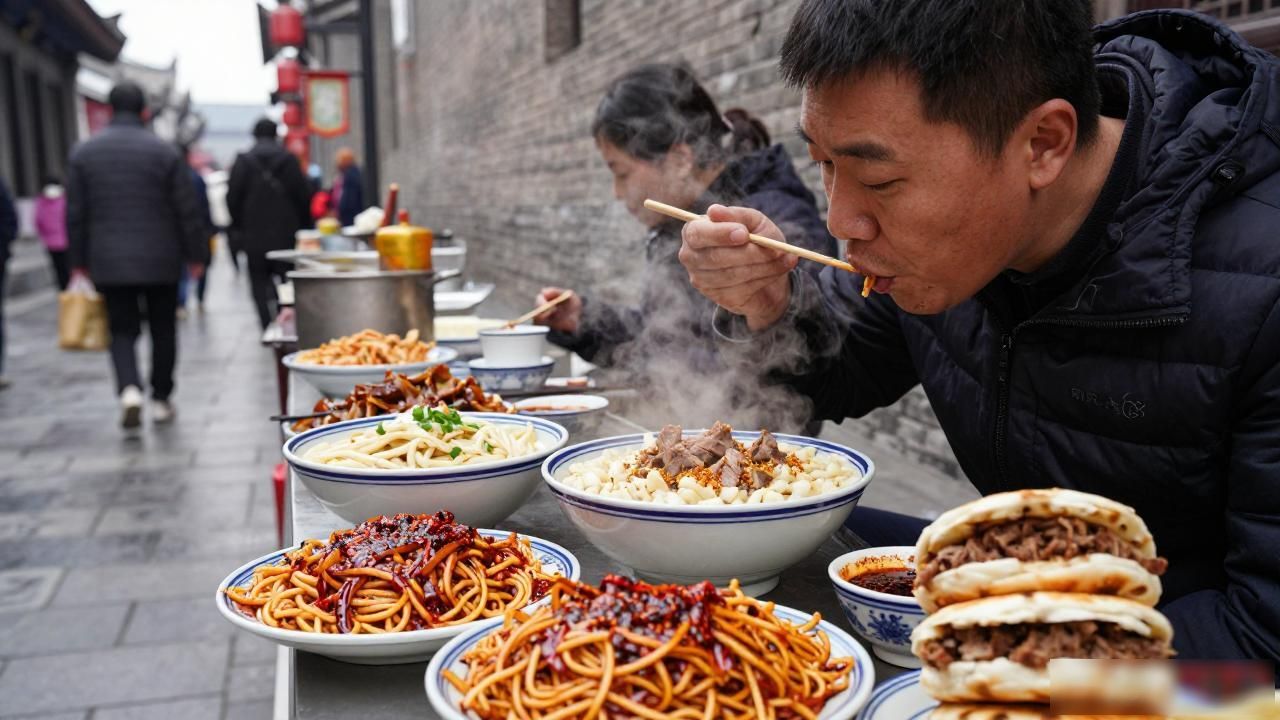
Xi’an’s food culture is deeply rooted in its history as the eastern terminus of the Silk Road. Centuries of trade brought Central Asian spices, techniques, and ingredients that shaped the city’s unique flavor profile. The heavy use of cumin, lamb, and wheat over rice sets Xi’an apart from many other Chinese cities. Cash is still widely accepted, though mobile payments dominate among younger vendors. Tipping is not practiced. Most popular restaurants get extremely crowded during lunch and dinner hours, so going early can save you from long waits. English menus are rare outside of tourist-heavy areas, but pointing and smiling works everywhere. The Muslim Quarter can be overwhelming for first-time visitors, but sticking to the side lanes often reveals quieter, equally delicious spots. Hygiene standards at street stalls vary — trust your eyes and go where the food is freshly cooked in front of you.
Xi’an will test your assumptions about what Chinese food can be. It is bold, unapologetic, and deeply connected to the land and history around it. Come hungry, leave fuller than you thought possible, and carry the memory of those flavors home with you.