
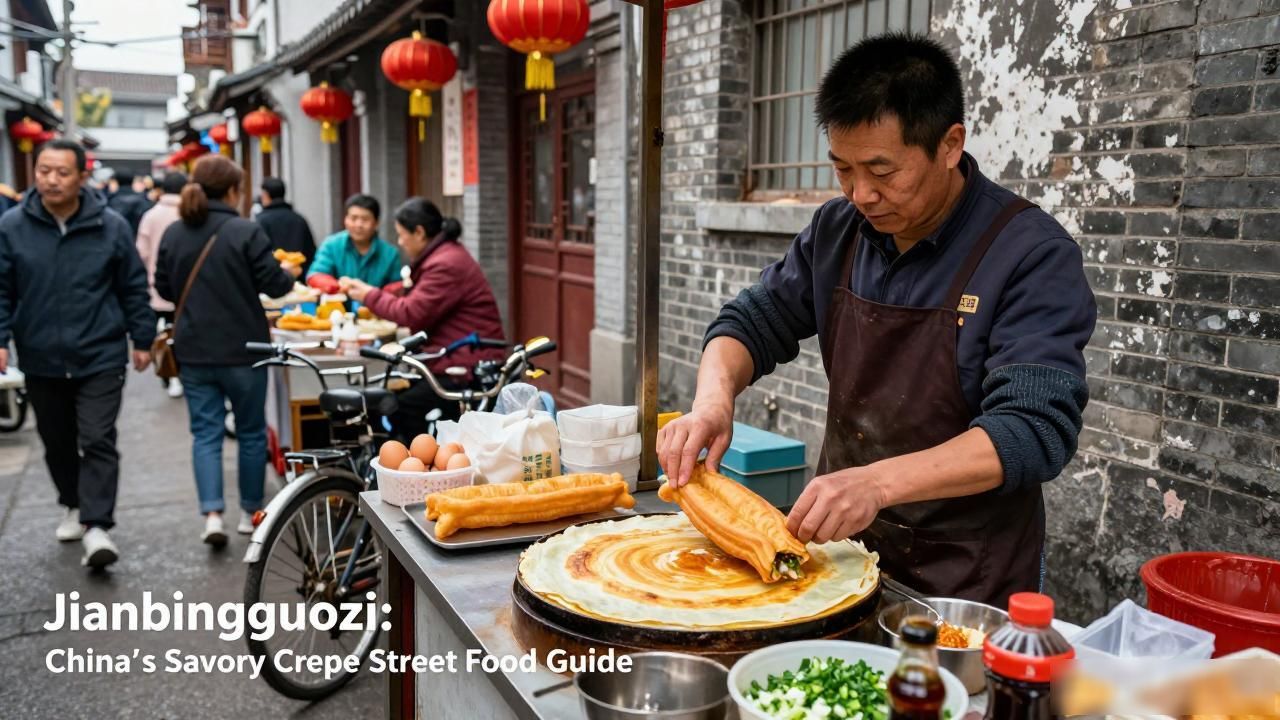
Jianbingguozi is China’s answer to the breakfast sandwich—a foldable crepe loaded with savory fillings that has fed students, office workers, and night owls for generations. If you have never tried it, picture a thin egg-and-mung-bean pancake wrapped around a crispy fried cracker, brushed with sauce, and rolled into a handheld package. It costs almost nothing, cooks in under two minutes, and tastes impossibly good.
Street vendors still call themselves jianbing laoye or jianbing ayi. Their carts sit on sidewalks from Tianjin to Chengdu, and the ritual never changes. Heat the griddle. Spread the batter. Crack the egg. Flip. Add sauce, scallions, cilantro, and either a zháogé or yOutiao inside. Roll it up. Hand it to you wrapped in paper. You walk and eat. That rhythm has stayed the same for decades.
What Makes Jianbingguozi Unique
Many people confuse jianbingguozi with other Chinese pancakes because the shapes look similar at a glance. The real difference lies in the batter, the fold, and the crunch. A true Tianjin-style jianbing uses mung bean flour, which gives it a pale green tint and a lighter, more delicate bite than wheat-only crepes. Most vendors blend in some wheat flour to make the sheet easier to handle, but the mung bean flavor should still shine through.

Another key marker is the fried insert. Some places use zháogé, a small round crisp that holds its shape inside the roll. Others use yOutiao, a long twisted dough stick that softens slightly from the hot crepe but keeps a chewy center. A few vendors even stack both. The choice changes the texture in every bite, and once you taste the contrast between the soft crepe and the shattering crunch, you will notice it everywhere you go.
The best jianbingguozi balances a tender crepe, a salty-sweet sauce, and a crunch that does not disappear too quickly. That balance is why experienced eaters watch the vendor closely instead of picking a random cart.
Where to Eat It Like a Local
Tianjin remains the hometown of jianbingguozi, and locals take that seriously. People there argue about sauce recipes the way other cities argue about noodle broth. Guofu Road and the alleys near Nankai University still have lines on weekday mornings, mostly from university students who know which carts keep their zháogé crispy longer. If you visit during rush hours, expect to wait, but the turnover is fast and the food comes out hot.
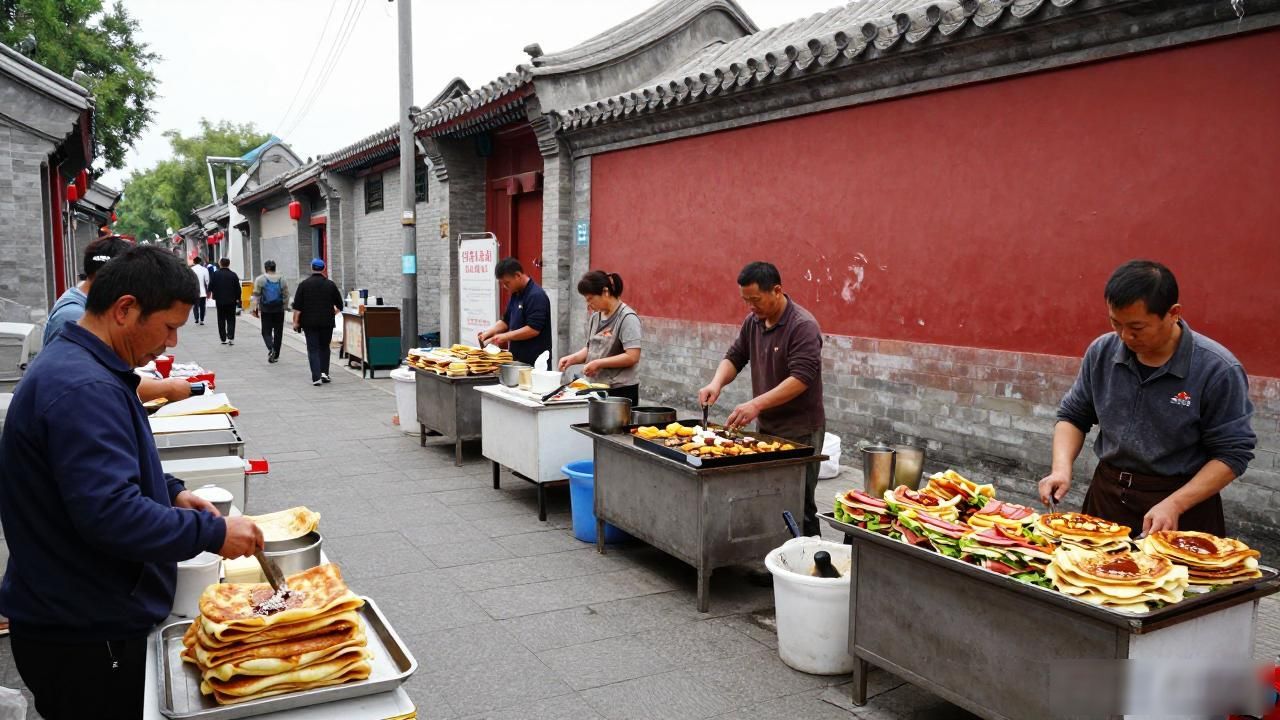
Beijing does not claim to invent jianbingguozi, yet it offers the widest variety because migrants brought their regional versions with them. Some Beijing carts lean toward a thinner, crispier crepe,while others add ham, lettuce, or even cheese for customers who want something closer to a wrap. Shanghai and Hangzhou tend to keep the portions smaller and sweeter, reflecting local taste preferences. Guangzhou and Shenzhen push the price up because rent is higher, but the technique stays rooted in the north.
A reliable street trick is simple: choose the cart with the longest line of locals, not tourists. Tourists usually gravitate toward carts near major subway exits or shopping malls, where prices run higher and the crepe sometimes turns out soggy because the vendor tries to rush through. Stand near universities, residential blocks, or old market streets instead.
How to Order and Eat It Without Confusion
Foreign visitors often feel lost when they reach the cart because the vocabulary is fast and the choices multiply quickly. The safest move is to point and say you want the classic version, then add or remove one thing at a time. You can ask for extra crispy, less spicy, no cilantro, or extra sauce. Vendors hear these requests daily and rarely get impatient.
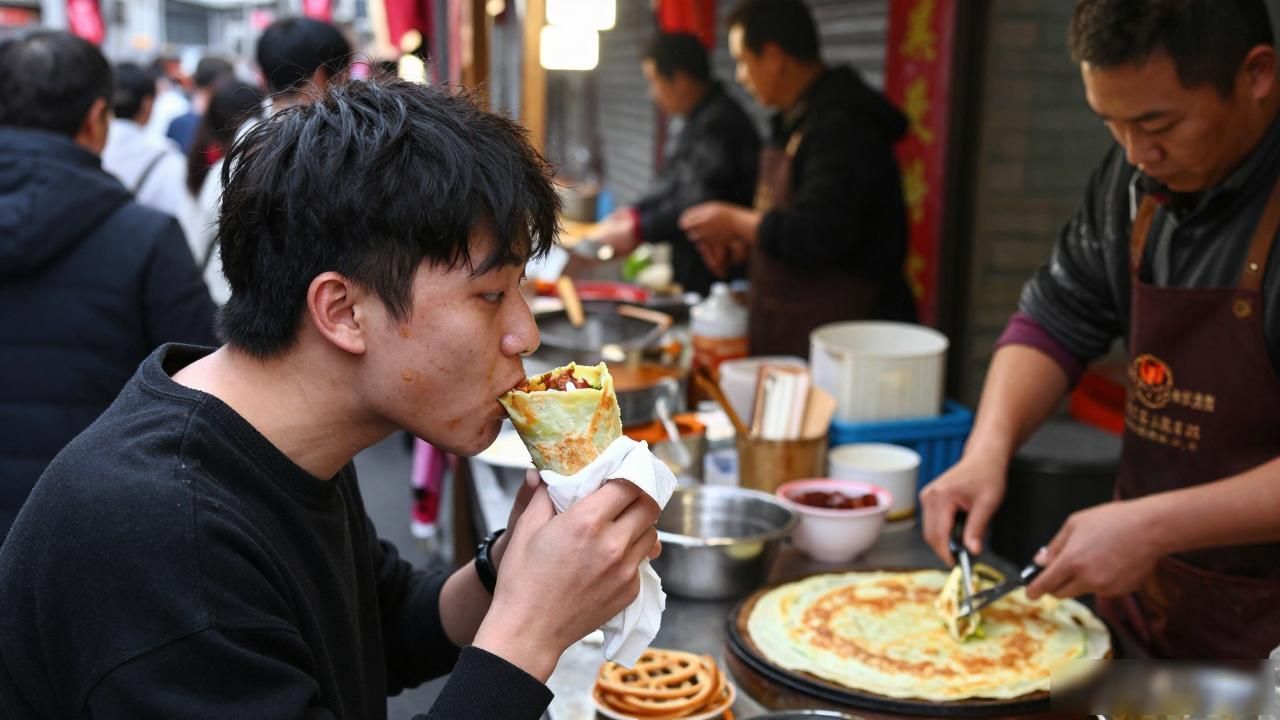
Eating jianbingguozi is easier than it looks if you hold it diagonally and take small bites from one end. The filling shifts inside the roll, so cutting it in half with scissors is common practice when you are standing in a crowd. Keep a napkin handy because sauce always finds its way onto your fingers, and that is part of the experience.
Street carts close early, usually between nine and ten in the morning, though some stay open later near nightlife districts. If you miss breakfast time, look for lunch spots that still cook fresh rather than reheated versions. Freshly made jianbingguozi tastes completely different from one that has sat under a heat lamp, and the difference shows in the crepe and the crisp insert.
The beauty of jianbingguozi is not just in the flavor but in the consistency of a dish that has survived urban change, fast food trends, and shifting tastes. Walk past a cart on a weekday morning, watch the batter spread, smell the scallion oil, and buy one. You will understand quickly why China keeps coming back to it.