
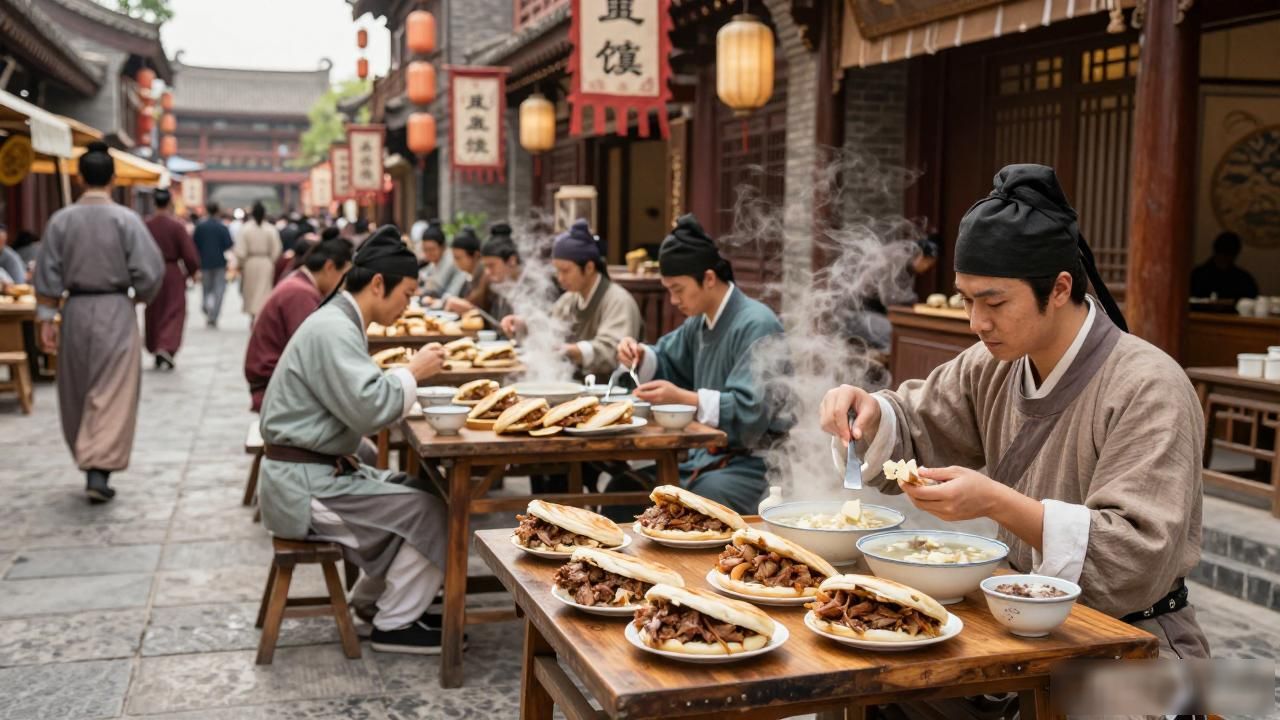
Xi’an is not just an ancient capital—it is a living museum of flavors. Located at the eastern end of the Silk Road, this city has been a crossroads of cultures for over 3,000 years. Its food tells stories of traders, monks, soldiers, and emperors. For visitors, every bite is a journey through history.
Food Carried by the Silk Road
Long before modern highways, camels carried spices, wheat, and livestock across deserts and mountains. Xi’an sat at the heart of this network. Central Asian influences shaped local cuisine in remarkable ways. Lamb became a staple. Noodle-making techniques arrived from the west. Spices like cumin and chili pepper transformed the flavor profile of the region.

One famous dish, roujiamo, is often called “the Chinese hamburger.” But its roots run much deeper. The soft bread is stuffed with slow-cooked pork belly, a combination that has satisfied travelers since Tang Dynasty times. Another iconic dish, yangrou paomo,requires diners to break flatbread into small pieces before adding rich lamb broth. This interactive meal reflects the city’s love for communal dining.
Street Food and Hidden Flavors
Walking through Xi’an’s narrow alleys reveals generations of street food wisdom. Liangpi, a cold noodle dish made from rice or wheat starch, is refreshing during hot summers. Vendors prepare it fresh daily, mixing it with vinegar, garlic, and sesame oil. The texture is uniquely chewy and satisfying.
Biangbiang noodles are another must-try. These wide, hand-pulled noodles are named after the sound they make when hitting the cutting board. A single plate can be enormous, topped with chili oil, Sichuan peppercorns, and crispy garlic. Locals eat them with their hands, dipping into shared bowls of soup.
For something sweeter, try youbing, a layered flatbread brushed with oil and sprinkled with sesame seeds. It pairs perfectly with a cup of sweet milk tea, a drink brought by Hui Muslim communities centuries ago.
Hui Muslim Quarter: A Feast for All Senses
The Muslim Quarter is where Xi’an’s food culture comes alive. Night after night, lanterns glow above crowded stalls selling skewers, dumplings, and fermented milk drinks. The air is thick with the smell of grilling meat and frying dough.
Sizzling lamb skewers dusted with cumin and chili arrive at your table still smoking. Juicy zongzi wrapped in lotus leaves offer a sweet, sticky contrast. Every corner presents a new taste waiting to be discovered.
Why Xi’an Food Matters Today
Xi’an’s cuisine reminds us that food is more than fuel—it is memory, identity, and connection. Each recipe has survived wars, dynasties, and globalization. In a world of fast food and instant meals, Xi’an honors tradition while embracing innovation.
To taste Xi’an is to understand China. Not the China of textbooks, but the real one—messy, bold, warm, and unforgettable.