
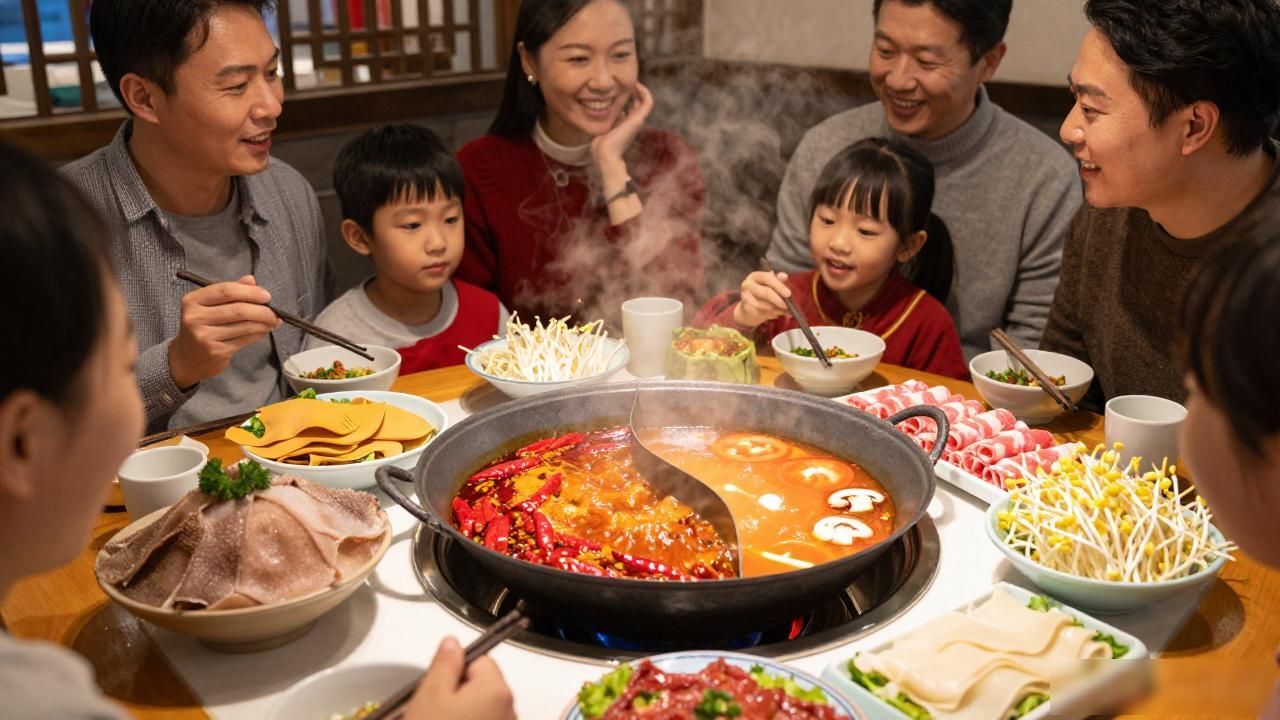
When someone unfamiliar with Chinese cuisine hears about Chongqing hot pot, their first question is usually simple: How spicy is it? And what exactly are you supposed to order? The answer is far more nuanced than a single number on a heat scale. Chongqing hot pot carries centuries of tradition in every bubbling pot, and understanding its flavors opens the door to one of the most rewarding dining experiences available anywhere in the world.
What Makes Chongqing Hot Pot Broth Unique
Most visitors expect hot pot to be a gentle, communal simmer — a light broth shared between friends. That experience exists elsewhere in China, but Chongqing operates on an entirely different frequency. The foundation of every authentic Chongqing pot is Sichuan peppercorn,a humble dried spice that produces an unmistakable tingling vibration across the tongue and lips. Combined with aggressively generous amounts of dried chili, this broth doesn’t merely warm you — it announces its presence to the entire restaurant.
The butter-based soup base is the gold standard in the city. Rendered beef tallow or vegetable oil is infused with dozens of spices over several hours, creating a thick, crimson pool that clings to every ingredient. This richness is what separates Chongqing hot pot from the lighter broths found in neighboring regions. The fat carries flavor into the meat, the vegetables, and ultimately into your memory of the meal.

Not every pot in Chongqing follows the fiery path. Tomato and mushroom broths appear on nearly every menu, catering to families and children who prefer something gentler. Some restaurants even offer split pots — one half butter-chili, one half mild — allowing a group to share a single table without alienating anyone. Choosing the split pot is never a compromise; it is a smart way to experience both sides of Chongqing’s culinary identity.
Decoding the Heat Levels and Must-Try Ingredients
Ordering a Chongqing hot pot means confronting the restaurant’s heat scale, which typically ranges from one to five stars. One star might seem approachable, but it still carries significant kick compared to what most Western palates consider spicy. Two or three stars is the sweet spot for first-timers — intense enough to feel authentic, mild enough to savor without tears. Going beyond three stars is reserved for locals and experienced visitors who have earned their burn tolerance.
Certain ingredients define the Chongqing experience, and skipping them means leaving money on the table. Fresh beef tripe, duck intestine, and various offal cuts form the core protein selection at nearly every establishment. These items cook in seconds rather than minutes, and their textures range from impossibly crunchy to velvet-smooth. Beef tripe, when cooked for precisely eight seconds, delivers a crunch that defines the entire meal. Sliced pork belly, fish balls, and duck blood curd round out the protein selection.
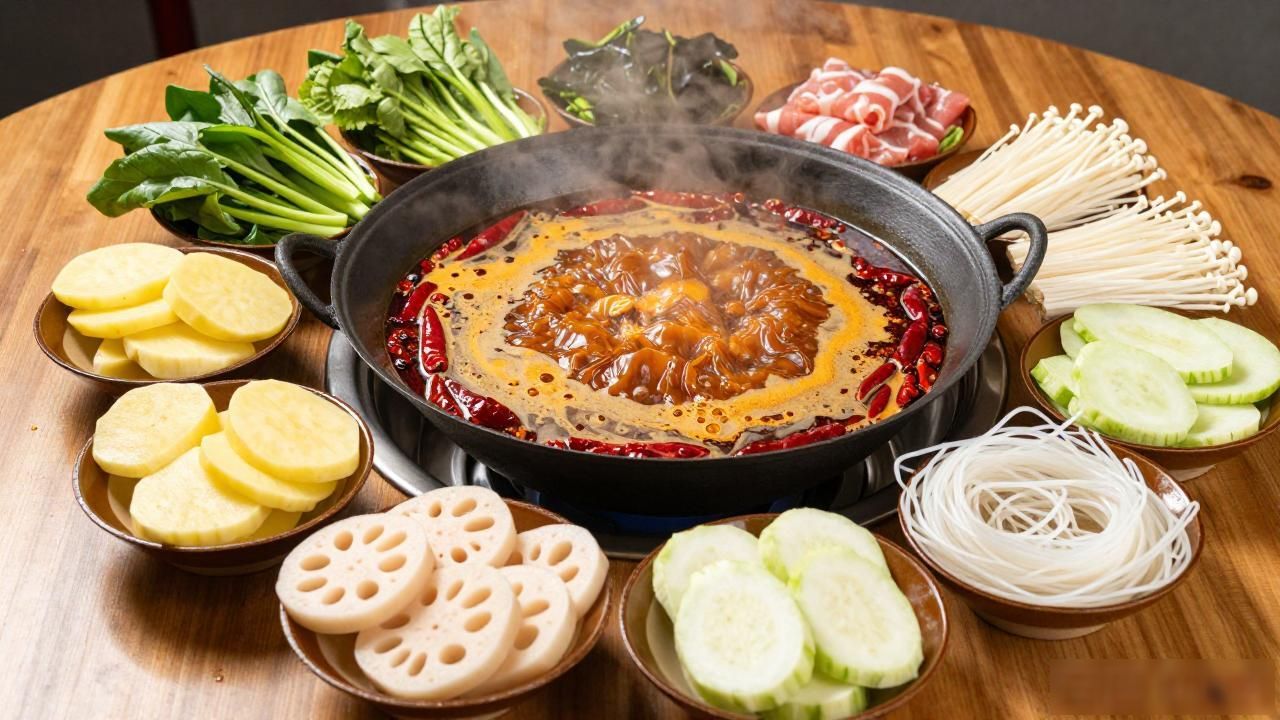
Vegetables play an equally vital role. Potato slices, lotus root, and winter melon absorb the broth’s heat and transform into something entirely new. Enoki mushrooms and leafy greens balance the richness of the butter base. Rice noodles and konjac knots provide chewy, almost rubbery resistance that contrasts beautifully with tender meat.
Dipping sauce is where personal expression enters the equation. The traditional Chongqing approach is deceptively simple: a small bowl of pure sesame oil with raw garlic cloves crushed into it. This might seem counterintuitive — adding more fat to something already swimming in it — but the oil creates a protective coating on the lining of your mouth, allowing you to eat faster and more confidently without burning yourself. A few dashes of soy sauce or a spoonful of chopped cilantro can elevate the dip further, though purists will argue against anything beyond oil and garlic.
Making the Most of Your Chongqing Hot Pot Experience
The ritual of Chongqing hot pot extends well beyond the food itself. It is a long, unhurried affair — easily two hours from first pot to final sip of tea. Locals understand this rhythm instinctively, but visitors sometimes mistake the pace for inefficiency. Nothing could be further from the truth. The broth deepens and evolves as the meal progresses. Early ingredients taste bright and clean. Later pieces absorb layers of concentrated spice and savory depth that simply cannot be rushed.
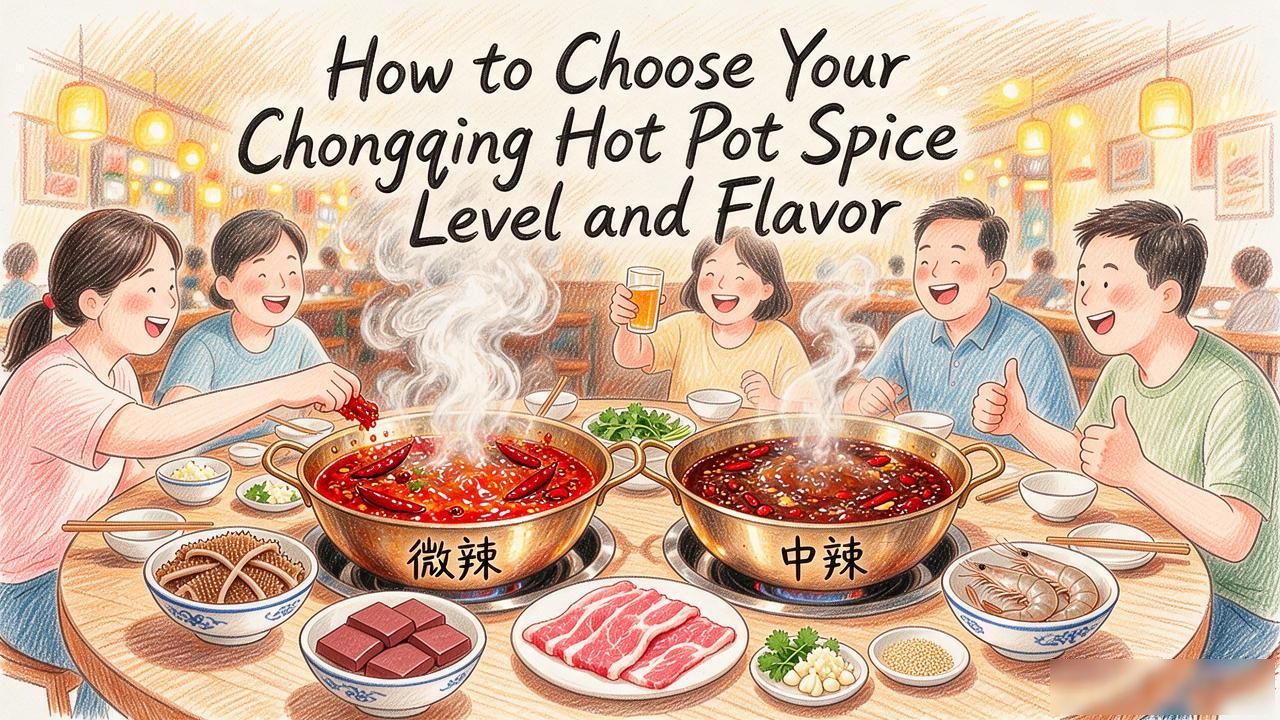
For a first visit, ordering one mild pot alongside one medium-spiced pot guarantees you leave satisfied rather than overwhelmed. Bring a group of at least three people. Hot pot loses something essential when eaten alone — the sharing, the constant refilling of bowls, the laughter that accompanies a meal designed for company.
If the spice becomes unbearable at any point, ordering a glass of sweet soy milk or a bowl of plain white rice will rescue your palate instantly. These humble remedies are everywhere in Chongqing and absolutely none of them invite judgment from fellow diners. Asking the staff for recommendations in advance is also wise; they see foreign faces daily and genuinely enjoy helping visitors navigate menus they might otherwise find intimidating.
The best Chongqing hot pot experience is not about enduring pain — it is about discovering a dimension of flavor most of the world has never tasted. Once you understand the broth, respect the heat levels, and learn which ingredients deserve priority, that first bowl transforms from a test of courage into something close to revelation. The city never stops cooking, and neither should you.