
China’s railway network is the largest in the world, carrying billions of passengers each year. For foreigners visiting this vast country, navigating the train ticket system can feel like solving a maze blindfolded. But once you understand the basics, booking a train ride in China becomes surprisingly straightforward. Whether you’re planning a quick trip from Beijing to Shanghai or a scenic journey through the countryside, knowing how to secure your seat ahead of time is essential.
Where can foreigners buy China train tickets
The most official and reliable channel is the China Railway 12306 platform, operated directly by China Railway Corporation. Both the app and the website accept foreign passports, which is a huge advantage for international travelers. You simply register with your passport number, verify your identity, and you are ready to book. The English interface on the website is decent, while the app offers an equally functional English version.

Many foreigners also turn to third-party travel platforms such as , which handle the English interface and customer support in your own language. These services charge a small convenience fee but save you from wrestling with registration hurdles. If you prefer a hands-off approach, your hotel concierge or a local travel agent can book tickets on your behalf using your passport copy.
It is worth noting that Chinese citizens typically rely on the 12306 app exclusively, while foreign visitors often gravitate toward third-party services simply because the support is more accommodating. Neither approach is wrong, and both will get you a valid ticket.
What do you need to book a train ticket
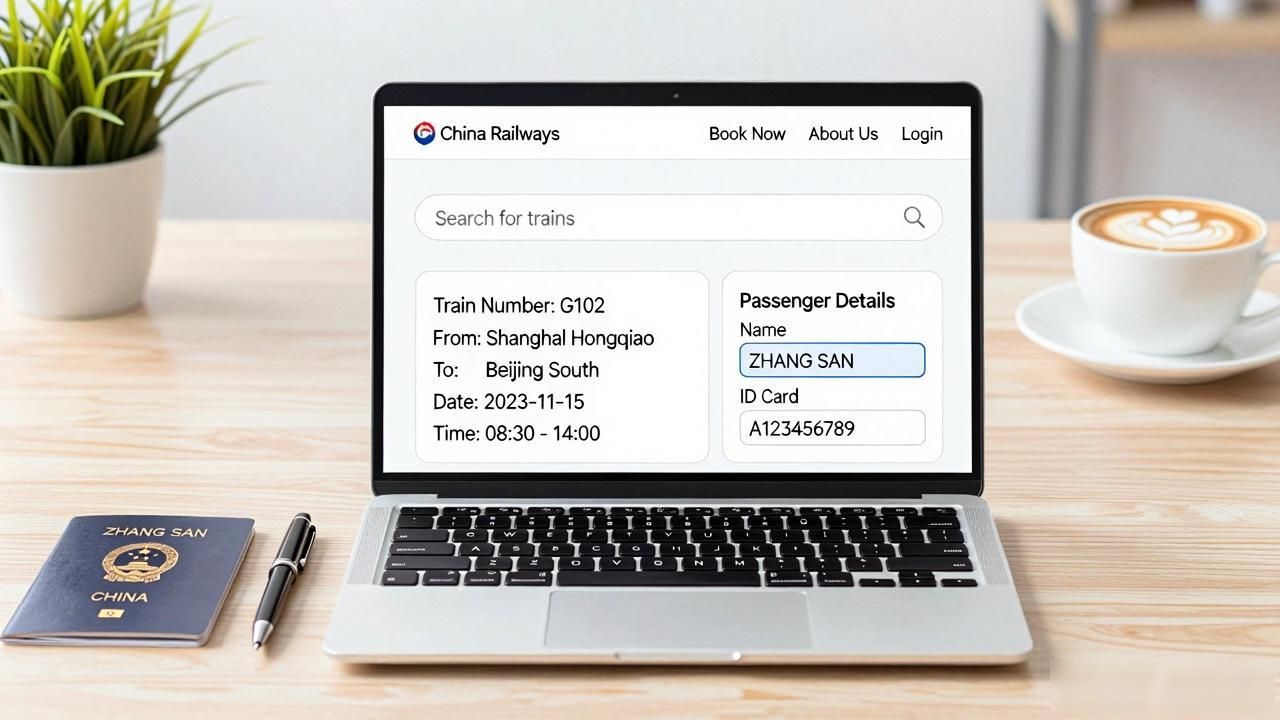
You will need a valid passport, since that serves as your primary identification document. A foreigner cannot use a national ID card in China,so keep your passport details handy during the entire booking process. Make sure the name on your passport matches exactly what you type into the booking system, including spelling and order. Even a minor mismatch can cause trouble when you try to board the train.
Payment is another consideration. The 12306 app accepts international credit and debit cards, as well as UnionPay. Third-party platforms usually accept Visa, Mastercard, and PayPal, giving you more flexibility. When booking, you will also need to select a specific boarding station and a return station if applicable, along with your preferred travel date and train number.
After completing the purchase, you will receive an e-ticket confirmation with a QR code. While paper tickets were once mandatory, China has moved toward fully electronic ticketing, meaning you can simply present your passport at the station gate and board directly. However, printing a copy of your e-ticket as a backup is still a wise move in case of technical glitches.
Tips that make the process smoother

Train tickets in China, especially on popular routes like Beijing to Xi’an or Shanghai to Hangzhou, sell out quickly during holidays and weekends. Book at least three to five days in advance whenever possible, and up to two weeks ahead during peak travel seasons such as the Spring Festival or National Day. Last-minute bookings are not impossible, but your seat choices will be severely limited.
When selecting a seat, understand the difference between hard seat, soft seat, hard sleeper, and soft sleeper classes. Hard seat is the cheapest option and suitable for short trips, while soft sleeper is the way to go for overnight journeys spanning several hundred kilometers. Each class offers a different level of comfort and price, so pick based on your budget and journey length.
Arrive at the boarding station at least forty-five minutes before departure. Security checks and passport verification take time, and the gates typically close fifteen minutes before the train leaves. Being early prevents unnecessary stress and gives you room to grab a drink or a snack from the station shop before your train departs into China’s remarkable rail landscape.