

When planning a trip to China, the sheer scale of the country can be overwhelming. From bustling cities like Shanghai and Beijing to remote natural wonders such as Yunnan’s landscapes and Sichuan’s pandas, creating an itinerary that balances must-see attractions with practical logistics requires careful thought. This guide aims to simplify the process by offering actionable tips tailored for first-time visitors who want to make the most of their time without feeling rushed or lost.
How to Choose Destinations Based on Your Interests

China’s diversity means there’s something for everyone,but focusing on your interests will help narrow down options. If you’re into history and culture, start with Xi’an—the birthplace of the Terracotta Army—and then move to Nanjing or Luoyang to explore ancient temples and imperial palaces. For food lovers, Chengdu is a no-brainer thanks to its spicy cuisine and vibrant street markets. Nature enthusiasts might prefer Guilin’s karst mountains or Zhangjiajie National Forest Park, which inspired the floating Hallelujah Mountains in Avatar. Don’t forget about coastal destinations like Sanya if beach relaxation tops your list.
Once you’ve picked two or three regions, consider travel seasons carefully. Spring (March-May) offers mild weather perfect for sightseeing, while autumn (September-November) brings clear skies ideal for photography. Avoid major holidays unless you enjoy crowded attractions! Also remember that intercity transportation—especially high-speed rail—is efficient between big cities, so don’t overpack your schedule with too many short hops.

Packing Smart and Navigating Like a Local
Packing light yet prepared is key when traveling across different climates within one trip. Layers are essential because temperatures vary drastically from north to south; bring comfortable walking shoes since cobblestone streets and temple stairs aren’t always forgiving. Tech-wise, download apps like Baidu Maps for navigation and WeChat Pay for seamless payments—it’s nearly cashless now in urban areas! Language barriers? Most signs use pinyin alongside Chinese characters, plus translation tools work surprisingly well offline once downloaded ahead of time.
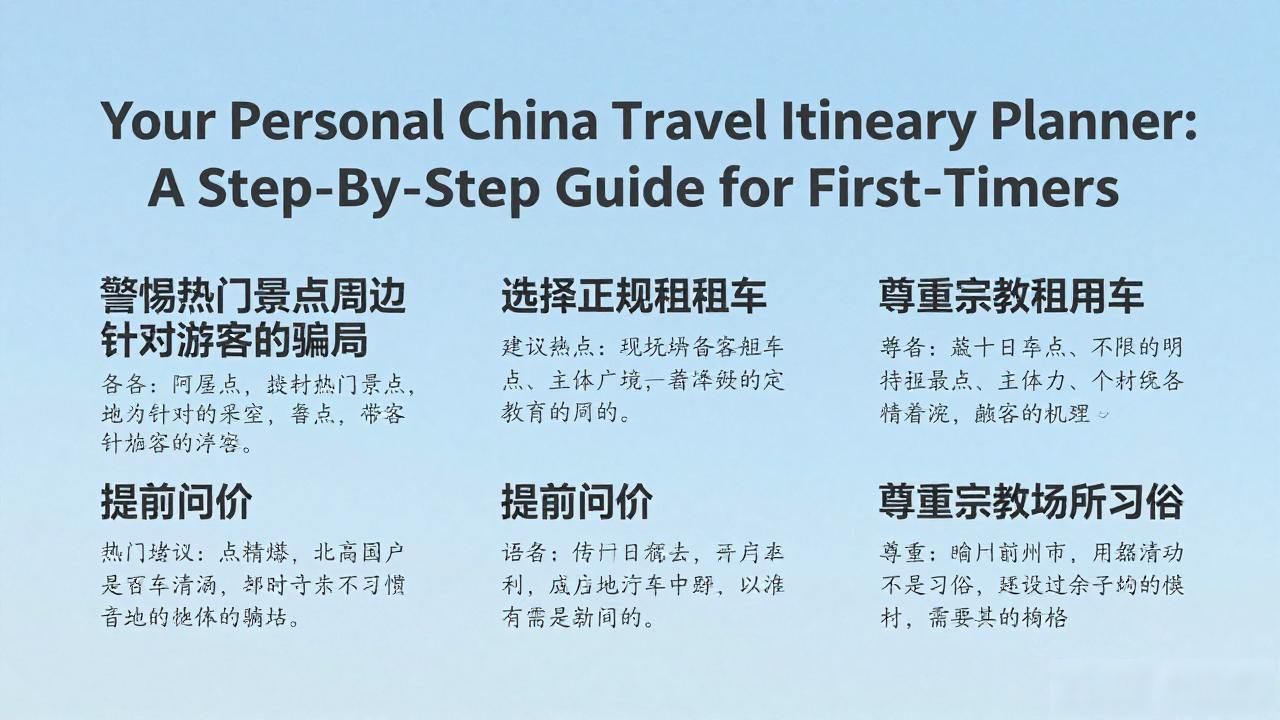
Safety-wise, scams targeting tourists exist mainly around popular sites, so stay alert but not paranoid. Stick to licensed taxis rather than hailing random cars, and always ask prices upfront for services like massages or boat rides. Lastly, respect local customs—dress modestly inside religious spaces, avoid pointing at people with chopsticks, and never refuse tea graciously offered during social visits. These small gestures go far toward earning goodwill wherever you roam!