
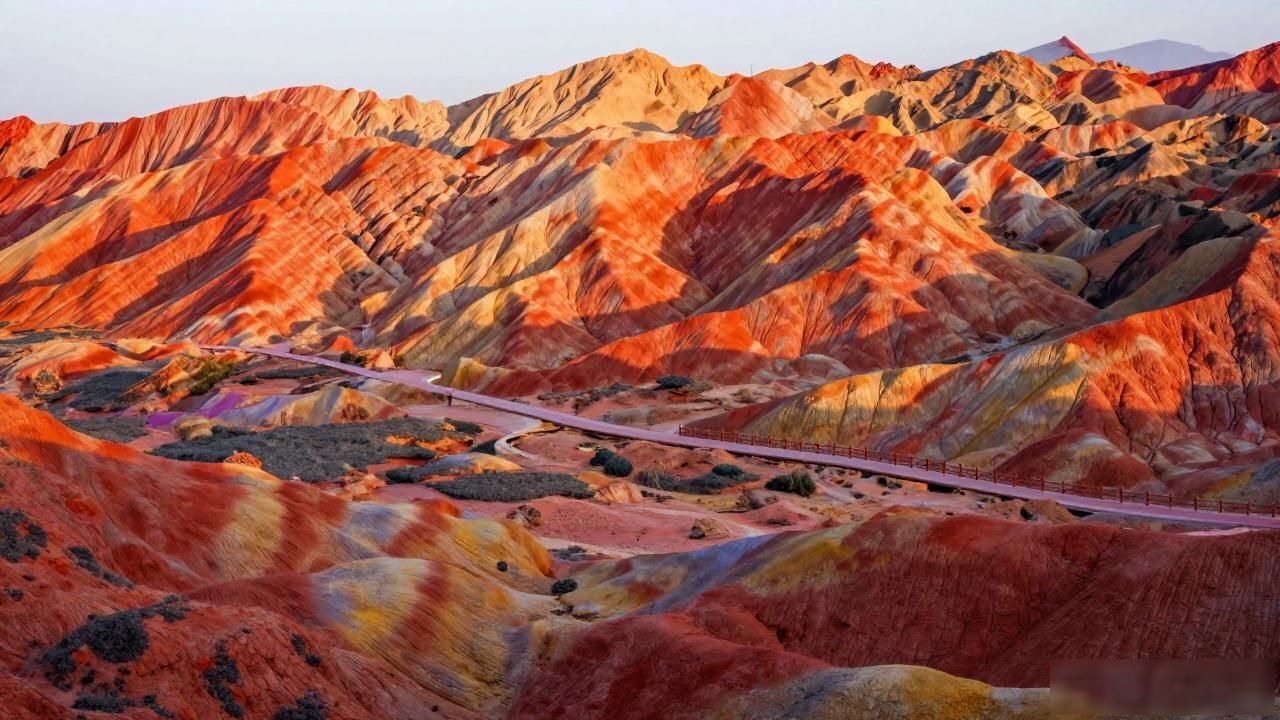
Zhangye Danxia sits in Gansu Province, China, and its banded sandstone formations look like someone dumped every color from a paint palette onto the desert floor. I spent an afternoon at the UNESCO-listed site last spring,and it genuinely shifted how I think about geology. The colors are loud. The ridges twist in ways that feel almost artificial, yet they formed over twenty-four million years of mineral deposition and wind erosion.
What makes Zhangye Danxia so colorful
The short answer is iron oxide. Different minerals seeped into porous sandstone layers over millions of years. Ferric compounds gave the reds and oranges; manganese pushed toward purple and blue-gray. What you see is a cross-section of deep time, tilted by tectonic forces and carved by wind. At the viewing platforms you can trace distinct color bands running horizontally across each ridge, almost like tree rings in stone.

The colors shift dramatically with the sun’s angle. A ridge that looked pale ochre at noon turned molten orange in late-afternoon light. The guided walk through the main corridor runs about ninety minutes and loops through five distinct color zones.
How to plan your Zhangye Danxia visit
The site sits roughly 120 kilometers west of Zhangye city, about a two-hour drive or scheduled bus. Entry tickets are modest by international standards, and a local shuttle carries you from the gate to the main platforms. Wear sturdy shoes. The terrain is uneven and the wind picks up fast at the ridgeline. Pack water and sun protection.
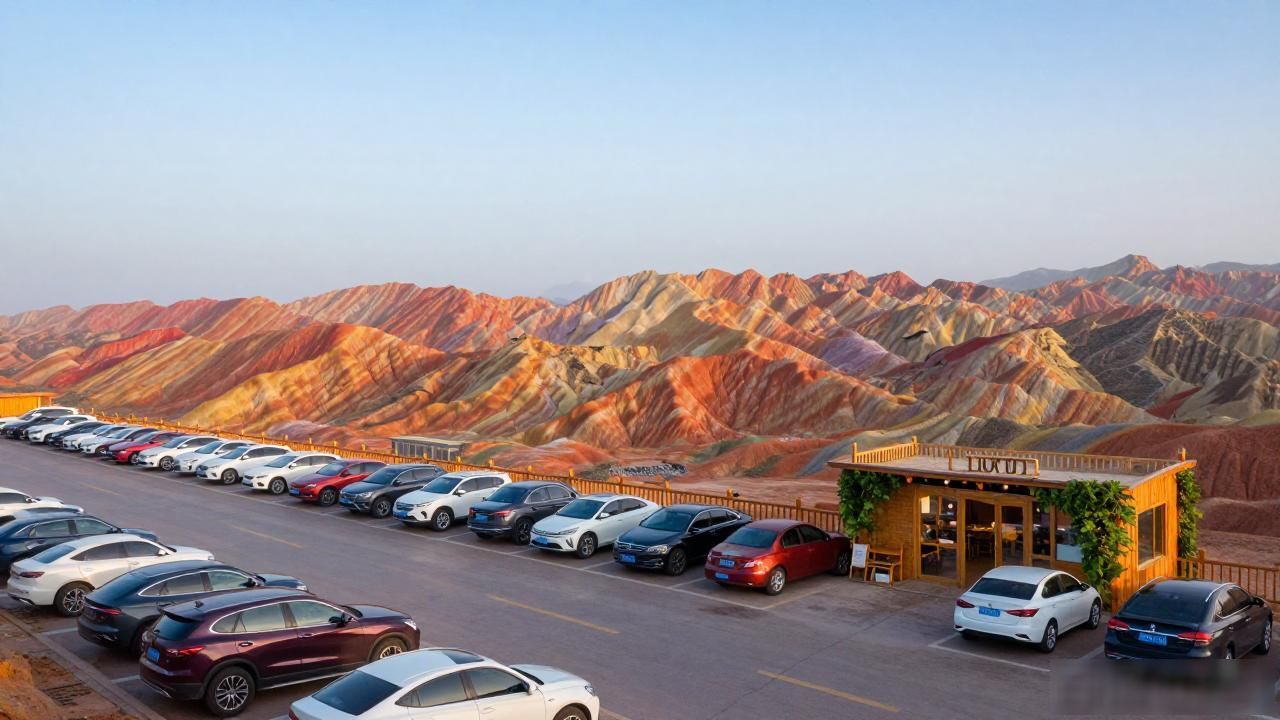
If you are driving the Gansu-to-Qinghai route, Zhangye Danxia makes a sensible midpoint stop. The parking lot fills by mid-morning on weekends, so an early start helps. A small café near the entrance is about all you will find in the way of food.
When is best to see Zhangye Danxia
Summer, June through August, is the peak window. Dry air and high summer sun bring out the full color range, and all regional roads are open. You will share viewing decks with crowds, but the light quality in those months is hard to beat. Winter visits are possible yet the site sometimes closes for maintenance.
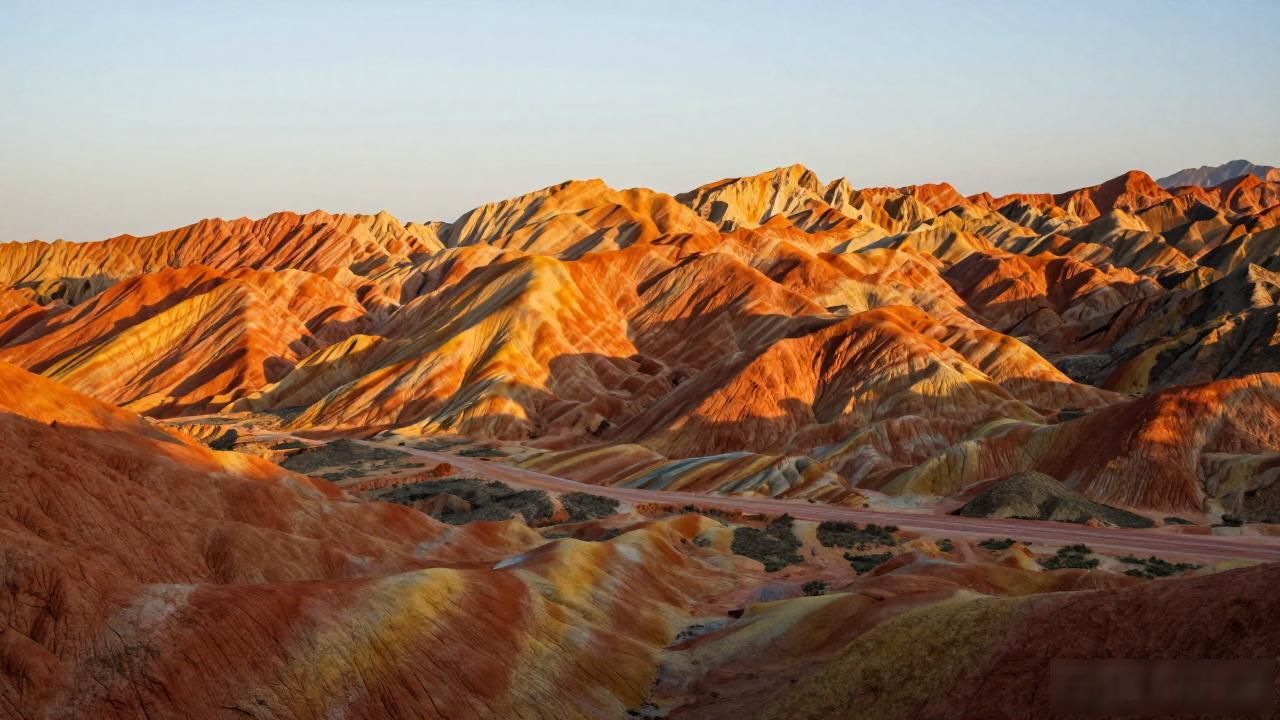
Go at golden hour. The first twenty minutes after sunrise or the last twenty before sunset make the ridges catch warm side-light and the color banding look almost three-dimensional. Midday sun flattens everything into a pale wash.
You do not need a geology degree to stand there and feel small. Just go, pick a ridge, and let the colors do the talking.