

If you are planning a trip along the ancient trade routes, choosing the right Silk Road city can make or break your experience. The Silk Road was not a single road but a vast network of trade routes connecting China, Central Asia, the Middle East, and Europe. For centuries, these cities served as bustling hubs where merchants exchanged silk, spices, and ideas. Today,they offer some of the most remarkable historical sites in the world. This article highlights the most rewarding destinations for travelers who want authentic history, stunning architecture, and a sense of stepping back in time.
Which Silk Road city has the best preserved old town

Bukhara in Uzbekistan is arguably the most complete medieval city on the entire Silk Road. Walking through its old town feels like entering a living museum, with over 140 architectural monuments protected by UNESCO. The Lyabi Hauz plaza, with its ancient pool and mulberry trees, has been a gathering place for traders and travelers for over 400 years. The city’s skyline is dominated by the Kalyan Minaret, which survived Genghis Khan’s destruction because he was reportedly so impressed by it that he ordered his army to spare it.
The old town is compact and walkable, which makes it perfect for exploring on foot. You can wander through the trading domes where merchants once sold carpets, jewelry, and spices. These brick domes are not just historical relics; they still function as small markets today. The atmosphere in the evening is particularly magical, as the monuments are illuminated and the streets fill with locals enjoying tea and conversation.
How many days should you spend in a Silk Road city
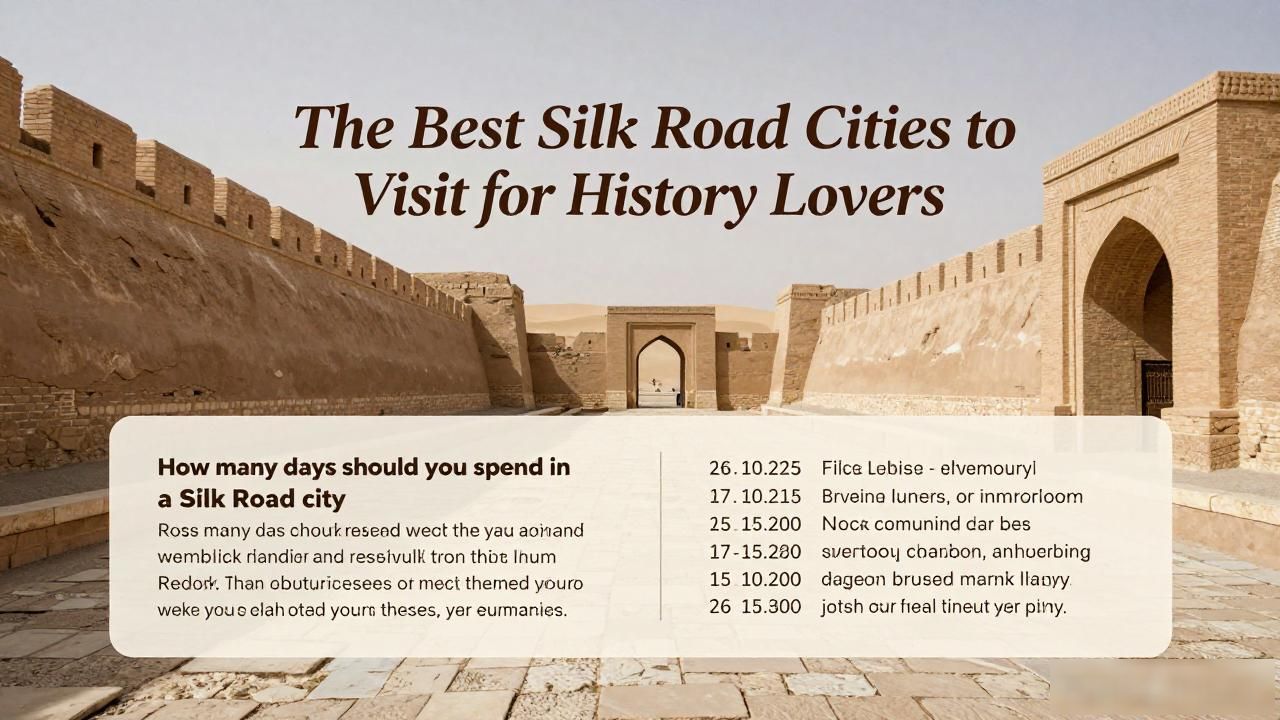
Most travelers underestimate how much time they need. For a city like Samarkand, you should plan at least two full days just to see the major sites. The Registan Square alone deserves several hours, especially if you want to appreciate the intricate tilework of the three madrasahs at different times of day. The Shah-i-Zinda necropolis, with its stunning blue-tiled mausoleums, requires another half day at minimum.
If your itinerary includes multiple Silk Road cities, allocate three to four days for each major stop. This allows you to visit not only the famous landmarks but also the lesser-known neighborhoods, local bazaars, and nearby archaeological sites. Rushing through these cities defeats the purpose of experiencing their layered history. The pace of life here is slower than in Western cities, and part of the joy is simply sitting in a tea house and watching daily life unfold around you.
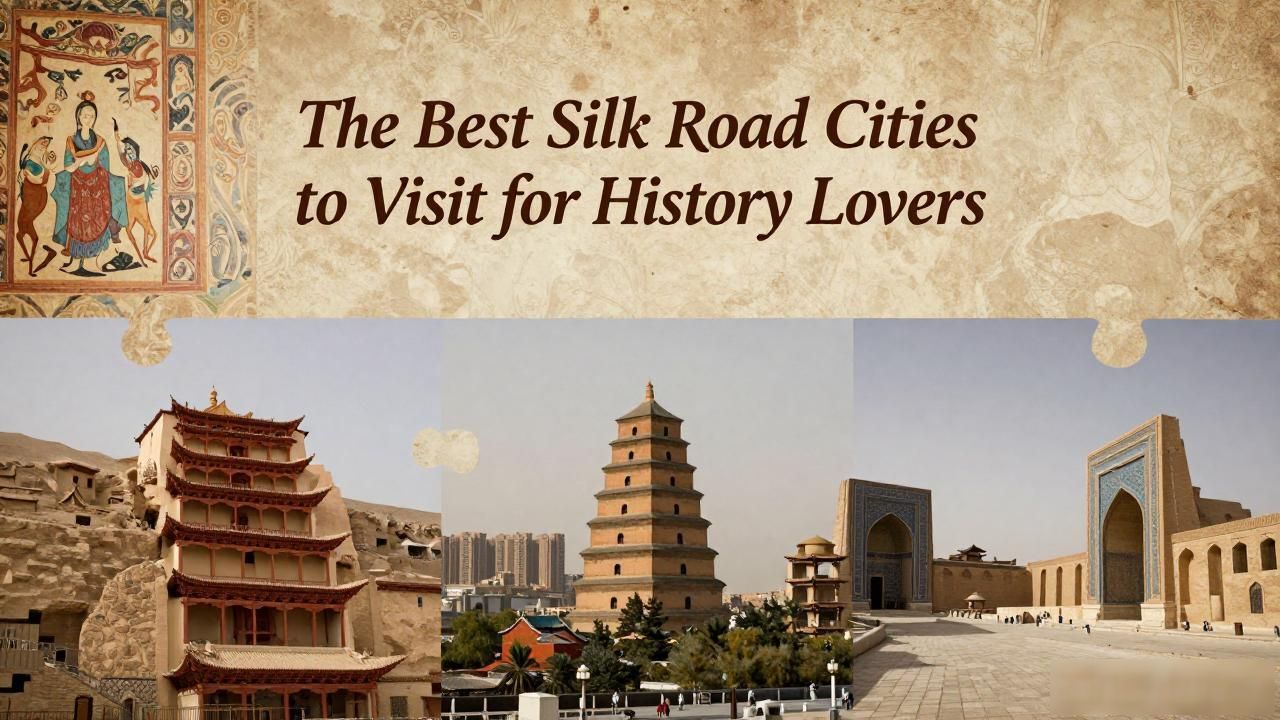
The best time to visit is spring or autumn, from April to June or September to November. Summer temperatures can reach extreme highs, making long days of sightseeing exhausting. Winter brings fewer crowds and lower prices, but some sites may have limited hours.
For first-time visitors, combining Bukhara, Samarkand, and Khiva in Uzbekistan gives the most comprehensive Silk Road experience within a manageable travel radius. These three cities are connected by train and can be covered in a week to ten days. Each one offers a distinct character, yet together they tell the complete story of how trade shaped civilization across Asia.