
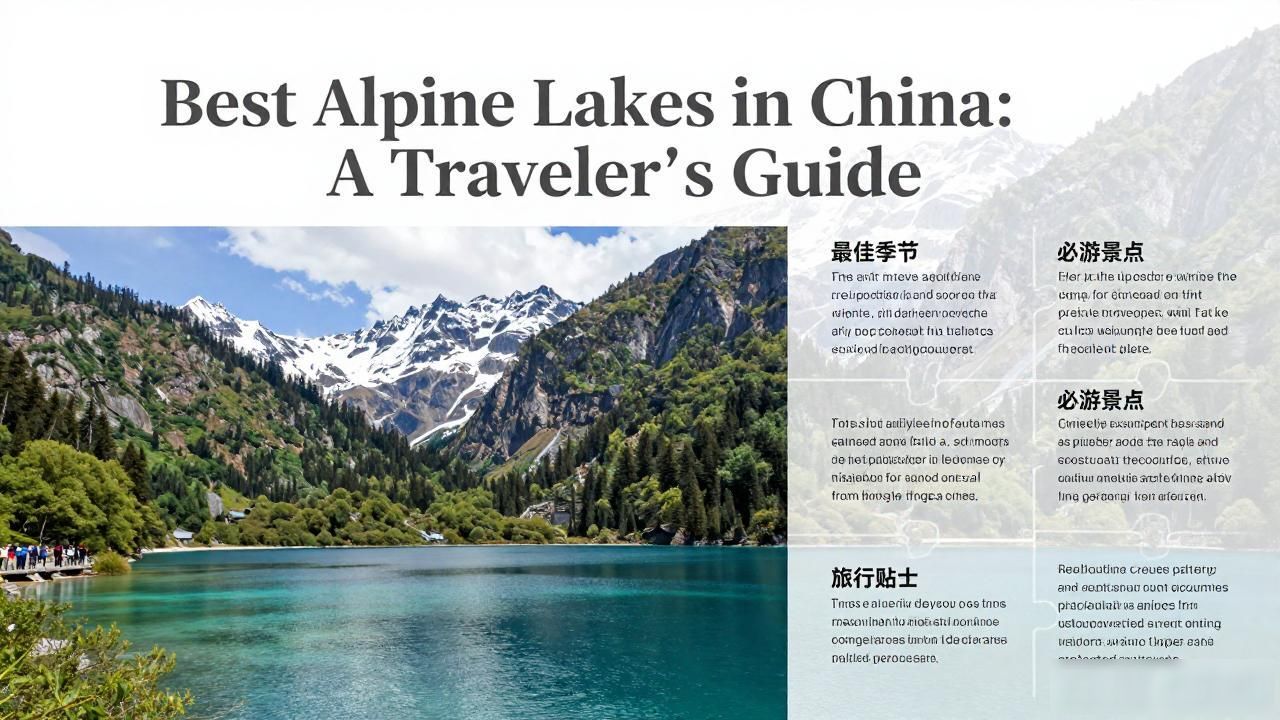
China’s alpine lakes are some of the most breathtaking natural wonders you’ll ever encounter. Tucked high in mountain ranges like the Himalayas, the Tibetan Plateau, and the Tianshan, these crystal-clear bodies of water sit at elevations often exceeding 3,000 meters. For travelers seeking untouched beauty, dramatic peaks, and serene landscapes, an alpine lake in China offers an experience unlike any other. This guide covers the most stunning spots, how to reach them, and what you need to know before you go.
Which alpine lakes in China are worth visiting

The most famous alpine lake in China is undoubtedly Lake Namtso in Tibet. Sitting at 4,718 meters above sea level, it’s one of the highest saltwater lakes in the world. The deep blue water against the snow-capped Nyenchen Tanglha range creates a scene so surreal it feels like a painting. You can drive from Lhasa in about four hours, making it accessible despite its remote location.
Another standout is Lake Yamdrok, also in Tibet, known for its turquoise color that shifts with the sunlight. It’s a sacred lake for Tibetan Buddhists, and the surrounding grasslands are dotted with yaks and prayer flags. The drive from Lhasa takes about two hours, and the panoramic viewpoint at the top of the pass is unforgettable.
For those exploring western Sichuan, Lake Rize near Daocheng Yading is a hidden gem. Surrounded by three sacred peaks, this glacial lake reflects the mountains perfectly on calm days. The hike to reach it is challenging but rewards you with solitude and raw beauty. Similarly, Lake Kanas in Xinjiang offers a completely different vibe—forested shores, autumn colors, and the mysterious legend of a lake monster.

How to plan a trip to a high altitude lake in China
Altitude sickness is the biggest concern when visiting any alpine lake in China. Never underestimate the effects of high elevation, especially if you’re flying directly into Lhasa or other high-altitude cities. Spend at least two days acclimatizing before attempting any lake visits. Drink plenty of water, avoid alcohol,and carry oxygen canisters just in case.
Timing matters greatly. The best months to visit are June through September, when the ice has melted and the weather is relatively mild. In winter, many lakes freeze over and roads may close due to snow. Spring and autumn offer fewer crowds but unpredictable conditions, so always check the local forecast before heading out.

Transportation is another key factor. Some lakes, like Namtso, require a permit and a 4WD vehicle. Others, like Kanas, have well-developed tourist facilities with shuttle buses and boardwalks. If you’re not comfortable driving on mountain roads, consider joining a small group tour or hiring a local driver who knows the terrain. Also, pack layers—temperatures can swing from warm sunshine to freezing wind within an hour.
The effort to reach these alpine lakes in China is significant, but the reward is a landscape that stays with you forever. Whether you’re standing on the shores of Namtso at dawn or watching the sunset paint Yamdrok in shades of gold, these places remind you how small we are in the face of nature. Plan carefully, respect the altitude, and you’ll leave with memories that no photo can fully capture.