
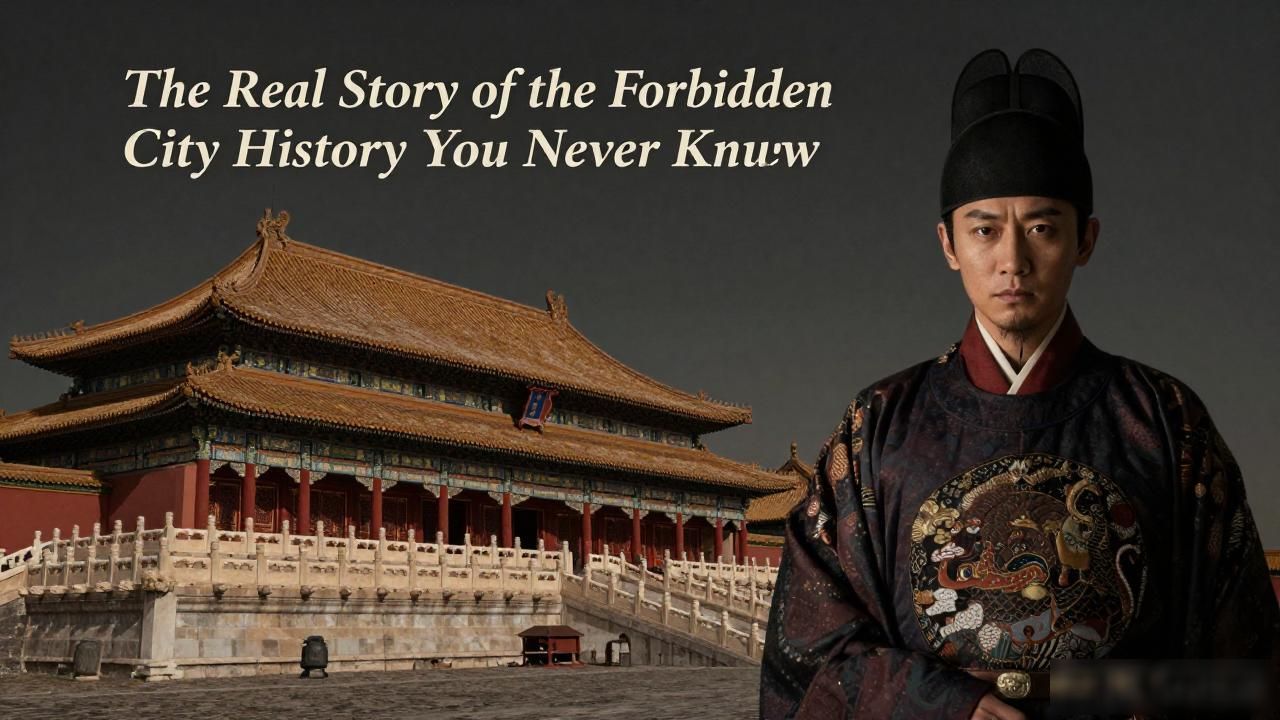
When people search for Forbidden City history, they usually expect dates, dynasties, and a list of emperors. But the real story is far stranger and more human than any textbook summary. The Forbidden City is not just a palace—it is a living document of power, paranoia, and survival, written in brick, timber, and blood.
Why Was the Forbidden City Built and Who Ordered It

The common answer is that Emperor Yongle built it to show off his power. That is true, but incomplete. Yongle had stolen the throne from his own nephew, and his capital was still in Nanjing, surrounded by officials who remembered his crime. He needed a new seat of power, far from those memories, where he could rewrite his own legend. Construction began in 1406, using over a million laborers, and took 14 years to complete.
The location was not chosen for beauty. It was chosen for feng shui and military logic—backed by the Jingshan hill, fronted by the Golden Water River, and surrounded by walls that were nearly 10 meters high. Every gate, every courtyard, every roof tile was placed to make one point: the emperor was not a man, but the center of the universe. Even the number of roof beasts on the Hall of Supreme Harmony—ten in total—was a number reserved for the emperor alone.
How Did the Forbidden City Survive Fires Wars and Revolutions
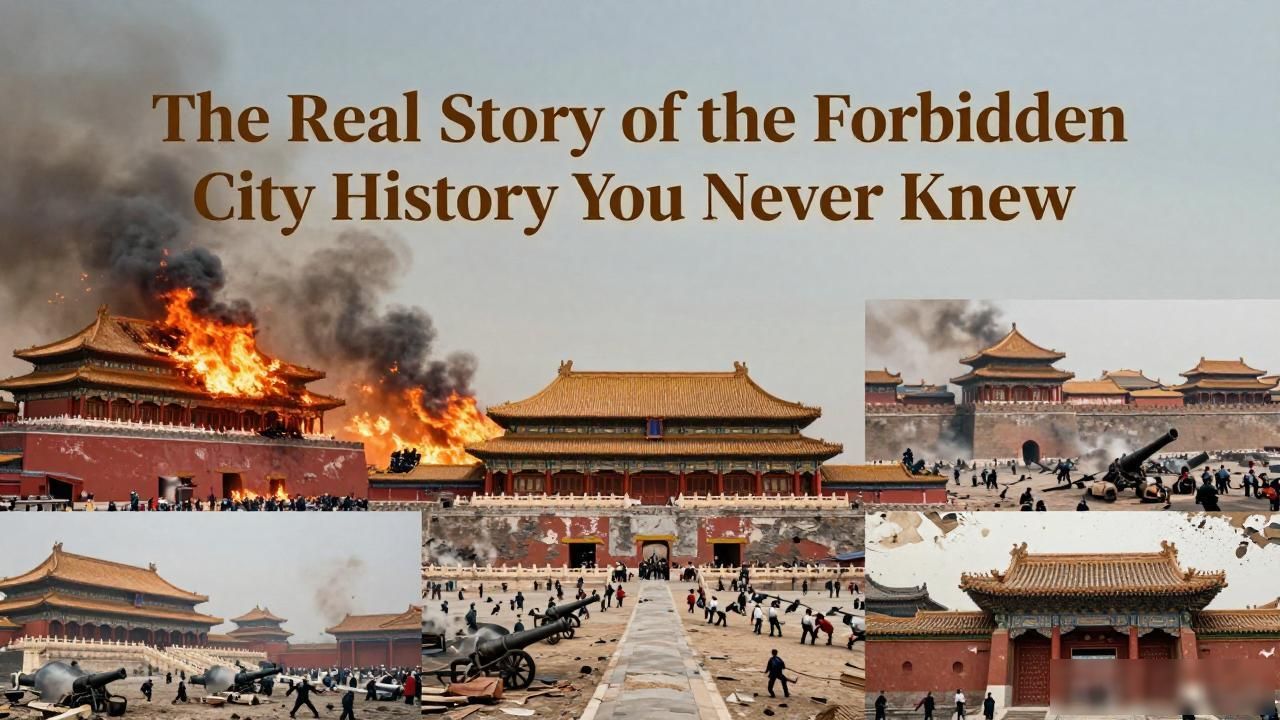
The palace has burned down at least four times, been looted by foreign armies, and nearly torn apart during the Cultural Revolution. Yet it stands. The secret is not luck—it is constant rebuilding. The original timber came from the forests of southwest China, floated down rivers for thousands of miles. When a fire struck, the court did not mourn; it ordered new logs and rebuilt within years.
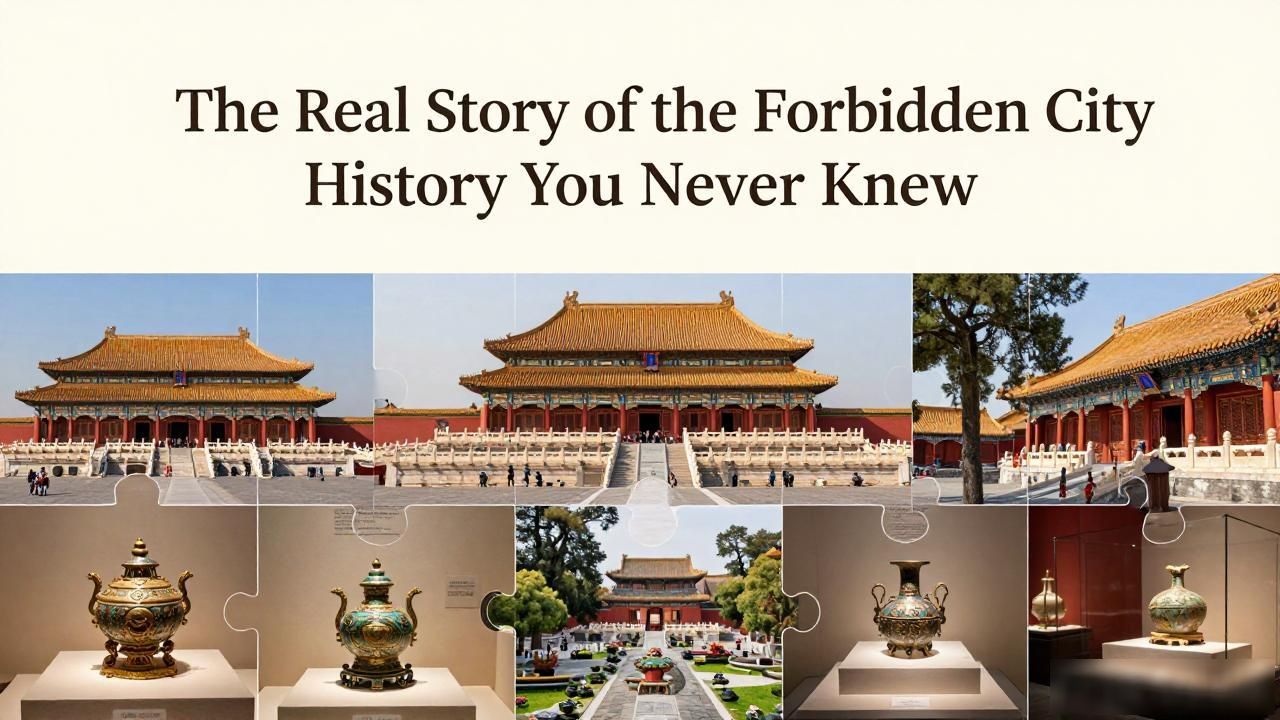
In 1860, British and French troops looted the Old Summer Palace just outside the city, but the Forbidden City itself was spared from total destruction. In 1900, during the Boxer Rebellion, foreign soldiers actually camped inside its walls. And in 1949, when the People’s Liberation Army entered Beijing, Mao Zedong gave an explicit order: no one was to touch the palace. That decision saved it from the fate of many other historical sites.
Today, the Forbidden City receives over 16 million visitors a year, but only about 30 percent of it is open to the public. The rest remains closed—offices,storage, and courtyards where workers still repair roofs by hand, using the same techniques as Ming dynasty craftsmen. The palace is not a frozen relic; it is a living machine that has been running for over 600 years. Every crack in its walls tells a story of a dynasty that fell, a fire that burned, or a guard who fell asleep on duty. Walk past the golden gates, and you are not just seeing history—you are standing inside it.