
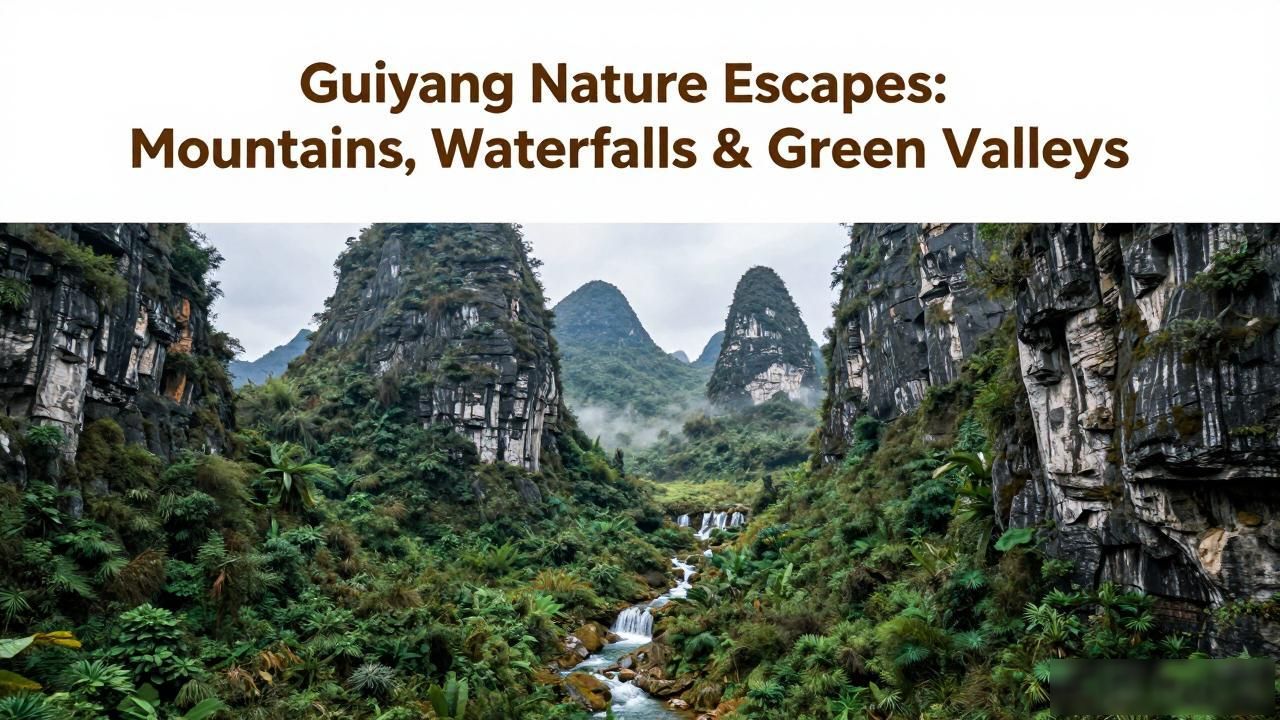
When people think of China’s cities, they often picture skyscrapers and crowded streets. Guiyang, the capital of Guizhou province, flips that image completely. Sitting on the Yunnan-Guizhou Plateau at an elevation of about 1,100 meters, this city is wrapped in karst hills, dense forests, and clean rivers. The air is fresh, the summers are cool, and the landscape feels more like a national park than a provincial capital. For travelers seeking natural beauty without the tourist crowds, Guiyang offers a rare combination of urban convenience and wild scenery.
What makes Guiyang’s natural scenery so unique

The secret lies in the region’s karst topography. Millions of years of rainfall dissolved the limestone bedrock, creating dramatic peaks, underground caves, and sinkholes that dot the entire area. Unlike the flat, manicured parks found in many Chinese cities, Guiyang’s green spaces feel raw and untamed. You can stand in the middle of the city and see forested mountains rising directly from the streets. The nearby Qianling Mountain Park is a perfect example—it’s a sprawling reserve where wild monkeys roam freely and ancient temples hide among the trees. The park’s hiking trails wind through bamboo groves and past clear streams, offering panoramic views of the city below.
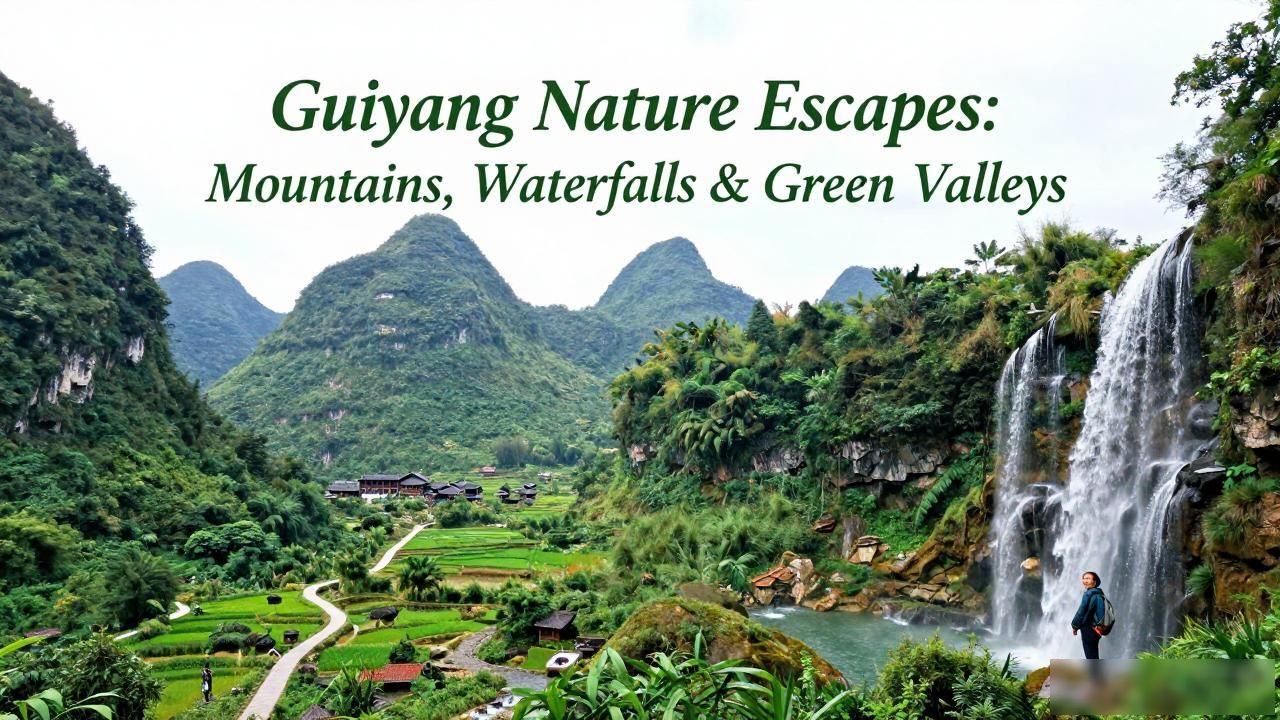
The water is another defining feature. Guiyang sits at the headwaters of the Wu River system, and the surrounding countryside is laced with waterfalls, lakes, and hot springs. The most famous is Huangguoshu Waterfall, about two hours from the city center, which drops 77 meters and stretches 101 meters wide. During the rainy season,the thundering water creates a permanent rainbow. Closer to town, the Huaxi River cuts through a scenic valley where locals picnic on grassy banks and wade in the shallow, crystal-clear water. These aren’t just postcard views—they’re living landscapes that shape daily life here.
How to explore Guiyang’s green side in one day
Start your morning at Jiaxiu Tower, the city’s iconic landmark, which sits on a small island in the Nanming River. The riverside promenade is lined with willow trees and weeping figs, and early risers practice tai chi under the branches. From there, head south to the Huaxi National Urban Wetland Park. This is a massive green corridor that stretches for miles, with boardwalks crossing lotus ponds, wooden bridges spanning small waterfalls, and shaded cycling paths that follow the river’s gentle curves. The park is free to enter, and it’s easy to spend three hours here without repeating a single trail.
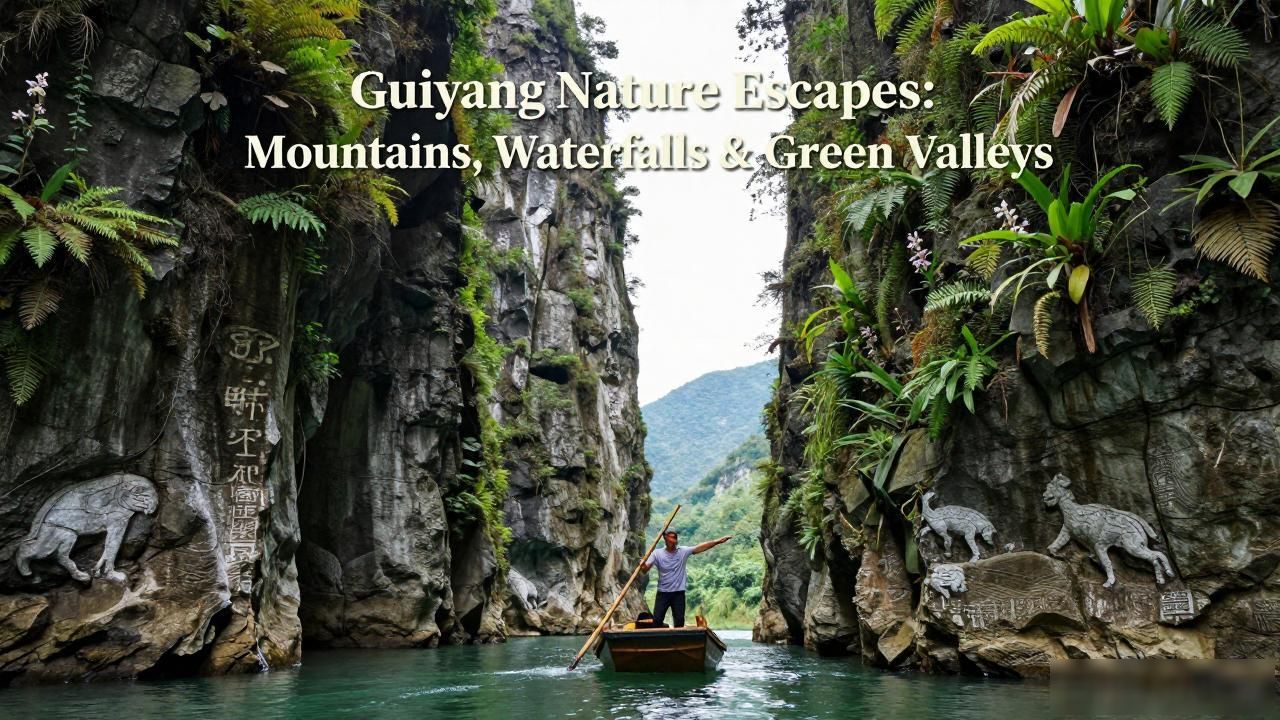
For the afternoon, take a short bus ride to Tianhe Lake, a hidden gem about 30 minutes from downtown. A boat trip through the lake’s narrow gorges reveals towering limestone cliffs covered in ferns and wild orchids. The boatman will point out rock formations that resemble animals and ancient characters. If you’re feeling adventurous, there’s a cave at the lake’s far end that you can explore on foot—it’s damp, dark, and completely natural, with stalactites dripping from the ceiling. End your day at Qianling Mountain to catch the sunset over the city. The climb takes about 40 minutes, but the reward is a 360-degree view of green peaks fading into the horizon.
Guiyang’s natural beauty isn’t a theme park attraction. It’s a genuine, working landscape where mountains, rivers, and forests exist alongside modern life. The city has invested heavily in preserving these green spaces, and the result is a destination that feels both refreshing and authentic. For anyone who loves the outdoors but wants to avoid the logistical headaches of remote wilderness, Guiyang delivers the best of both worlds. Pack comfortable shoes, bring a rain jacket, and prepare to be surprised by how green a Chinese city can be.